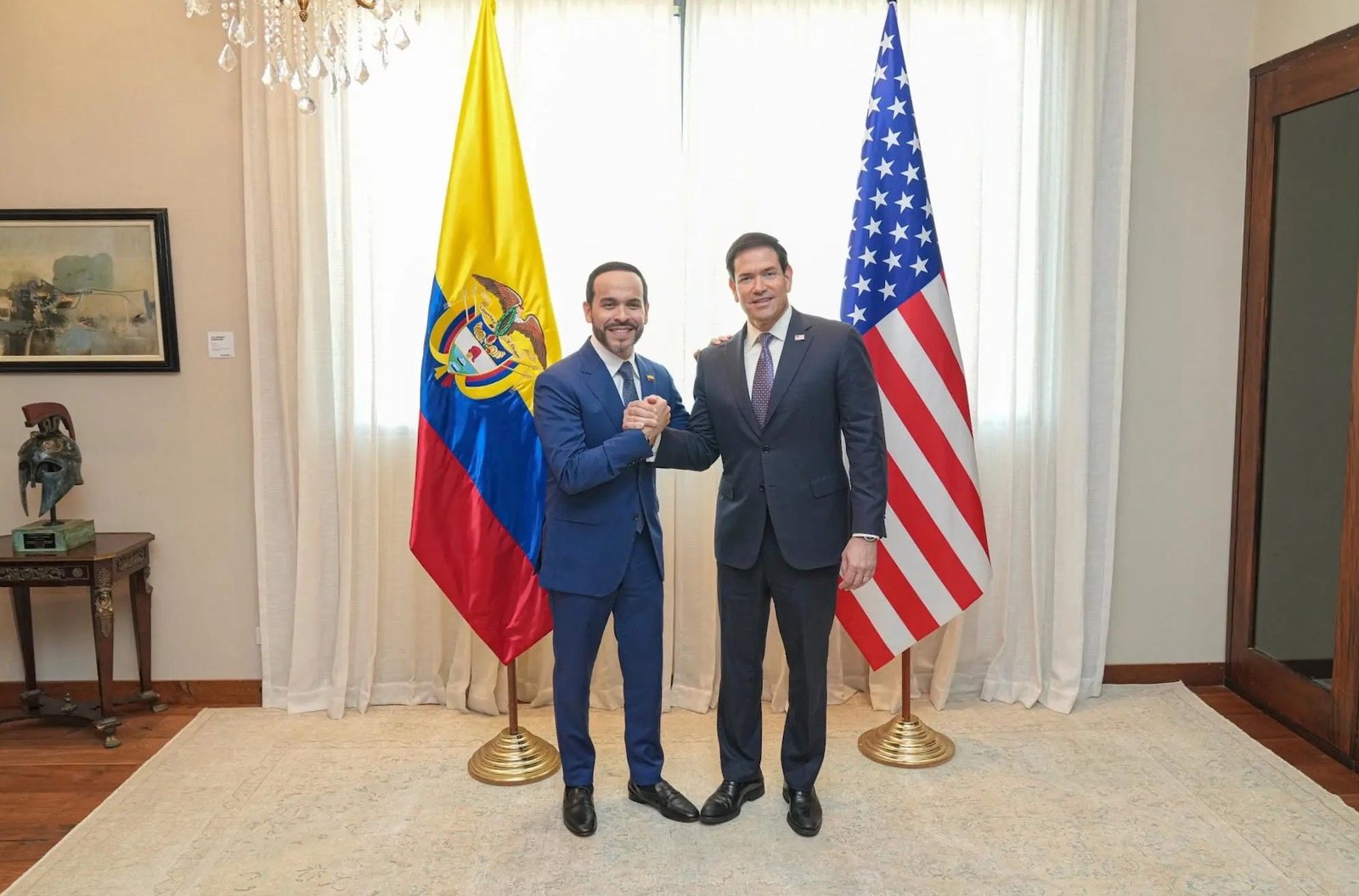

The United States announced $45m in security funding and additional naval vessels for Ecuador on Tuesday, as Secretary of State Marco Rubio visited the country during a tour of Latin America.
Rubio called Ecuador Washington’s “most involved and aggressive partner” in the fight against drug trafficking. The funding and hardware are intended to strengthen Ecuadorian maritime operations against smuggling networks moving cocaine through Pacific waters.
Speaking during the visit, Rubio outlined a shift in US strategy. The Trump administration, he said, would work with allied countries and align operations with their laws, while adding that the American military would “still blow up ships if need be.”
The public acknowledgment of that shift comes a year after Washington began a campaign of unilateral strikes against vessels it describes as operated by “narco-terrorists” in international waters. Three people were killed in the latest boat strike, according to US officials.
The strike campaign has drawn scrutiny over its legal basis and the identities of those killed. US officials have released few details about individual operations, including how targets are selected or verified before a vessel is destroyed.
Ecuador has become a central transit route for cocaine leaving Colombia and Peru bound for North America and Europe. Rising violence linked to trafficking gangs has pushed the government to seek closer security ties with Washington.
The Ecuador stop followed Rubio’s earlier visit to Colombia, where he pressed regional partners on drug enforcement and questioned Beijing’s growing role in the region. His itinerary reflects a broader effort to deepen US security cooperation across South America.
Rubio said cooperation with allied governments would allow strikes to continue within a framework agreed with partner states, rather than through unilateral action alone. He did not specify which countries had agreed to coordinate.
The three deaths in the latest strike bring further attention to a campaign that has operated largely outside public view since it began. Washington has not published a full accounting of the vessels hit or the number of people killed over the past year.