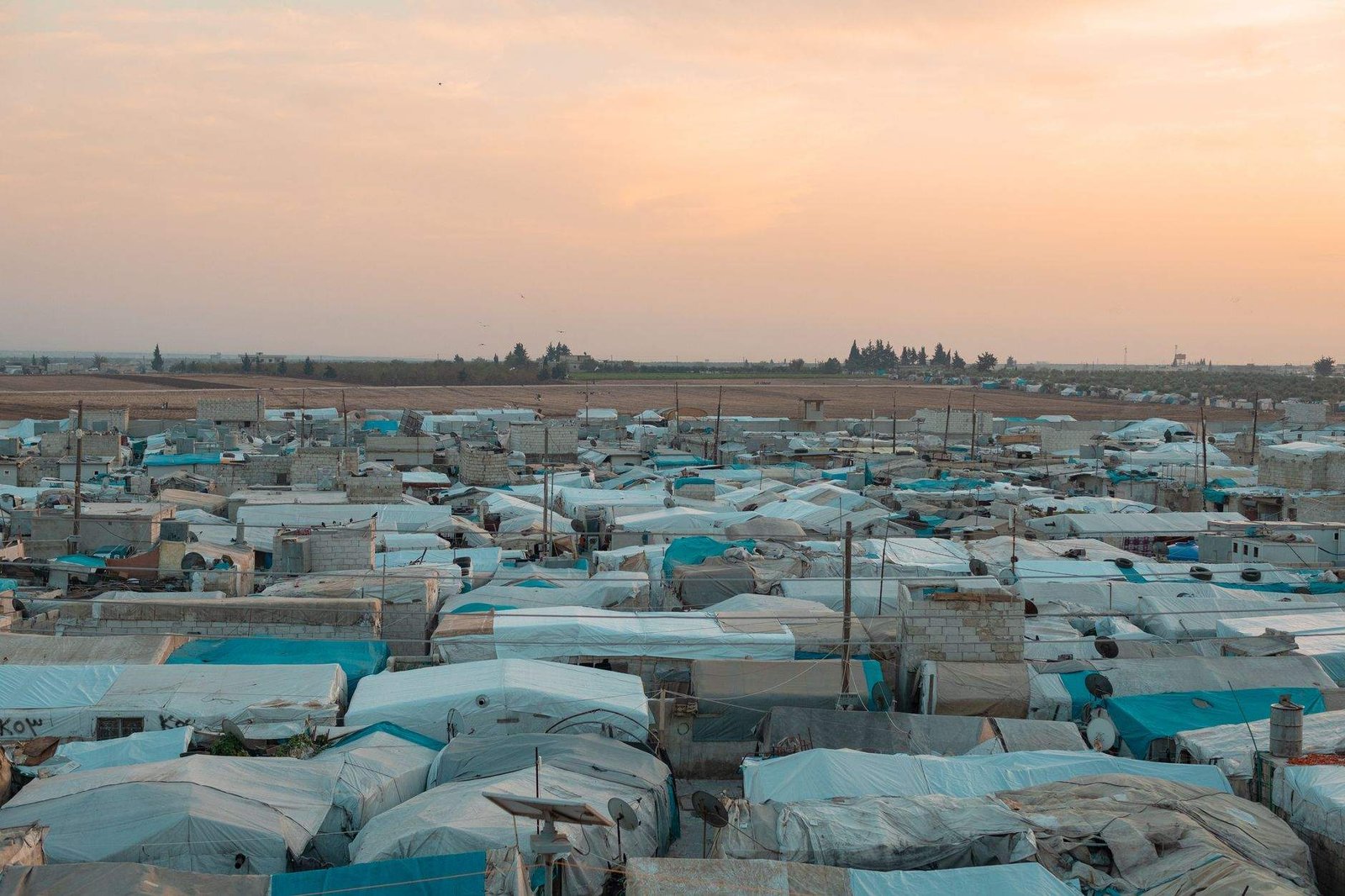

More than 100,000 people have been forced from their homes by escalating fighting between the Houthis and forces loyal to Yemen’s internationally recognised government, the UN Refugee Agency (UNHCR) said on Tuesday, warning of a widening humanitarian crisis along the country’s western coast.
The agency said thousands more had risked the dangerous sea crossing over the Bab al-Mandab strait to reach Djibouti, with more than 2,400 people making the journey in the past four days. Most arrivals are women, children and older people.
UNHCR said it needs an estimated $14 million in new funding to meet the immediate needs of displaced families inside Yemen. “Shelter, food, clean water, health care and protection services are among the most urgent needs, as receiving communities and displacement sites become overstretched,” the agency stated. More than 65,000 registered refugees and asylum seekers already inside Yemen, mainly from Somalia and Ethiopia, are also at risk.
The displacement began as the Iran-aligned Houthis advanced to seize the entirety of Yemen’s Red Sea coast, taking control of Bab al-Mandab, the narrow waterway at the southern entrance to the Red Sea that dominates the naval route to Asia.
Saudi cities faced the threat of a second day of Houthi attacks after the group claimed a “large-scale” strike using dozens of ballistic missiles and drones against King Khalid airbase in Khamis Mushait, southern Saudi Arabia, on Monday. Air raid sirens were activated in six governorates, including Jeddah, on Tuesday before being lifted.
Oil prices rose after Reuters reported that loadings at Saudi Arabia’s Red Sea port of Yanbu had been suspended, citing shipping industry sources. Brent crude, the international benchmark, rose nearly 3% to $108 a barrel. Prices climbed this week after Saudi Aramco closed its East-West pipeline following a Houthi attack.
The strait has become vital to Saudi crude exports as the wider Middle East war has choked the strait of Hormuz in the Gulf. The earlier Houthi strikes on Saudi tankers had already pushed oil past $100 a barrel.
An emergency meeting of the UN Security Council in New York heard repeated calls for Houthi forces to show restraint. Qatar, acting as a mediator, warned of catastrophe if the group won full control of the strait. “The world is suffering enough with the closure of the strait of Hormuz, so we cannot also afford to add the Bab al-Mandab into that equation,” foreign ministry official Ibrahim al-Hashmi told reporters.
US President Donald Trump has so far rejected Saudi pleas to join the fight against the Houthis, the Guardian reported. The group has signed a ceasefire agreement with the US but remains subject to US sanctions. Western governments are providing intelligence and targeting advice rather than direct military support.
Yemen’s ministry of foreign affairs said: “If the world wants stability and calm in the region, it must tell the Saudis: enough interference in the Yemeni affair.” Inside Yemen, the next military engagement is expected to focus on the city of Marib, where Saudi air raids have sought to weaken Houthi formations.