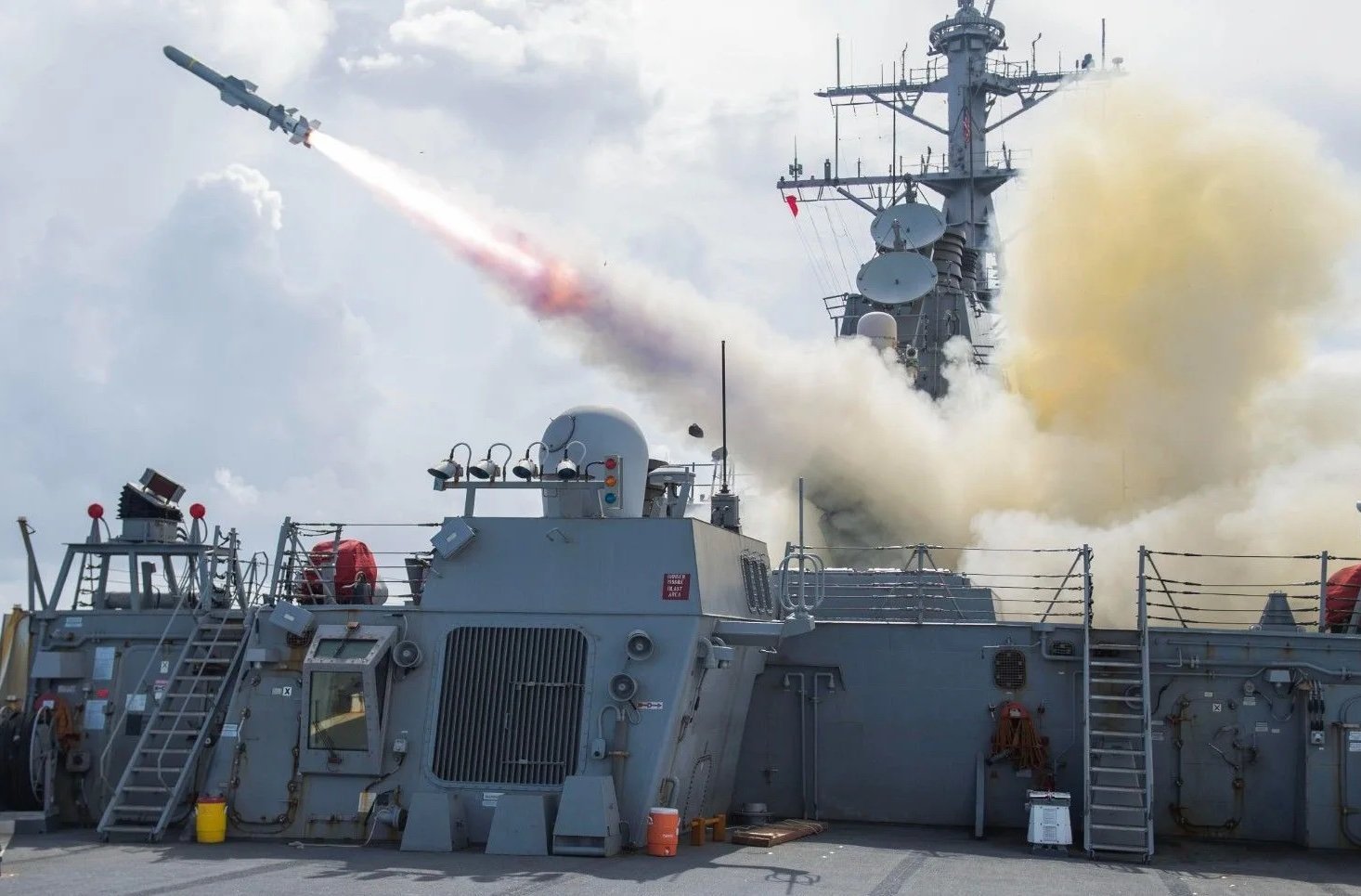

The war with Iran has cost the Pentagon an estimated $38.1 billion through August 1 and depleted US missile-defense stockpiles so heavily that rebuilding them could take five years, the Congressional Budget Office said in a report released Tuesday.
More than half of the total came from replacing missiles and other munitions expended in the fighting. Increased flying hours added $10.4 billion and higher fuel prices $2.7 billion, the CBO estimated. Each additional month of combat would cost a further $2 billion to $3 billion, depending on intensity.
The war has consumed as much as two-thirds of the nation’s missile-defense interceptors since June 2025, largely from helping defend Israel against Iranian attacks. “Rebuilding DoD’s inventory of interceptors would probably take at least five years — even if production was increased,” the report said. The assessment was requested by Representative Brendan Boyle, the top Democrat on the House Budget Committee.
Of the munitions bill, $21.7 billion went to replacing expended weapons, including $13.1 billion for missile-defense interceptors alone. The CBO said it built much of its estimate from public reporting because the Pentagon did not answer its requests for information.
The war began when President Donald Trump launched it February 28. The CBO figures follow the first comprehensive accounting from the Defense Department’s inspector general, released late Monday, which put total spending at $33.4 billion as of June 29: $7.4 billion in operating costs, $22.3 billion to replace munitions and $3.7 billion in equipment losses. That watchdog found the pace of weapons use had caused “strategic inventory shortfalls,” with shortages of solid rocket motors, explosives, propellants and skilled workers slowing resupply.
Iranian strikes damaged or destroyed hundreds of buildings at US bases across eight countries, including Kuwait, Bahrain, Qatar, the United Arab Emirates, Saudi Arabia, Iraq, Oman and Jordan. Dozens of aircraft were hit, among them four F-15E fighters, an F-35A, seven KC-135 refueling planes, seven helicopters and more than 30 drones. An F-35A costs as much as $92 million per plane.
The interceptor shortage would be “especially problematic” in a hypothetical conflict over Taiwan, the CBO said, because engaging large numbers of ballistic and cruise missiles would require far more interceptors, deployed far faster, than the Iran campaign. It noted China maintains and is expanding such an arsenal.
The disruption of oil shipments through the Strait of Hormuz has pushed up energy costs. Brent crude jumped from $64 a barrel before the fighting to $103 at its peak, and the CBO projects the war will leave inflation running 0.5 percentage points higher than expected by early 2027, with short-term interest rates about 0.2 points higher. US crude topped $106 on Tuesday, while regular gasoline averaged about $4.33 per gallon nationally, up $1.15 from a year earlier.
The prior surge in global fuel prices tied to the conflict has fed into consumer costs, with the CBO saying fuels will account for about 40% of the war’s price effect by early 2027.
In June the White House requested $87.6 billion in supplemental funding, of which $67.1 billion was earmarked for the Pentagon. The CBO judged $42.3 billion of that tied to the Iran conflict, including $12.1 billion for classified programs it could not examine.