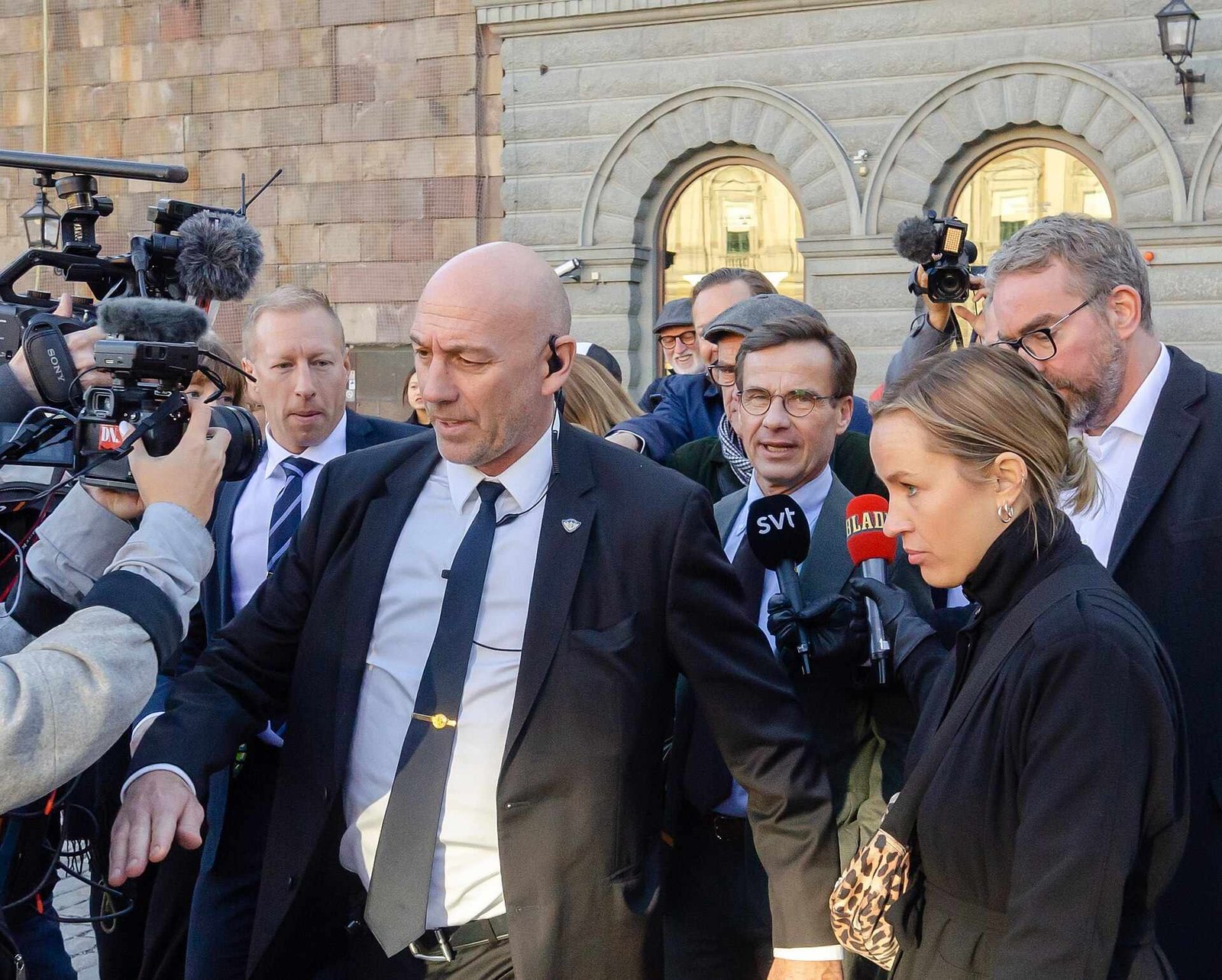

Sweden’s conservative Prime Minister Ulf Kristersson resigned on Thursday after the left-wing opposition secured a narrow majority in the country’s general election, held on Sunday.
The Swedish Election Authority reported that the four left-wing parties won 176 seats in the 349-seat Riksdag, against 173 for Kristersson’s right-wing alliance — a three-seat margin. Only about 50,000 votes separated the two blocs in the country of about 10 million people.
“Now, it is the speaker who will lead the next stage of the way to a new government. I am henceforth requesting that I be relieved of the office of prime minister to allow that work to start immediately,” Kristersson said in a letter posted to X.
Magdalena Andersson‘s Social Democrats finished as the largest single party despite falling to 28.0 percent, their weakest result in over a century. Andersson, 59, was Sweden’s first female prime minister in 2021–22 and finance minister for seven years before that.
“The Swedish people have voted for a new direction for our country. Voted for unity and against division,” Andersson said in a speech posted to social media.
Her path to government is complicated by divisions within the left bloc, which comprises the Social Democrats, the Left Party, the Greens Party and the Centre Party. The Centre Party has said it will oppose any government that grants cabinet posts to the Left Party, which insists on having a minister. Andersson has ruled out including the Left Party in cabinet but wants its parliamentary support.
Under Swedish practice, the Speaker of the Riksdag holds talks with all parties and proposes a candidate, who is then voted on by lawmakers. After the 2022 election, government formation took 37 days; in 2018 it took 134 days.
The anti-immigration Sweden Democrats, part of Kristersson’s outgoing alliance, lost support for the first time since entering parliament in 2010, taking 17.5 percent — down three percentage points from 2022.
Parliament can vote on a new prime minister on September 29 at the earliest.