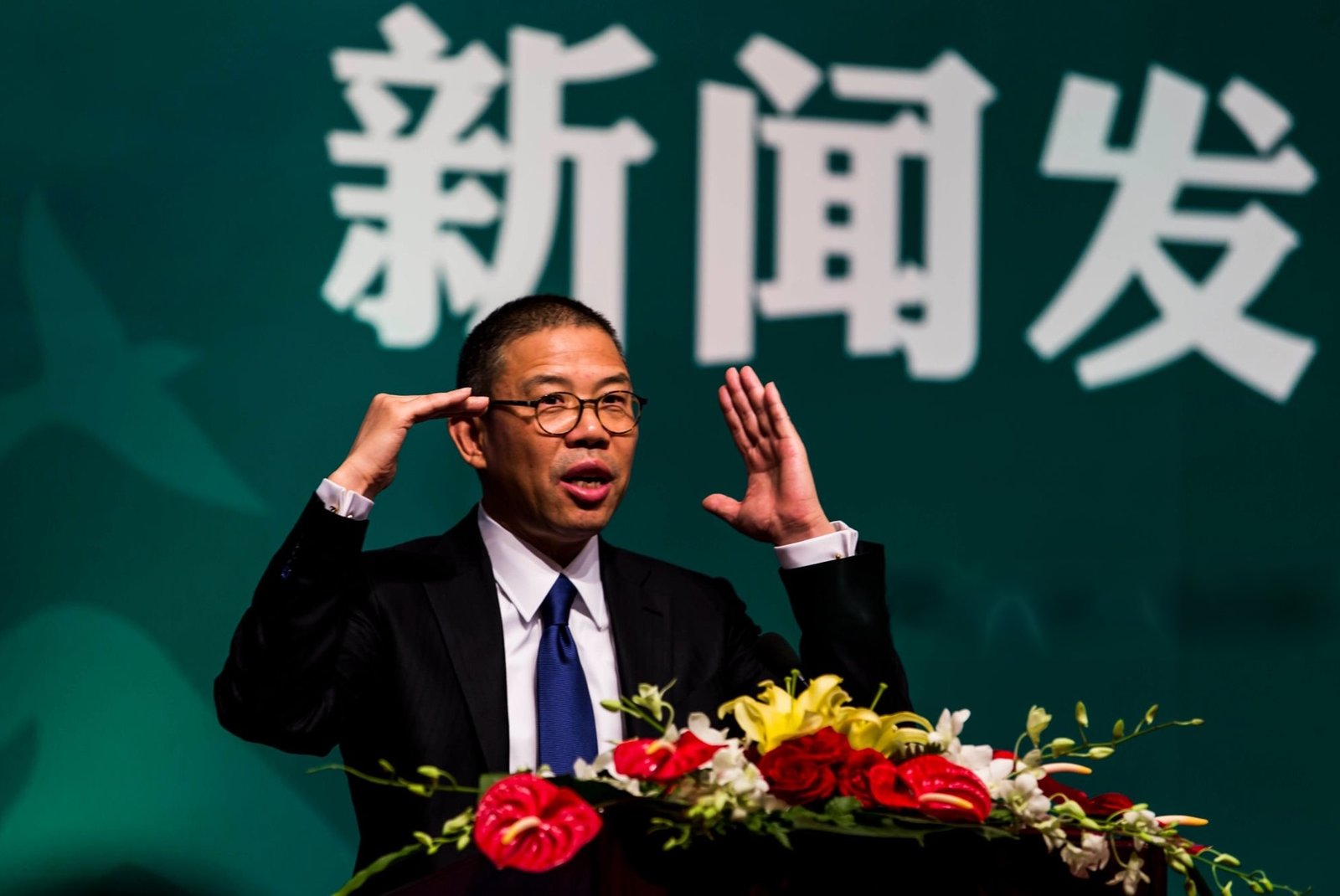

Zhong Shanshan does not court the spotlight. He rarely gives interviews, skips the business-club circuit, and built his fortune without a single app or chip. Yet the 72-year-old founder of Nongfu Spring has spent most of the past six years at or near the top of China’s rich lists, powered by something as ordinary as bottled water and, increasingly, unsweetened tea.
How much is Zhong Shanshan worth?
Estimates move with the Hong Kong stock market. Forbes ranked him No. 27 on its 2026 World’s Billionaires list with $68.1 billion. Real-time trackers have since placed him closer to $58–60 billion, roughly level with or behind ByteDance founder Zhang Yiming in the race for China’s top spot. The 2025 Hurun China Rich List, which valued fortunes as of September 1, 2025, put him at a record 530 billion yuan, the fourth time he has topped that ranking.
Nearly all of it comes from one asset: his stake of more than 80% in Nongfu Spring (HKEX: 9633). Because so much of his wealth sits in a single listed company, his net worth rises and falls almost in lockstep with its share price. He also controls Beijing Wantai Biological Pharmacy, a Shanghai-listed vaccine and diagnostics maker.
From construction sites to Hainan
Born in Hangzhou in 1954, Zhong saw his schooling cut short by the Cultural Revolution. He worked construction jobs, then as a reporter for a Zhejiang newspaper, before moving in 1988 to Hainan, the island China had just made a province and special economic zone. There he cycled through mushroom farming, prawn farming and selling health tonics, including turtle-based supplements, a string of ventures later chronicled by TODAY. He also spent time as a regional sales agent for Wahaha, the beverage group that would later become his chief rival.
Building Nongfu Spring
Zhong founded Nongfu Spring in Zhejiang in 1996, drawing water from Qiandao Lake. His bet was on source and story: rather than compete on cheap purified water, the company positioned itself around natural lakes and springs, and relentless marketing turned its red-capped bottle into a fixture of Chinese convenience stores. The company now draws on 17 major water sources nationwide.
Two listings, one record year
2020 transformed his finances. Wantai listed in Shanghai in April, and Nongfu Spring followed in Hong Kong that September. Within weeks, Bloomberg estimated his fortune had roughly tripled to $58.7 billion, pushing him past Jack Ma as China’s richest person. By January 2021 he had briefly become the world’s sixth-richest person, ahead of Warren Buffett.
The ride has not been smooth. Shares slid as pandemic-era gains faded, and a 2024 online backlash against the company, combined with a bottled-water price war, wiped billions off his net worth.
Tea is now the growth engine
The latest numbers explain the rebound. Nongfu Spring’s 2026 interim results showed revenue up 16% to 29.7 billion yuan and attributable profit up 16.6% to 8.89 billion yuan. Tea drinks, led by the Oriental Leaf brand, grew 30.1% to 13.1 billion yuan and now account for 44.2% of revenue, while packaged water grew just 2.1% to 9.64 billion yuan. That followed a strong 2025, when full-year revenue climbed 22.5% to 52.6 billion yuan and net profit rose about 31%.
In other words, China’s “bottled water king” now earns more from tea than from water, a shift analysts at Bamboo Works and others have tracked closely.
Why the “Lone Wolf”?
Chinese media gave Zhong the nickname for keeping his distance from business associations and politics. He holds few public roles and leaves the talking to his products. That reticence has not kept him out of foreign headlines: in 2025, a plan linked to him to develop an industrial site in Nashua, New Hampshire, drew scrutiny from local residents and officials.
What to watch
Nongfu Spring marked its 30th anniversary in 2026. Whether Zhong reclaims the No. 1 spot on Hurun’s next China list, usually published in late October, will depend largely on one question: can tea keep growing at around 30% a year while water sales flatten?