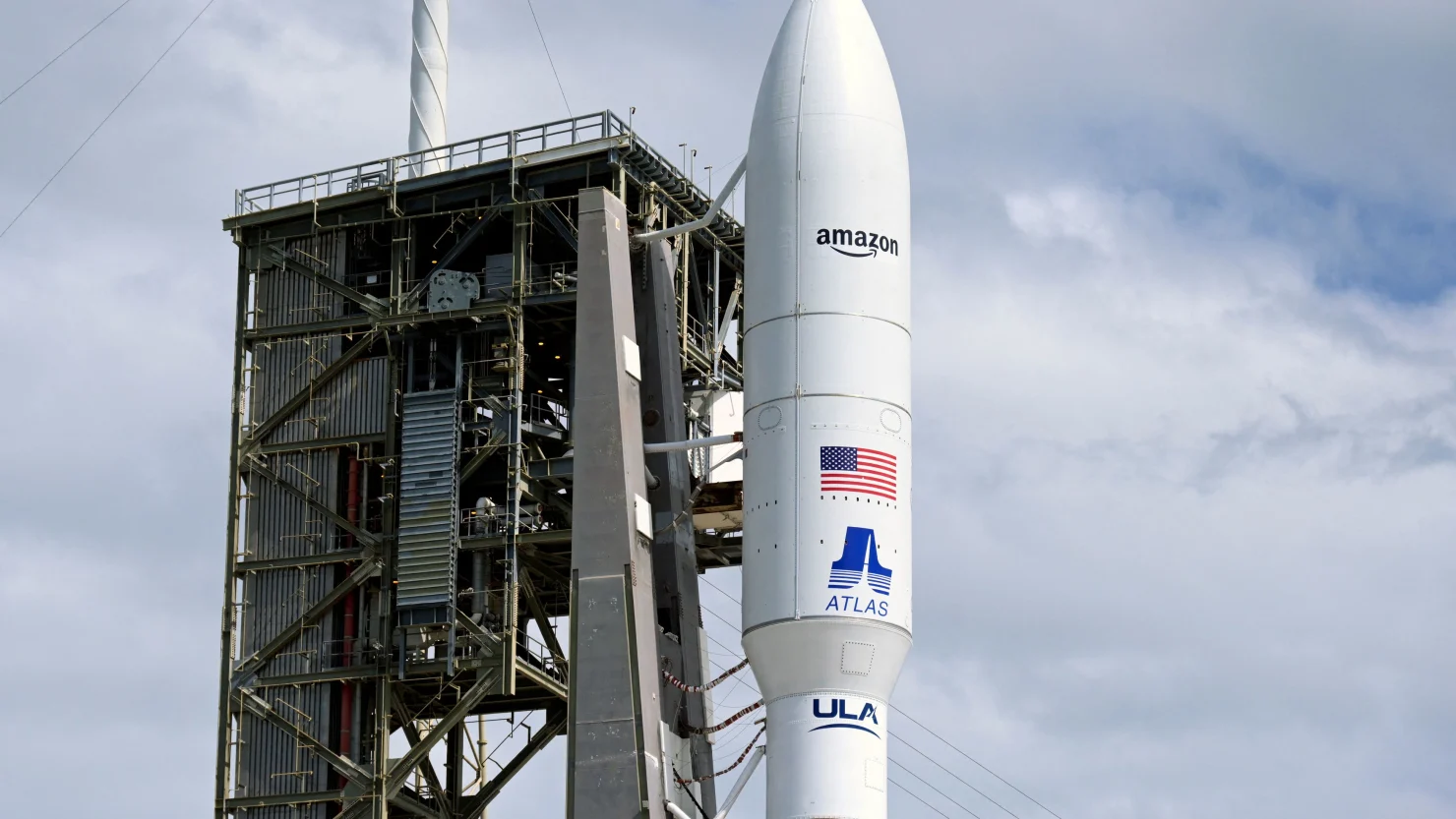

Amazon successfully launched the first batch of its Kuiper internet satellites into space on Monday, after a prior attempt was delayed due to bad weather conditions. The 27 satellites were carried into orbit by a United Launch Alliance (ULA) rocket, which lifted off from Cape Canaveral Space Force Station in Florida. The launch went smoothly, with the Atlas V rocket taking off at approximately 7 p.m. Eastern time. Following the launch, the satellites are expected to detach from the rocket about 280 miles above Earth, after which Amazon will work to ensure that the satellites can communicate and maneuver on their own.
Amazon’s ambitious Project Kuiper aims to create a network of low Earth orbit satellites to provide global internet coverage, competing with Elon Musk’s Starlink service, which already has a significant presence with 8,000 satellites in orbit. This first launch marks the beginning of Amazon’s long-term plan to establish its satellite network, which will require multiple launches to meet the Federal Communications Commission’s (FCC) deadline. By July 2026, Amazon is expected to have half of its planned constellation—1,618 satellites—in orbit. To reach this target, Amazon has booked more than 80 launches with various partners, including ULA, SpaceX, Arianespace, and Bezos’ own space company, Blue Origin.
With an estimated investment of $10 billion, Amazon is dedicated to building the Kuiper network, hoping to start offering services to consumers, enterprises, and governments later this year. The company plans to offer internet connectivity in underserved regions around the globe, aiming to tap into a lucrative market. Despite the hefty upfront costs, Amazon’s CEO Andy Jassy has stated that the company expects Kuiper to eventually become a significant contributor to Amazon’s operating income.
The success of this first launch is seen as a key milestone in Amazon’s race to establish its satellite network and compete with SpaceX’s dominant Starlink service. The launch also signals Amazon’s determination to expand its technological and space ambitions. Investors are eagerly awaiting the company’s first-quarter earnings report to learn more about further investments in the Kuiper project, especially in terms of capital expenditures and its projected return on investment.
READ MORE: