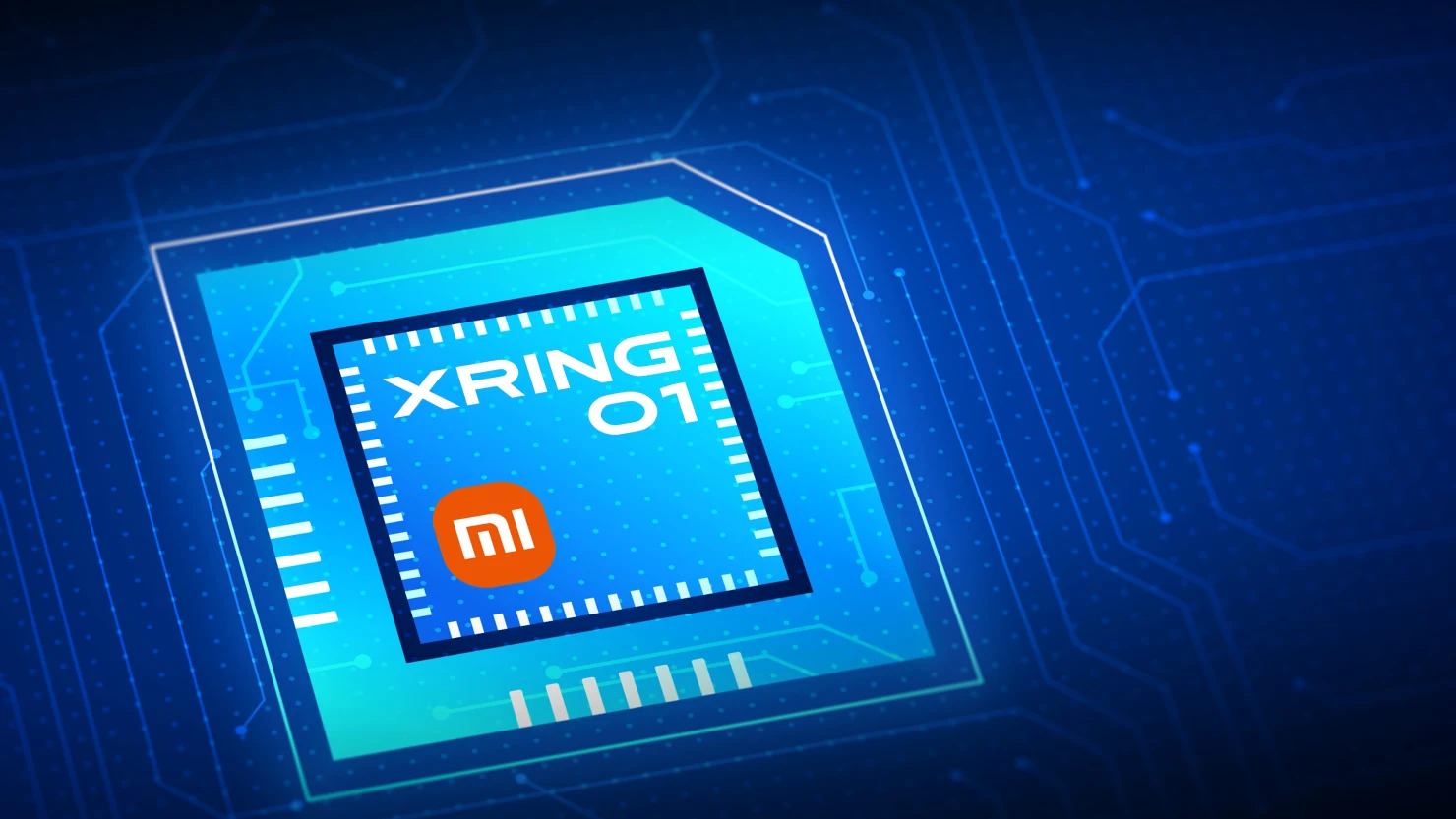

Xiaomi has announced a major investment plan to strengthen its chip development capabilities, committing at least 50 billion yuan (approximately $6.9 billion) over the next decade. The move reflects China’s broader ambition to cultivate home-grown semiconductor technologies in response to ongoing geopolitical tensions and restrictions imposed by the United States on chip exports to Chinese firms.
The investment, set to begin in 2025, underscores Xiaomi’s renewed focus on building proprietary system-on-chip (SoC) technologies. CEO Lei Jun revealed the company’s plans in a post, noting that Xiaomi is set to unveil its latest chip, the Xring O1, later this week. This chip will serve as the core component in the company’s upcoming smartphone launch, signaling a major shift in Xiaomi’s technology strategy.
The Xring O1 is built on a cutting-edge 3-nanometer process, making it one of the most advanced semiconductors in the market. This puts it on par with chips such as Apple’s A18 Pro, used in the latest iPhone models. SoCs integrate several critical components, including processing units, memory, and wireless connectivity modules, into a single chip, optimizing performance and efficiency.
Historically, Xiaomi has relied on U.S.-based Qualcomm to supply chips for its premium smartphones through the Snapdragon lineup. While Xiaomi is not expected to end this relationship immediately, the introduction of the Xring O1 suggests a long-term plan to gradually increase self-reliance in chip production and reduce dependency on foreign suppliers.
This development also marks Xiaomi’s return to in-house chip design after a multi-year hiatus. The company previously launched its first SoC, the Surge S1, in 2017. However, due to challenges in the highly complex and capital-intensive chip industry, further development was temporarily suspended. Since then, Xiaomi has continued producing other semiconductor components, such as those focused on power management and image processing, but the Xring O1 represents a renewed focus on core smartphone technology.
Very few global smartphone manufacturers have the resources and expertise to design their own SoCs. Notable exceptions include Apple, Samsung, and Huawei. Xiaomi’s strategic investment could enable it to offer a more tightly integrated hardware-software experience, improving performance and differentiation across its product lines.
With plans to unveil a new smartphone, tablet, and electric vehicle at its upcoming event, Xiaomi is clearly signaling its broader ambitions across tech sectors, all underpinned by a more robust and independent semiconductor strategy.
READ MORE: