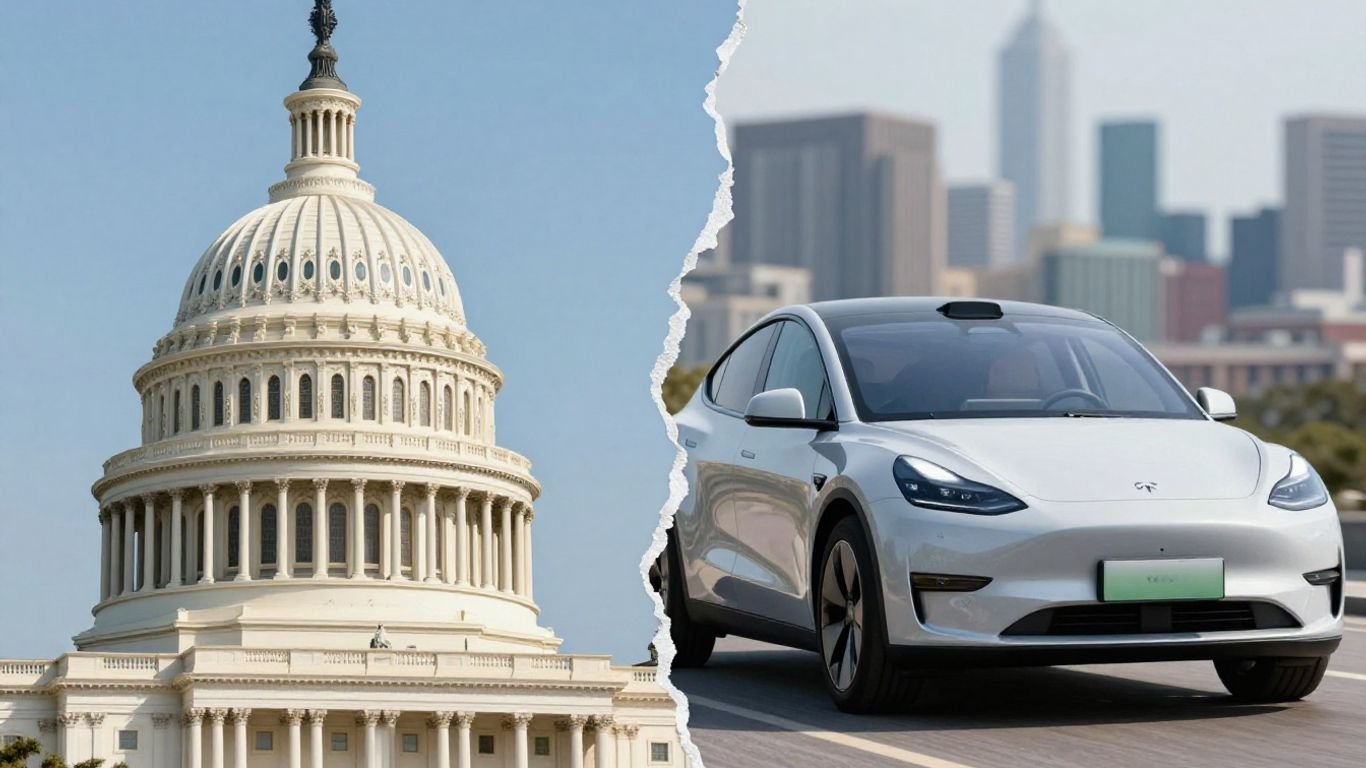

U.S. lawmakers are pushing for a significant expansion of restrictions on Chinese automotive products, proposing a comprehensive ban that would extend beyond vehicle imports to include technology, software, and partnerships. This move signals a hardening stance against Chinese automakers in the American market, citing national security and fair competition concerns.
Senator Bernie Moreno (R-OH) announced his intention to introduce legislation next month that would significantly toughen the existing U.S. government ban on Chinese automakers. This proposed bill aims to create a zero-access scenario for Chinese vehicles in the American market, covering hardware, software, and any potential partnerships. Moreno explicitly stated, “There will not be a Chinese automobile here,” drawing a parallel to the U.S. restrictions on Chinese telecommunications giant Huawei.
The push for a wider ban is rooted in national security concerns, particularly regarding the data collection capabilities of connected vehicles. The Biden administration already implemented a regulation in January 2025 that effectively banned Chinese passenger vehicles due to these security risks. U.S. carmakers and trade groups have voiced strong support for these measures, urging the government to maintain strict barriers against Chinese imports. They have also called for preventing Chinese manufacturers from circumventing restrictions by establishing production facilities within the U.S.
Senator Moreno is encouraging allies, including Canada, Mexico, European nations, and Latin American countries, to adopt similar restrictions, hinting at a potential coordinated global strategy. However, responses from allies vary. While the European Union has imposed tariffs on Chinese electric vehicles, Canada has a different agreement allowing for the import of Chinese electric vehicles. China has strongly condemned the U.S. proposal, labeling it as “trade protectionism” and “economic coercion” that violates the principles of a market economy and fair competition. The Chinese Embassy in Washington stated that the U.S. has erected obstacles and discriminatory policies against Chinese-made cars.
This intensified debate over Chinese auto imports highlights growing global tensions surrounding technology, data security, and international trade in the automotive sector. As vehicles become increasingly reliant on software and connectivity, concerns over data privacy and potential cyber threats are paramount. If enacted, Moreno’s proposed legislation could significantly reshape global automotive supply chains, partnerships, and market strategies for manufacturers worldwide.