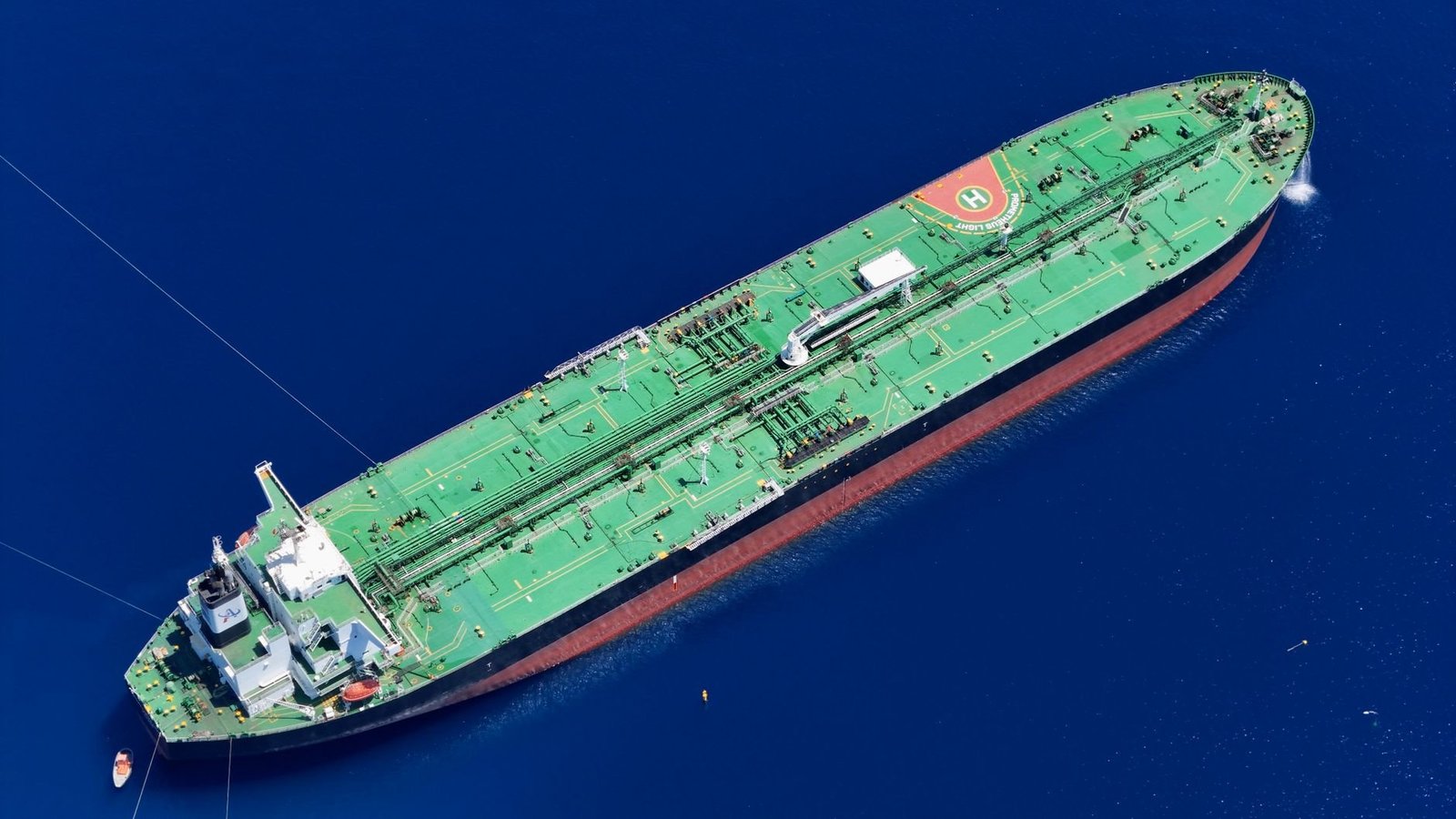

As oil tanker traffic through the Strait of Hormuz slows, an obscure freight fund has become one of Wall Street’s biggest winners of the year, climbing roughly 3,600% since January. The Breakwave Tanker Shipping ETF (BWET), which tracks the price of shipping crude oil, was the best-performing non-levered fund in the United States as of early September, according to Morningstar data through Sept. 11.
Unlike most oil-linked funds, BWET does not follow the price of crude itself. It is the only ETF that tracks the future cost of moving oil, giving investors exposure to tanker futures without trading in the futures market directly. Year over year, rates on the Middle East tanker routes it follows are up close to 500%, per the fund’s biweekly tanker report on Sept. 8.
“It has very little to do with the oil price itself or its actual volume and depends mainly on geopolitics,” said John Murillo, chief business officer of B2BROKER, which supplies trading infrastructure to financial institutions. Investors are betting on how expensive it is to move a barrel from the Middle East to consumers, he said, “and it became very expensive to do so after the crisis in the Strait of Hormuz began.”
The pressure has grown as the U.S.-Iran conflict continues to disrupt regional energy flows. Iran-backed Houthi rebels seized Yemen’s port of Mocha last week, giving the militia a base to disrupt Red Sea traffic that had served as an alternate to the Persian Gulf. Saudi Arabian officials also ordered a precautionary shutdown of the kingdom’s East-West crude oil pipeline after drone attacks launched from Iraq.
The war is not the only driver. Tariffs and widespread drought have scrambled traditional routes, with low water levels stranding ships at ports in Panama and Europe, said Kyle Peacock, principal at Peacock Tariff Consulting. “Companies are jumping at prices that might be 300 percent higher than they were paying, but that is the only ship available,” he said. “The shipping companies may have to route a ship farther, but their income is increasing tenfold.”
Peacock said urgency has upended how carriers choose routes, with capacity now going to the highest bidder rather than to long-standing clients. Rerouting driven by tariffs has added pressure; one of his clients moved a manufacturing plant from China to Hungary to sidestep duties, opening new trade lanes that draw from an already thin pool of vessels.
Relief will be slow, he said, arriving only as ships marooned in geopolitical choke points and low-water ports return to service. In the longer term, a large order book will ease the shortage, but new vessels will take 18 to 36 months to hit the seas, with an estimated 200 or more under construction worldwide. “There is always a reserve of diesel, there is always a reserve of gas, but there isn’t a reserve of vessels,” Peacock said.