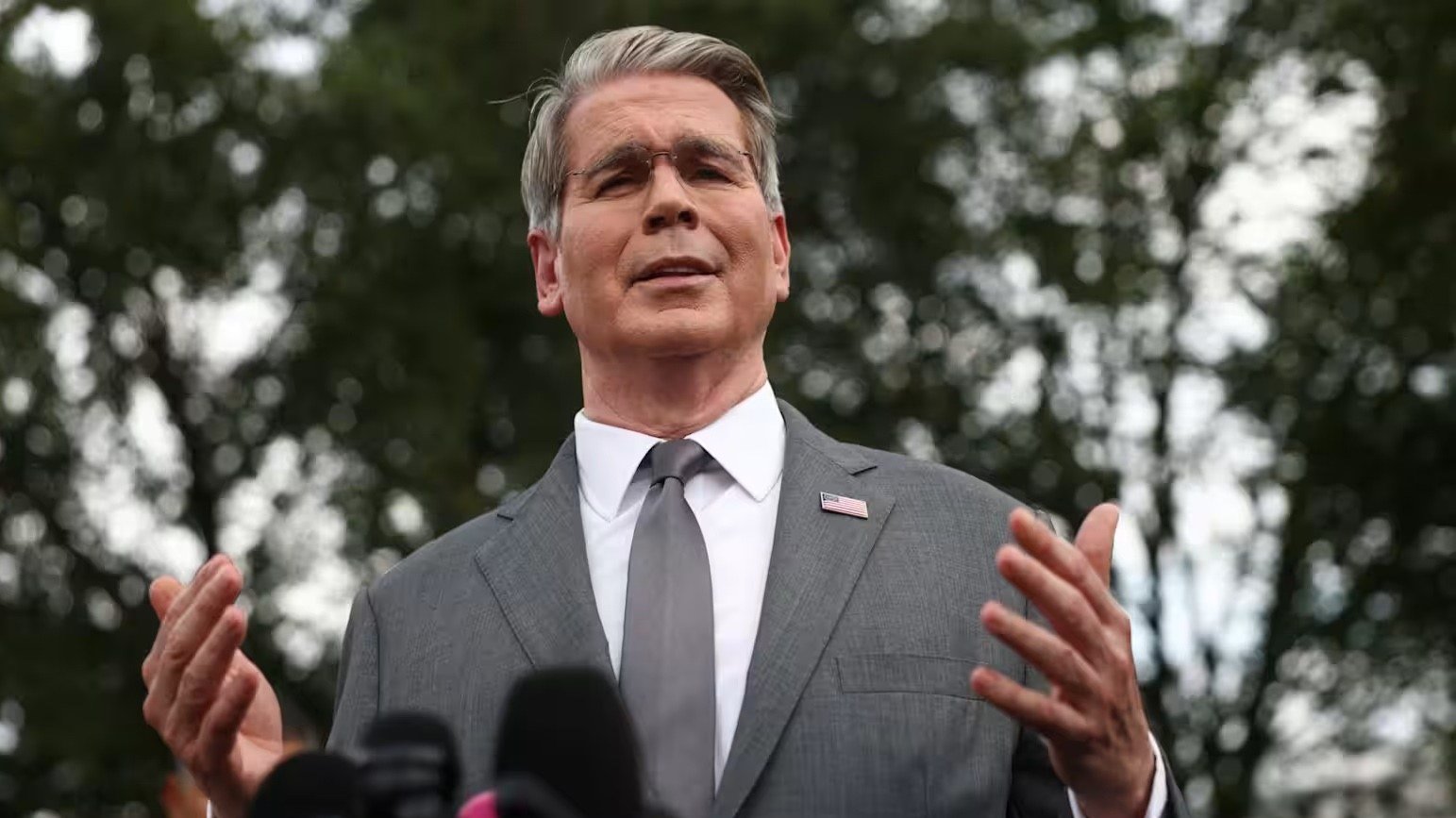

US Treasury Secretary Scott Bessent called on Japan to raise interest rates and chart a clear path toward fiscal sustainability, telling CNBC on Monday that he expects the country’s government and central bank to act in ways that lift the yen.
Bessent said he believes the Bank of Japan will move to combat the currency’s weakness, pointing to a strong likelihood of a rate increase as soon as September. “I have information that the market doesn’t have,” he said, expressing confidence that Japanese policymakers would tighten monetary settings in the months ahead.
The comments followed remarks a day earlier, when the Treasury chief said he expected BOJ Governor Kazuo Ueda to “do the right thing” on monetary policy to counter the yen’s slide. A weaker yen makes Japanese exports cheaper abroad but raises the cost of imported food and energy for households at home.
Bessent also pressed Tokyo to demonstrate how it intends to steady its public finances, according to Japanese broadcaster NHK. The call links two long-running concerns: the yen’s persistent weakness against the dollar and Japan’s heavy government debt burden, among the largest in the developed world.
The BOJ has spent years unwinding its ultra-loose stance, having begun signalling a shift toward higher rates as inflation took hold. Yet the pace of tightening has stayed cautious, with the central bank weighing domestic price pressures against trade and growth risks.
For consumers on both sides of the Pacific, the exchange rate matters directly. A firmer yen would ease the sting of imported goods for Japanese shoppers, while a weaker one keeps Japanese cars and electronics competitive in American showrooms. Currency swings also ripple through travel budgets and investment returns.
The remarks place a US official squarely in the middle of another country’s monetary debate, a step Washington usually treads carefully around. Central bank independence remains a sensitive principle, and Japanese authorities have historically resisted framing rate moves as responses to foreign pressure.
Markets will watch the BOJ’s coming policy meetings closely for any confirmation of Bessent’s expectations. Should a September hike materialise, it would test whether Tokyo’s gradual normalisation can lift the yen without choking off a fragile domestic recovery.