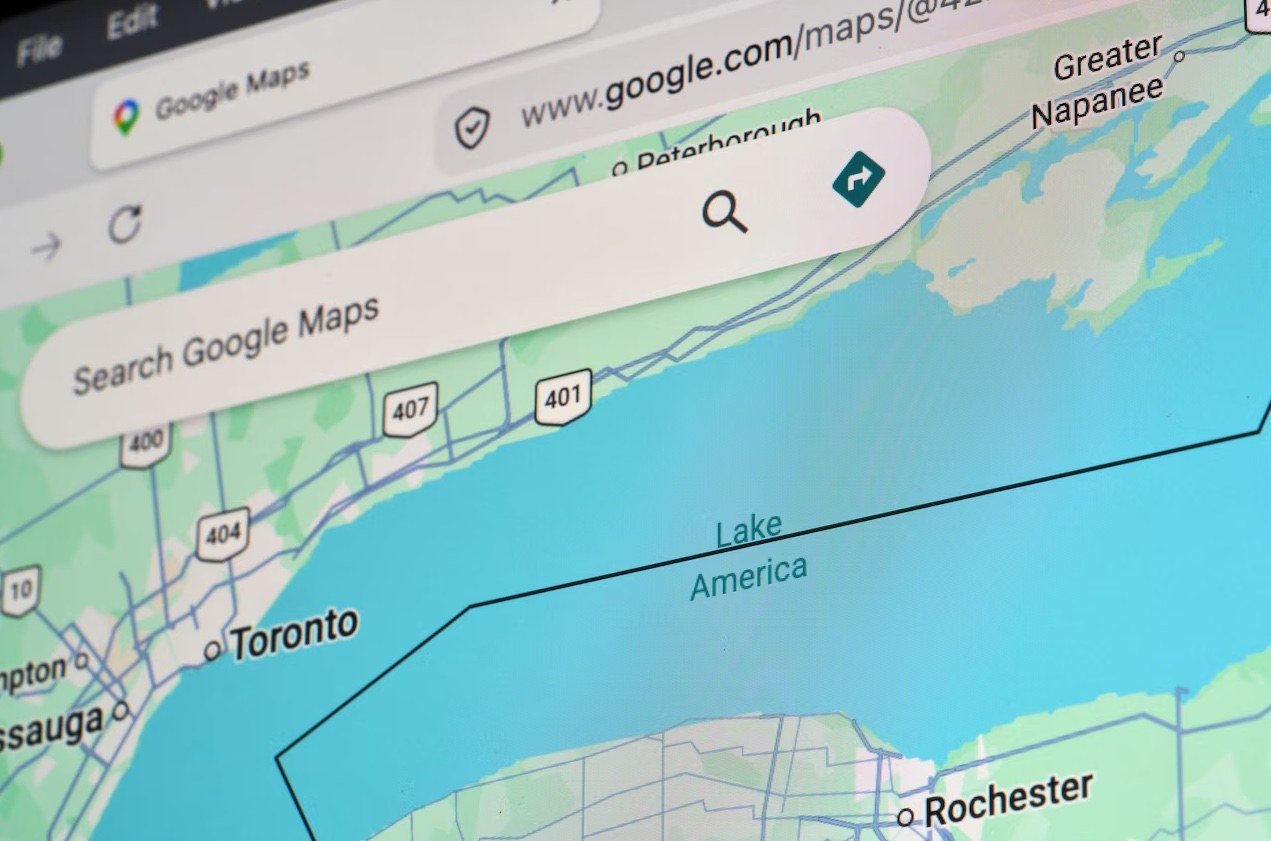

MapQuest reached the top of Apple’s most-downloaded US app chart after publicly refusing to rename Lake Ontario, the navigation service confirmed on September 1. The app overtook both Google Maps and Apple Maps, according to a ranking first reported by TechCrunch.
The surge followed President Donald Trump’s August 27 executive order directing federal agencies to refer to the smallest of the Great Lakes as “Lake America.” The directive came during a trade dispute with Canada, which shares the lake’s shoreline.
MapQuest, one of the earliest online mapping tools, responded to the order with a blunt public message stating it would not comply. “We’re not changing it,” the company said. The dismissive stance appeared to drive a wave of downloads from users opposed to the renaming.
The response from larger rivals has been less uniform. Google Maps now displays different names depending on a user’s country, showing the alternate label to some American users while keeping Lake Ontario elsewhere. The company earlier indicated it would reflect the change for US-based users in line with its practice of following official government sources.
Apple’s position remains less clear. A Trump administration official said the president had “directly” contacted the company about updating its maps. Apple has not publicly detailed whether it intends to alter the lake’s name in its software.
Lake Ontario is the smallest of North America’s five Great Lakes by surface area and borders the US state of New York and the Canadian province of Ontario. Its naming carries cross-border implications given the shared waters and the ongoing trade friction between Washington and Ottawa.
The renaming push follows a pattern of similar moves by the Trump administration, including an earlier proposal to apply a new label to the Strait of Hormuz. Federal agencies are bound by the executive order, but private technology firms face no legal obligation to adopt the terminology.
The divergence has produced inconsistent map labels across platforms and regions, leaving users to encounter different names for the same body of water depending on their device and location. MapQuest’s climb to the top of the download chart reflected consumer reaction to that split.