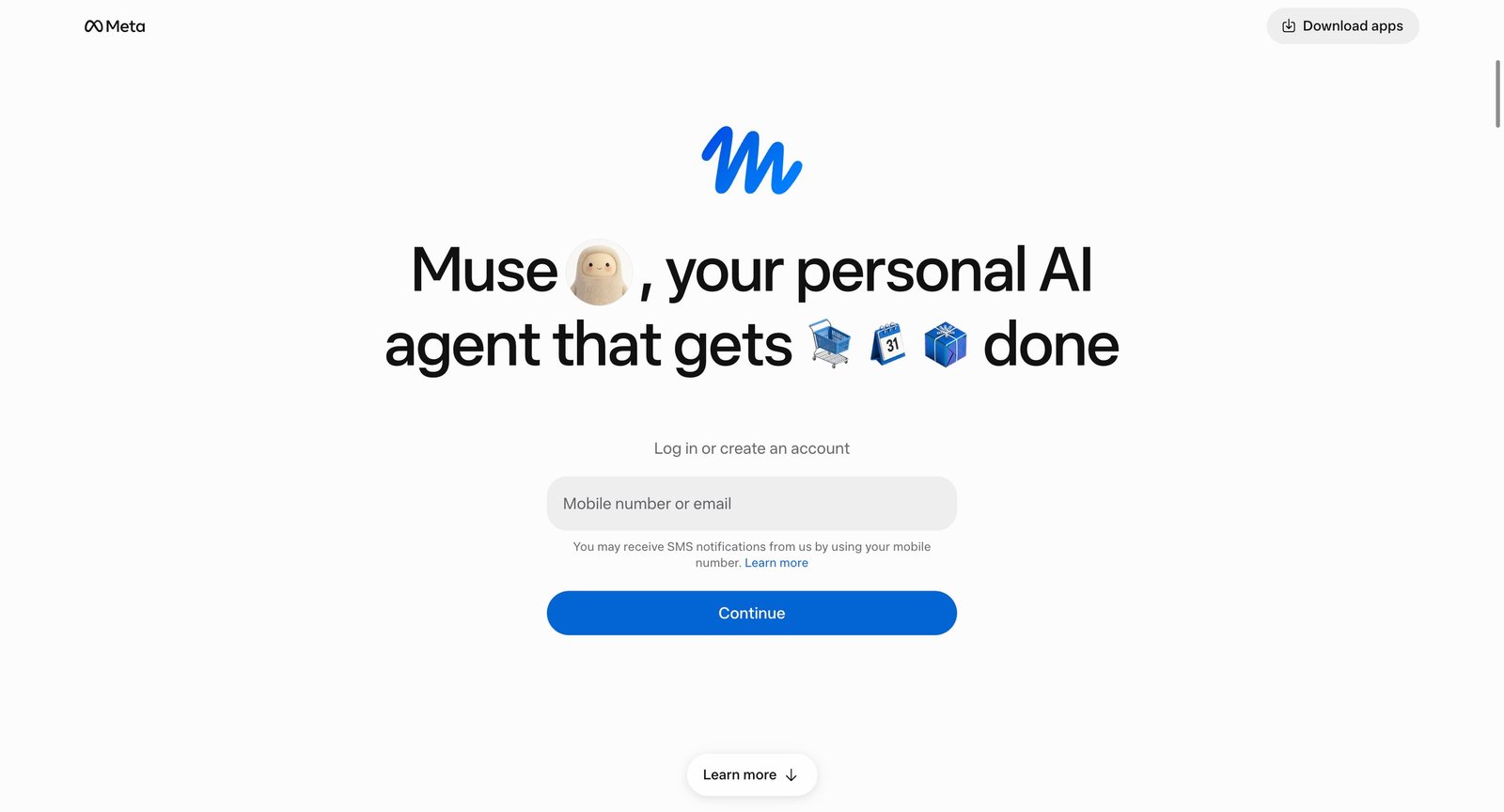

Menlo Park was the setting on September 8 for Meta’s introduction of Muse, an autonomous personal assistant capable of acting across other applications, as the company confronted renewed scrutiny over user privacy and safety.
The Muse app arrives in three tiers: a free version, a $20 monthly plan, and a $100 monthly plan for heavier use. Access scales with the higher tiers, according to the pricing structure Meta disclosed at launch.
Unlike earlier chatbots, Muse is designed to take actions rather than only answer questions. Chief Executive Mark Zuckerberg said the assistant can access connected apps to send emails and complete payments on a user’s behalf, moving Meta into the category of agentic AI that operates with limited human input.
Meta shares wavered following the announcement, reflecting investor caution over the cost of the company’s AI expansion and the risks tied to agents that transact and communicate independently.
The release adds to Meta’s broader push into consumer artificial intelligence. This year the company shipped a stand-alone AI app to compete with ChatGPT and issued open-source models under the Muse family, part of a spending program the firm has projected at tens of billions of dollars. Earlier commitments included a multibillion-dollar AI investment plan for 2025.
The launch coincides with mounting public questions about how Meta handles personal data. An assistant that reaches into email accounts, payment systems and other services widens the volume of sensitive information flowing through the company’s models, raising concerns among privacy advocates about consent and oversight.
Safety is a second pressure point. Agents that execute financial transactions carry the risk of erroneous or unauthorized actions, and regulators in several markets have begun examining how such tools should be governed.
Meta positions Muse as a productivity tool that reduces routine digital tasks. The company has previously argued that open models and broad access prevent AI capability from concentrating in a few firms, a theme Zuckerberg has repeated in past product briefings.
The rollout places Meta alongside Google, OpenAI and Anthropic, each racing to deploy assistants that move beyond conversation into direct action across a user’s accounts and devices.
Meta has not detailed the full list of third-party services Muse can control at launch, nor the safeguards governing payment authorizations. The tiered app is now available to users under the pricing terms set out by the company.