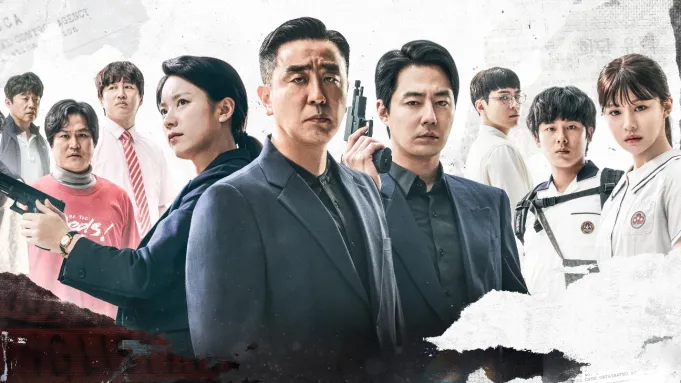

Korean dramas (K-dramas) are globally celebrated for their predictable charm and emotional resonance. Yet, such narratives often risk repetitiveness, prioritizing comfort over originality. However, recent releases, including “Mask Girl” from Netflix and “Moving” on Disney+, have demonstrated a refreshing deviation from the norm.
Where “Mask Girl” tantalized viewers with its evolving episodes before petering out at the climax, “Moving” transcended expectations. The series brilliantly adapted Kang Full‘s webcomic, bringing to life a vast ensemble of multidimensional characters, each having their distinctive moments under the spotlight.
“Moving” dives deep into the lives of high school students, Kim Bong-seok, Jang Hui-soo, and Lee Gang-hoon, unearthing their mysterious powers and intertwining relationships. The storyline elegantly juxtaposes the past, delving into their super-powered parents’ adventures: Jang Ju-won, Lee Mi-hyun, Kim Doo-sik, and Lee Jae-man.
The climactic convergence of these timelines over a captivating five-episode finale set at Jeongwon High School is the series’ magnum opus. Here, characters, including the affable bus driver Jeon Gye-do, are pitched against a battalion of super-powered North Korean troops led by the daunting Kim Deok-yoon.
However, what truly sets “Moving” apart is its ability to blur the lines between heroes and villains. While the battle commences with a typical good vs. evil premise, the narrative shifts, casting the North Korean soldiers in a new light. The genius of “Moving” lies in its capacity to humanize even its antagonists, enriching the drama’s depth and showcasing the multidimensionality of its characters.
In the face of adversity, surprising relationships blossom. A poignant moment arises when Hui-soo encounters a distraught North Korean soldier, Kwon Yong-deok, who bears the scars from a confrontation with her father. Such unexpected interactions tug at the viewers’ heartstrings, grounding the fantastical tale in genuine human emotion.
But as the plot thickens, we realize the real adversaries are not always visible. Shadows of bureaucracy and unseen puppet masters loom large, represented by the enigmatic figures of Min Yong-jun from the National Intelligence Service and his North Korean counterpart, Kim Hyun-sung. But these antagonists are mere proxies, with greater powers operating behind the scenes. The series delves into the stark realities of power dynamics, portraying the devastating human costs of political machinations.
Yet, no narrative, no matter how brilliant, can shine without its actors. “Moving” boasts stellar performances, with Ryoo and Han portraying their roles with a perfect blend of might and tenderness. Their characters demonstrate that true heroism lies not just in superpowers but also in the love and sacrifice for family.
The grandeur of the show’s battles, including a cinematic face-off in a North Korean palace led by Zo, showcases the drama’s commitment to high-octane action. Yet, in a strategic move, the series lets other characters helm the finale, offering a well-earned victory and a satisfying conclusion.
As with most contemporary dramas, a continuation is hinted at, but “Moving” tactfully places this after the credits. This decision allows viewers to relish the triumphant ending fully.
In conclusion, “Moving” is a testament to K-drama’s potential evolution. By breaking away from traditional storytelling boundaries, it offers a refreshing, deep, and profoundly moving viewing experience.
READ MORE: