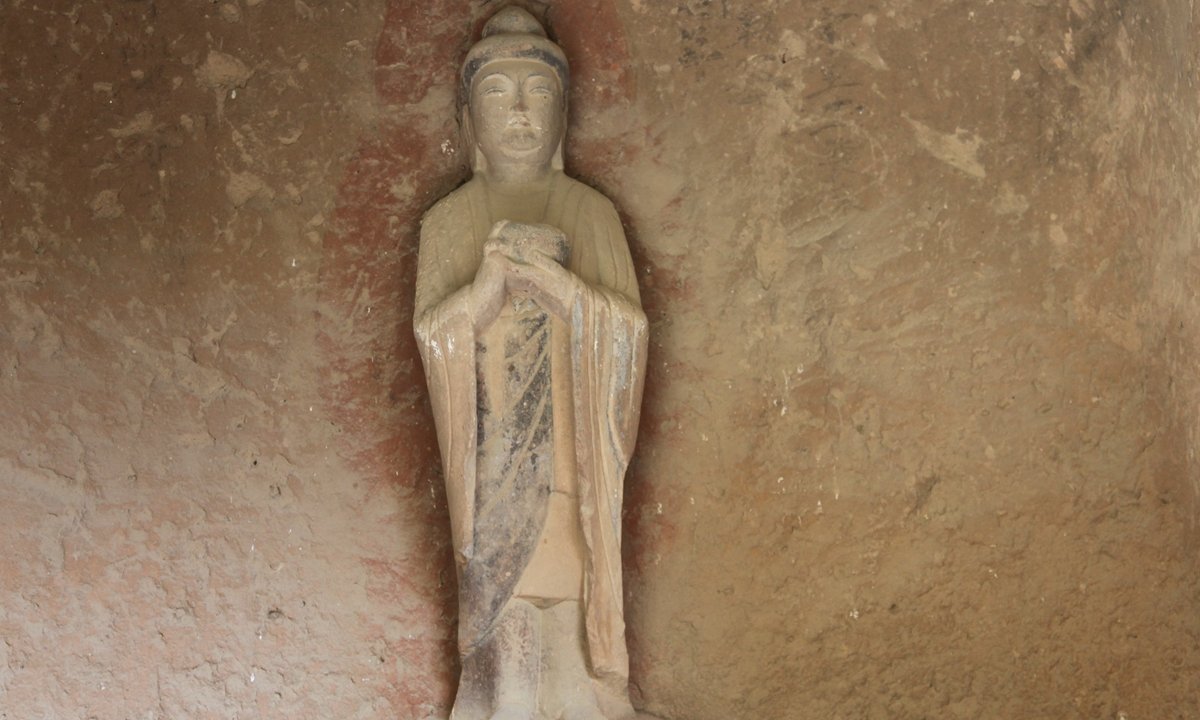

The 6.2-magnitude earthquake that struck Jishishan county in the Linxia Hui Autonomous Prefecture, located in Northwest China’s Gansu Province, has raised significant concerns for the region’s cultural heritage. The quake, centered near some of China’s most treasured historical sites, notably impacted the Bingling Temple Grottoes, a site of immense cultural and historical value.
Bingling Temple Grottoes, recognized as part of China’s first batch of cultural relic sites, experienced the loosening and falling of several stones due to the earthquake. Although no casualties were reported at the grottoes, the incident has undoubtedly raised safety concerns. Witnesses at the site reported seeing stones rolling down, raising questions about the potential damage to the grottoes’ intricate sculptures.
Xu Yitao, a Beijing-based archaeologist specializing in ancient architecture, expressed concern over the possible damage to the grottoes. If the dislodged stones were indeed parts of the statues, it could indicate substantial harm to the main bodies of these ancient sculptures. He warned that a large earthquake could potentially compromise the mountain that supports the statues, posing a significant threat to the site’s structural integrity.
Diao Changyu, vice president of the Institute of Cultural Heritage at Zhejiang University and an expert in cave relic protection, highlighted the need for a thorough investigation to ascertain the extent of the damage. He pointed out that while cultural relics in grottoes are usually inside the caves, some stones were found outside, suggesting the need for a detailed assessment.
Diao also emphasized the vulnerability of grottoes to seismic activities, necessitating increased budgets and technical support for their protection. Bingling Temple, with its rich history dating back 1,600 years, houses 216 grottoes, over 800 Buddhist statues, and 56 pagodas, making it a site of significant cultural importance.
Following the earthquake, the temple was closed to the public, and the timeline for its reopening remains uncertain. This closure underscores the delicate nature of preserving such ancient structures amid natural disasters.
Concerns extended to another national-level cultural heritage site, the Mogao Caves in Dunhuang, located about a 13-hour drive from Bingling Temple. Fortunately, the Mogao Caves, a renowned UNESCO World Heritage Site, were reported to be safe from the earthquake’s impact. Customer service staff at the caves assured that no damage had occurred, and the site continued to accept public reservations.
Preventative measures at the Mogao Caves include a model to predict areas most vulnerable to earthquakes, allowing for timely protective actions. Additionally, many museums have adopted smart anti-seismic equipment to stabilize cultural relics during earthquakes, ensuring their safety.
However, the Jishishan Museum, situated at the earthquake’s epicenter, was not spared. The museum, which houses a collection of 1,740 cultural relics, including jade, pottery, and ancient coins, experienced impacts from the quake. Museum staff are currently assessing the condition of their collection, particularly focusing on second- and third-tier relics.
This earthquake serves as a stark reminder of the challenges in preserving cultural heritage in the face of natural disasters. It highlights the need for continued vigilance and the implementation of advanced protective measures to safeguard these invaluable pieces of history for future generations.
READ MORE: