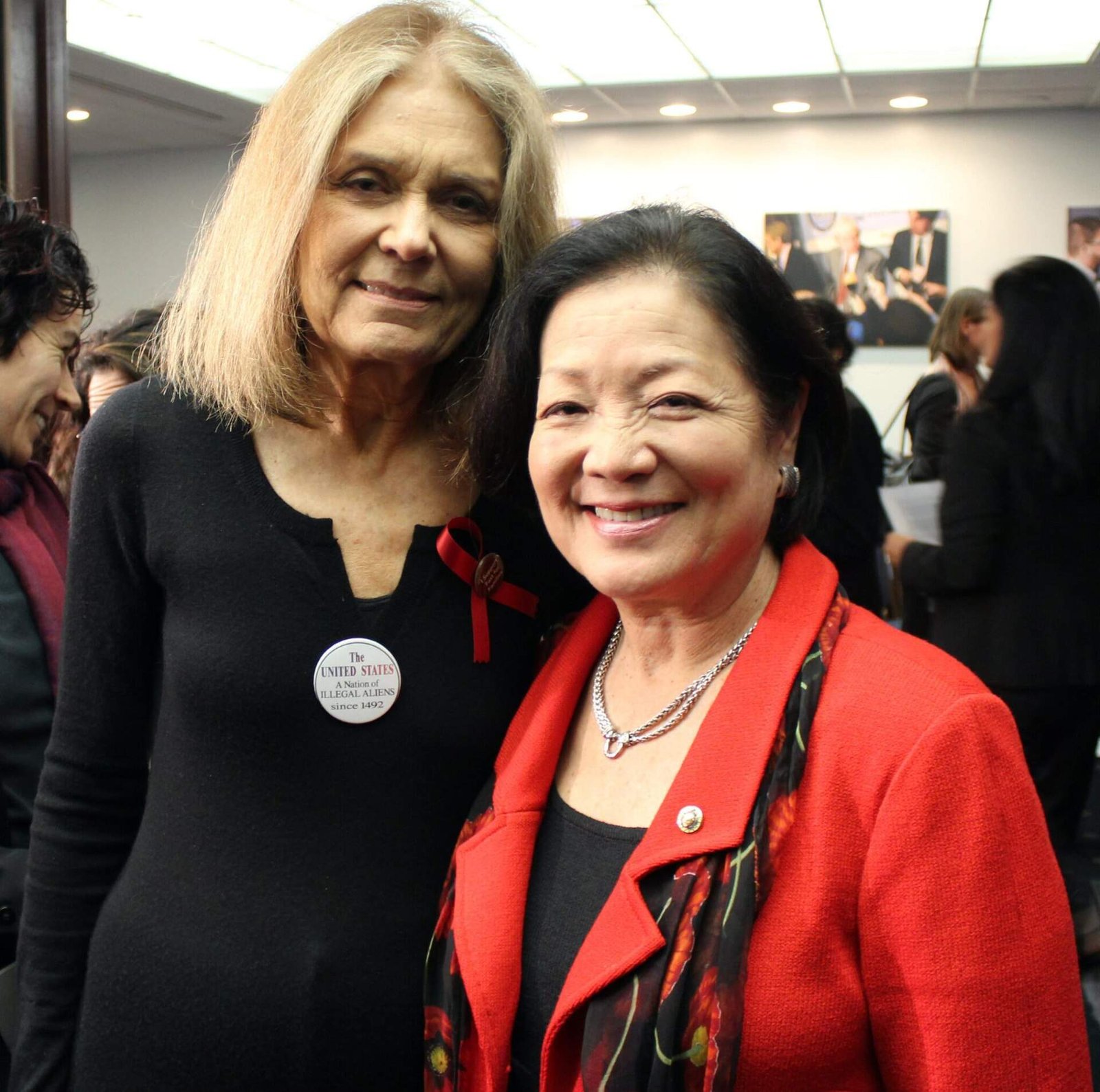

Gloria Steinem, the American journalist and activist whose writing and organizing helped reshape the modern women’s movement, died on Wednesday at her home in New York City. She was 92.
Her foundation announced that she “passed away peacefully” at her Manhattan residence, “surrounded by some of the many who loved her,” in a statement shared to her social media pages. No cause of death was given.
Recognizable for her streaked hair parted down the middle and oversized aviator glasses, Steinem became one of the most visible faces of American feminism. She spent much of her adult life on the road, addressing college campuses, community centers, rallies and marches across the United States and beyond.
She first drew wide attention in 1963 with an undercover exposé written after she worked as a Playboy Bunny, documenting the conditions and treatment women faced at the club. The piece established her as a fearless reporter willing to place herself inside the stories she covered.
In 1971 she co-founded Ms. Magazine, which became a defining publication of second-wave feminism and gave the movement a national platform. Through the magazine, her books and decades of journalism, she confronted many forms of discrimination and argued for expanded rights for women.
Her advocacy carried her far past the borders of the United States, and she was frequently cited as an influence on women’s rights campaigns worldwide. In 2021 she appeared at the Princess of Asturias Awards ceremony in Oviedo, northern Spain, one of many international honors she received in her later years.
Steinem belonged to a generation of women whose public lives redrew expectations around gender, work and family. Her death arrives as a wave of figures who shaped 20th-century culture and activism have passed, a shift felt across journalism and the arts alike.
Tributes poured in from writers, activists and public figures who credited her with opening doors that a later generation would walk through. Her combination of reporting and organizing made her unusual among her peers, at once chronicler and participant in the causes she championed.
Her influence extended into popular culture, where women who broke barriers have increasingly been commemorated in the ways that earlier generations of activists rarely were.
Steinem’s body of work — the magazine, the essays and the countless speeches — leaves a record of a movement built over more than half a century, and a life that placed her at its center from the 1960s onward.