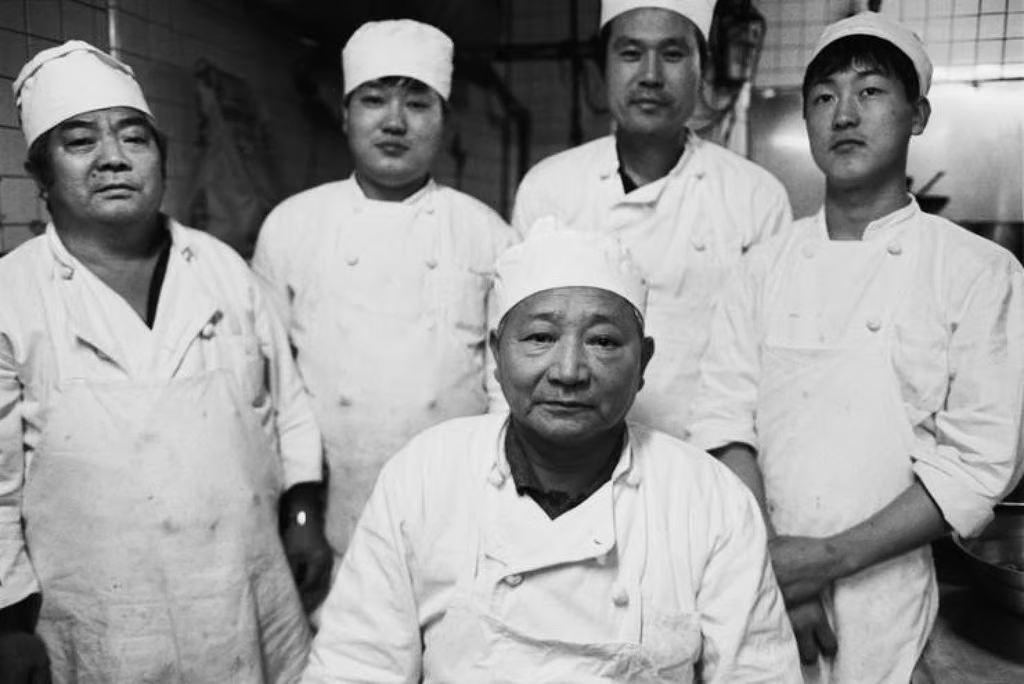

In the 1980s, photographer Kim Bo-sub frequently visited Incheon’s Chinatown in South Korea, drawn to its unique atmosphere and rich Chinese heritage. The area, located in the Jung district, was once a bustling hub of Chinese restaurants and businesses, but by the time Kim arrived, many had closed or been abandoned. Despite its decline, Chinatown’s distinctive Chinese character fascinated Kim. From mahjong houses to traditional Chinese buildings, the area offered glimpses into a culture deeply rooted in Incheon’s history.
Kim’s connection with the Chinese community began in the mid-1980s when he was asked by a Chinese woman to take portrait photos of her mother. This experience sparked his lifelong interest in documenting the lives of Chinese immigrants in Korea. Over the years, Kim captured images of the Chinatown district and its people, delving into their customs, traditions, and everyday life.
In the early 1990s, the Chinese community in Korea underwent significant change due to the establishment of diplomatic relations between South Korea and China. Two distinct groups of Chinese immigrants emerged: those who had arrived before 1992, primarily as economic migrants, and those who arrived after, often for educational or work opportunities. The early Chinese immigrants, many from Shandong province, played a crucial role in introducing Shandong cuisine to Korea, with dishes like jjajangmyeon, a popular noodle dish, becoming a staple of Chinese-Korean food culture.
Kim’s work also explored the painful traditions that some of these immigrants carried with them. In one poignant moment, Kim photographed an elderly Chinese woman who had endured foot binding, a centuries-old practice that left her feet deformed. This encounter, along with other personal connections Kim made in Chinatown, deepened his understanding of the Chinese experience in Korea.
In recent years, Incheon’s Chinatown has undergone a transformation. Urban renovations aimed at attracting tourists have altered the district’s original character, replacing authentic elements of Chinese culture with a version tailored to Korean perceptions of China. While the facelift has revitalized the area, Kim laments the loss of the true cultural identity that once defined the neighborhood.
Kim’s photographic journey, spanning over four decades, culminated in his recently published photo book, Chinese in Korea. The book offers a powerful visual record of Incheon’s Chinatown before its transformation, preserving the memory of a community whose cultural influence shaped the city’s history.
READ MORE: