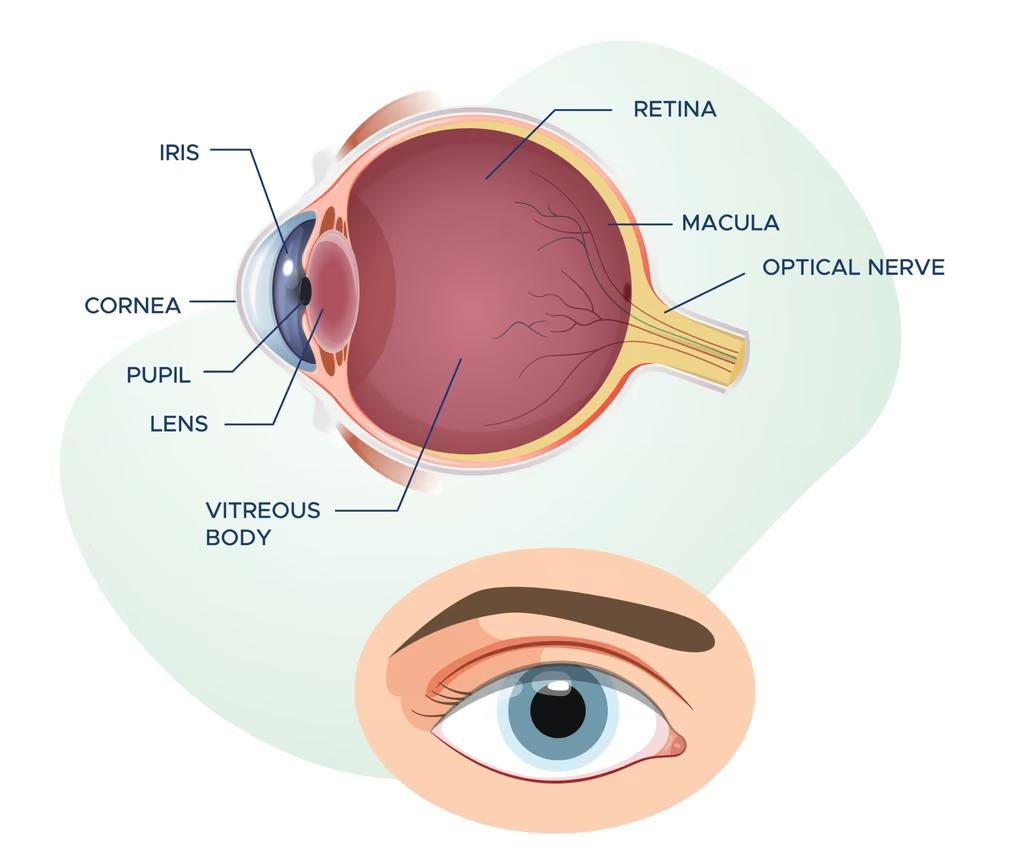

After receiving a reminder for a routine eye test, I scheduled an appointment, thinking it was a good excuse to get a new pair of prescription sunglasses. The optometrist’s questions felt more probing than before. He asked about blurred vision and tested my eyesight using a grid, checking whether straight lines appeared distorted.
Following the scans, he delivered an unexpected diagnosis: early age-related macular degeneration (AMD). Seeing my concern, he reassured me, saying, “It’s very common.” But I could only think of my grandmother, who suffered from AMD, eventually losing her ability to read, watch television, or even recognize faces easily.
AMD is a leading cause of vision impairment, affecting 196 million people worldwide. It primarily impacts the macula, the small area at the back of the eye responsible for central vision, color recognition, and fine details. Optometrist Dr. Andy Meau explains that early AMD is identified by drusen, small yellowish deposits of protein and fat that form in the macular area. While many people with drusen maintain normal vision, larger deposits increase the risk of developing AMD.
There are two types of AMD: dry and wet. Dry AMD, my diagnosis, progresses slowly, often without noticeable symptoms for years. About 10% of cases develop into wet AMD, where abnormal blood vessels grow into the macula, leading to rapid vision loss. Symptoms of wet AMD include wavy lines, distorted faces, or blank spots in central vision.
Routine optical coherence tomography (OCT) scans are recommended to monitor drusen progression. Annual tests are sufficient for those without symptoms, but for those with larger drusen, more frequent check-ups—every six months—are advised.
Both genetics and lifestyle play a role in AMD. While 20% of cases have a family history, smoking, poor diet, and lack of exercise are significant risk factors. A diet rich in omega-3s, vitamins, and antioxidants can help slow its progression.
Although there is no cure, treatment for wet AMD includes laser therapy and eye injections, which have been shown to stabilize or improve vision in many cases. The AREDS 2 study found that specific supplements, including Vitamin C, Vitamin E, lutein, zeaxanthin, zinc, and copper, may help slow AMD progression.
With this knowledge, I now understand what steps to take to maintain my vision. My diagnosis, while unsettling, has motivated me to adopt healthier habits, take supplements, and wear protective sunglasses—which, after all, was my original reason for scheduling the eye test.
READ MORE: