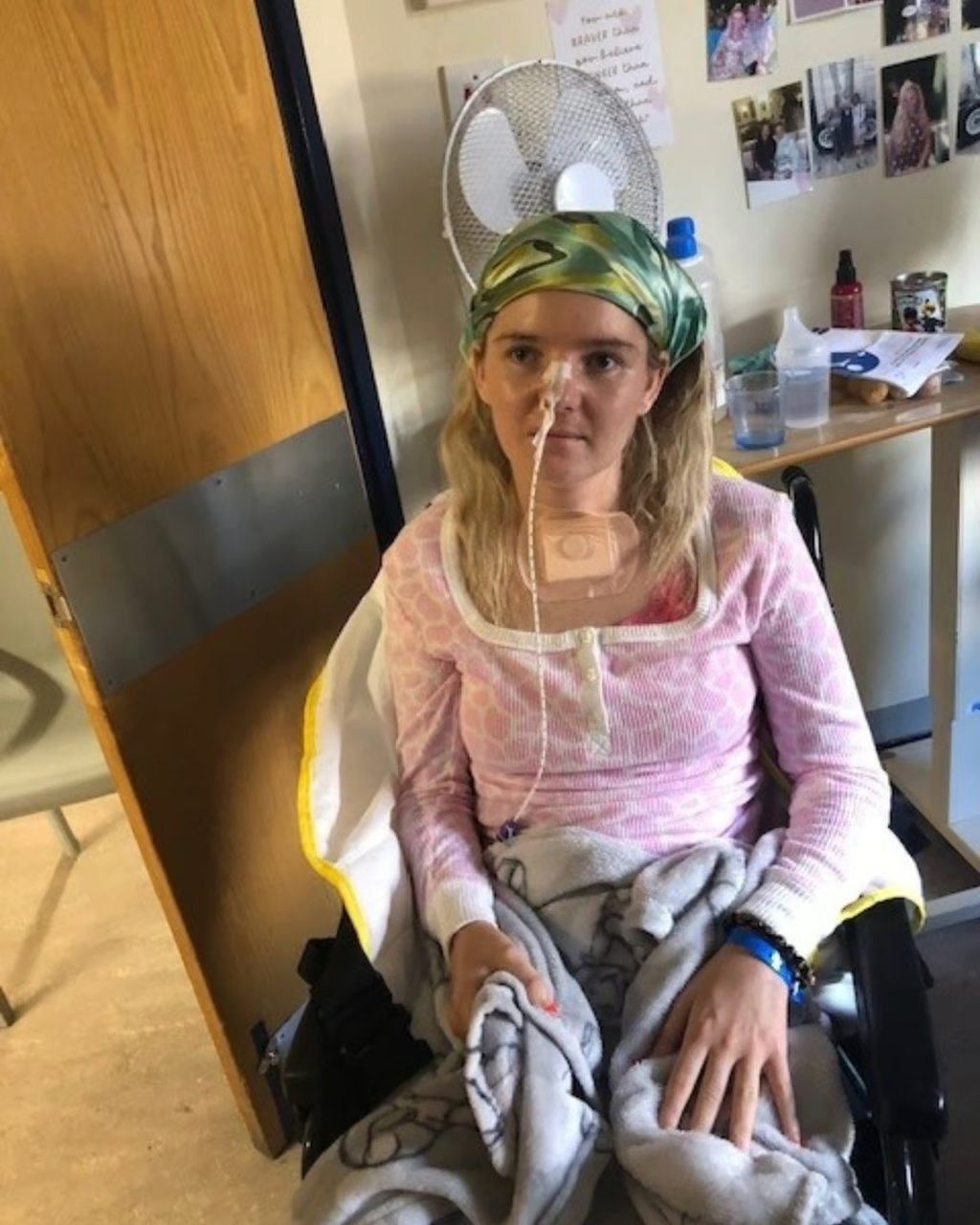

At just 24 years old, Summer Clarke’s life changed dramatically when she suffered a spontaneous brain haemorrhage. Doctors gave her only a 10 percent chance of survival and advised her family to prepare for the worst. Placed into an induced coma, Clarke clung to life while her loved ones watched helplessly. After two weeks, a slight movement in her finger marked the beginning of her fight back from the brink.
Once she regained consciousness, Clarke faced overwhelming challenges, including learning to walk, read, and recognise loved ones again. However, amid the struggle, one unexpected ability returned early: she could sing. Even before she could speak or identify her own mother, Clarke remembered lyrics to her favourite songs. One standout was “Proud Mary” by Tina Turner, which became a comfort and a symbol of her resilience.
Her experience is not uncommon. A new survey by the Stroke Association found that 35 percent of stroke survivors found it easier to sing than speak in the aftermath of their stroke. One-third of respondents reported losing their ability to speak, and 26 percent said singing or humming returned before spoken language. More than half reported that music helped with both communication and memory recovery.
This phenomenon is linked to how the brain processes language and music. While strokes can damage language centres, musical abilities are often located in different regions. For individuals with aphasia – a condition affecting language comprehension and expression – singing can bypass the damaged areas, allowing them to communicate through song.
Clarke’s story underscores the importance of these findings. Once a member of the British Airways cabin crew, she spent nine months in hospital re-learning daily functions. Her mother recalls how Clarke began by miming lyrics before progressing to full songs, even when other skills were still far from recovery.
Now 26, Clarke is lending her voice to the Stroke Association’s new Sing4Stroke campaign, which encourages people to raise funds through singing. The initiative supports the growing population of stroke survivors in the UK, now estimated at over 1.4 million. Through her remarkable journey, Clarke proves that even after profound trauma, the power of music can spark unexpected healing.
READ MORE: