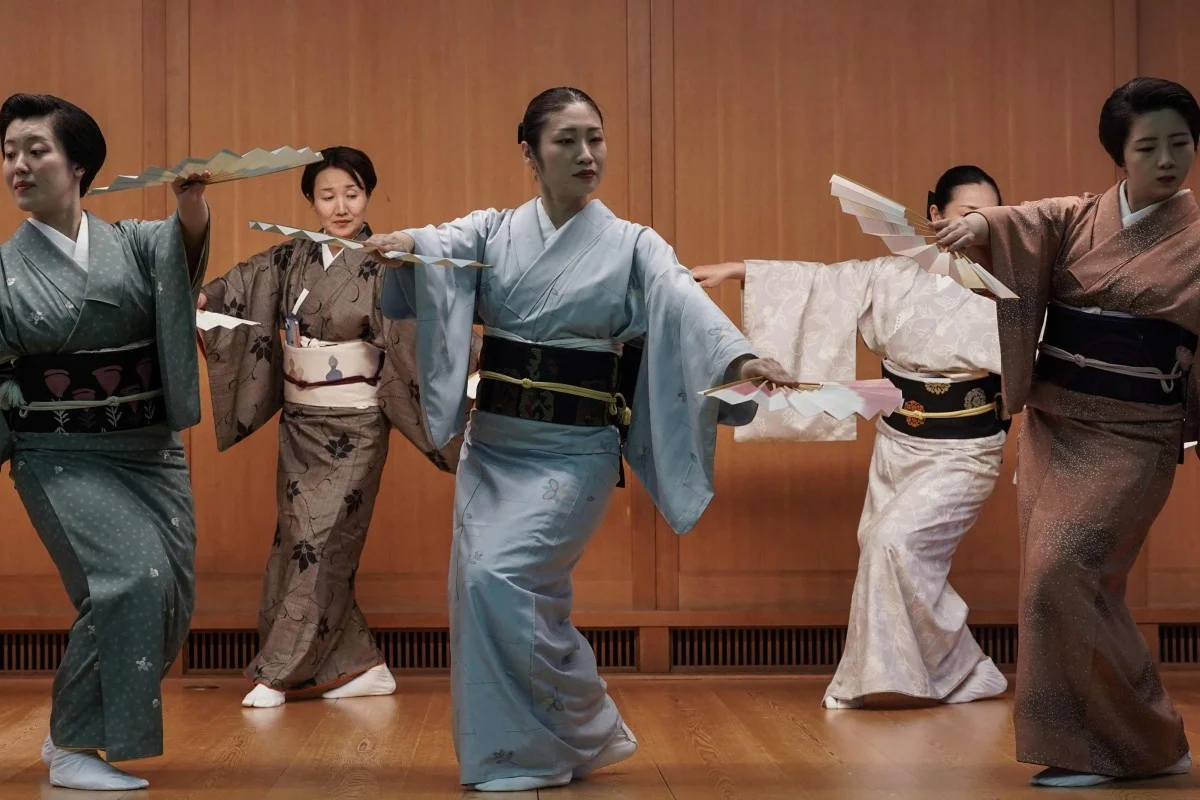

Gracefully moving across a wooden stage, geishas rehearse their performances in understated elegance—without their iconic white makeup or elaborate hairstyles. These rehearsals mark the lead-up to Tokyo’s century-old Azuma Odori festival, which runs through May 27 at the historic Shinbashi Enbujo Theatre. For one week, nearly 180 geishas from 19 regions of Japan, alongside Tokyo’s Shinbashi district performers, will captivate audiences with traditional dance, music, and storytelling in twice-daily shows.
Despite the mystique surrounding geishas, many still misunderstand their role. Contrary to popular misconceptions, geishas are not courtesans. They are highly trained artists, skilled in dance, music, and refined conversation. The term “geisha” translates to “person of the arts,” and in cities like Kyoto, geishas—or “geikos”—are especially revered for their dance, while those in Tokyo often specialize in singing and playing the samisen, a traditional three-stringed instrument.
Koiku, a geisha from Shinbashi, emphasizes that their primary duty is to host and entertain at ryotei, exclusive, invitation-only restaurants located in traditional geisha districts known as hanamachi. Once teeming with performers, Shinbashi now counts only around 40 active geishas. “There used to be 100 of us, then 60… the number keeps going down,” says Koiku, reflecting on the steady decline of the profession.
The road to becoming a geisha is long and demanding. It typically takes about a decade of rigorous training to be recognized as proficient. Koiku, drawn to the craft by her love of music and dance, notes that many older geishas continue performing into their seventies or eighties, passing down a legacy through subtle, expressive choreography—some mimicking playful gestures, like the movements of a fox.
The decline in geisha numbers is linked to reduced demand. In the past, geishas were often hired for lavish government and business banquets, but changing corporate cultures have diminished such traditions. Former prime minister Morihiro Hosokawa’s 1993 call to end official banquets in ryotei dealt a significant blow to the industry.
As the 100th anniversary of the Azuma Odori unfolds in a theatre rebuilt after World War II, its survival symbolizes both resilience and fragility. For cultural expert Hisafumi Iwashita, the festival’s continued existence is a rare and vital tribute to Japan’s artistic heritage—and possibly one of its final stages.
READ MORE: