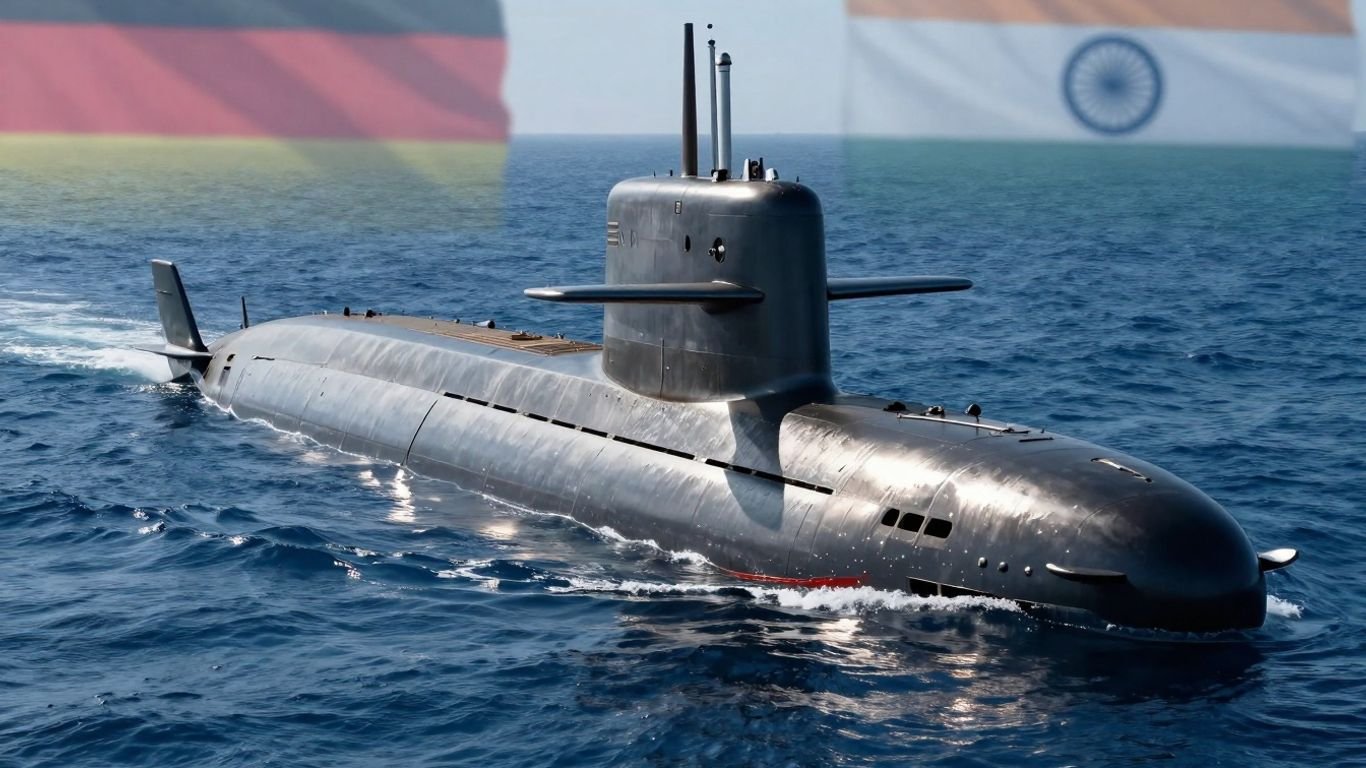

Germany and India are on the cusp of finalizing a monumental defense agreement valued at approximately $8 billion, marking the largest defense contract in India’s history. The deal, expected to be a significant outcome of German Chancellor Friedrich Merz‘s upcoming visit to India, includes crucial technology transfer for submarine production, signaling a new era of defense cooperation between the two nations.
Deepening Defense Ties
Sources indicate that the agreement centers on the construction of six German-designed conventional submarines for the Indian Navy. This collaboration is expected to involve ThyssenKrupp Marine Systems and India’s state-owned Mazgon Dock Shipbuilders Limited (MDL). The partnership would facilitate the local manufacturing of these advanced vessels in India, a significant step towards enhancing India’s indigenous defense capabilities.
Technological Advancement
The proposed submarines are reportedly Type 214 diesel-electric vessels equipped with Air-Independent Propulsion (AIP) technology. This capability is crucial for extending underwater endurance, allowing the submarines to remain submerged for extended periods, estimated at around six days, without needing to surface. This advancement is a long-sought goal for the Indian Navy, which is currently modernizing its fleet while also pursuing its nuclear submarine program.
Strategic Implications
While a final contract is not anticipated during Chancellor Merz’s visit, the ongoing discussions highlight a broader strategic alignment. Germany’s recent easing of export controls on defense items has paved the way for closer industrial cooperation with India. This deal is seen as a major boost for India’s naval modernization efforts, addressing the immediate need to replace aging conventional submarines, some of which are over three decades old.
Chancellor Merz’s Visit
German Chancellor Friedrich Merz’s visit to India, scheduled for mid-January, will feature defense ties as a central agenda item. The itinerary includes high-level delegation talks, visits to key industrial and cultural sites, underscoring the comprehensive nature of the bilateral engagement. The negotiations come at a critical time for the Indian Navy, which operates 16 conventional submarines, with a significant portion nearing the end of their service life.