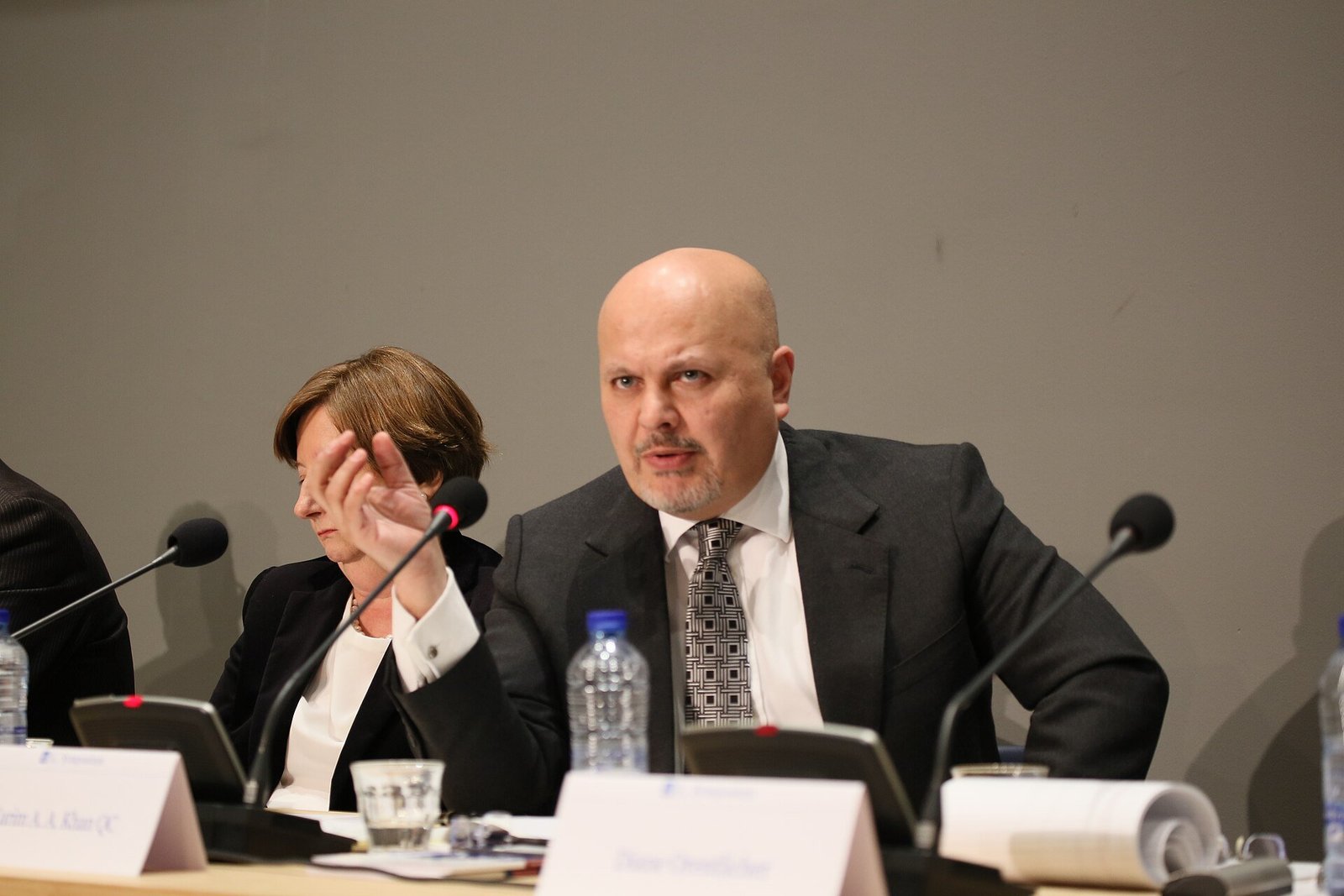

The 125 member states of the International Criminal Court will vote by secret ballot on Friday on whether to permanently remove chief prosecutor Karim Khan, marking a pivotal moment for a tribunal already grappling with mounting external pressure and internal division.
Khan, a 56-year-old British barrister, has been accused of sexual misconduct involving a female aide, allegations he has consistently denied throughout a process that has stretched on for more than two years.
He was formally removed from his duties in June after the executive committee of the court’s oversight body concluded he had committed “serious misconduct.” Documents reviewed by The Associated Press indicate the committee found Khan engaged in a sexual relationship with the woman and sought to prevent her from pursuing her allegations. Khan disputes those findings.
The drawn-out saga has fractured the community that supports the court’s mission, setting human rights advocates, staff and member states against one another. “There has been splintering over how the court has handled this,” said Lucy Gaynor, a historian of international criminal tribunals at the University of Amsterdam.
Groups that back the court’s work have taken diverging positions. A coalition of Palestinian organizations recently issued a public letter accusing the executive committee of “unwarranted political interference” and questioning its independence and impartiality.
The timing has compounded concerns about the institution’s stability. The ICC, established to prosecute those responsible for the gravest crimes under international law, is simultaneously facing a campaign by the United States aimed at dismantling the court.
Similar controversies over senior officials facing personal misconduct claims have recently unsettled institutions elsewhere, echoing episodes such as the questions raised over a US diplomatic envoy earlier this year.
Observers note that whatever the outcome, the prolonged nature of the proceedings has already inflicted reputational damage on the tribunal at a moment when it can least afford it.
Friday’s secret ballot will determine not only Khan’s future but also how the court navigates a period defined by external threats and internal fault lines. The result is expected to shape the institution’s credibility and its ability to pursue its mandate in the years ahead.