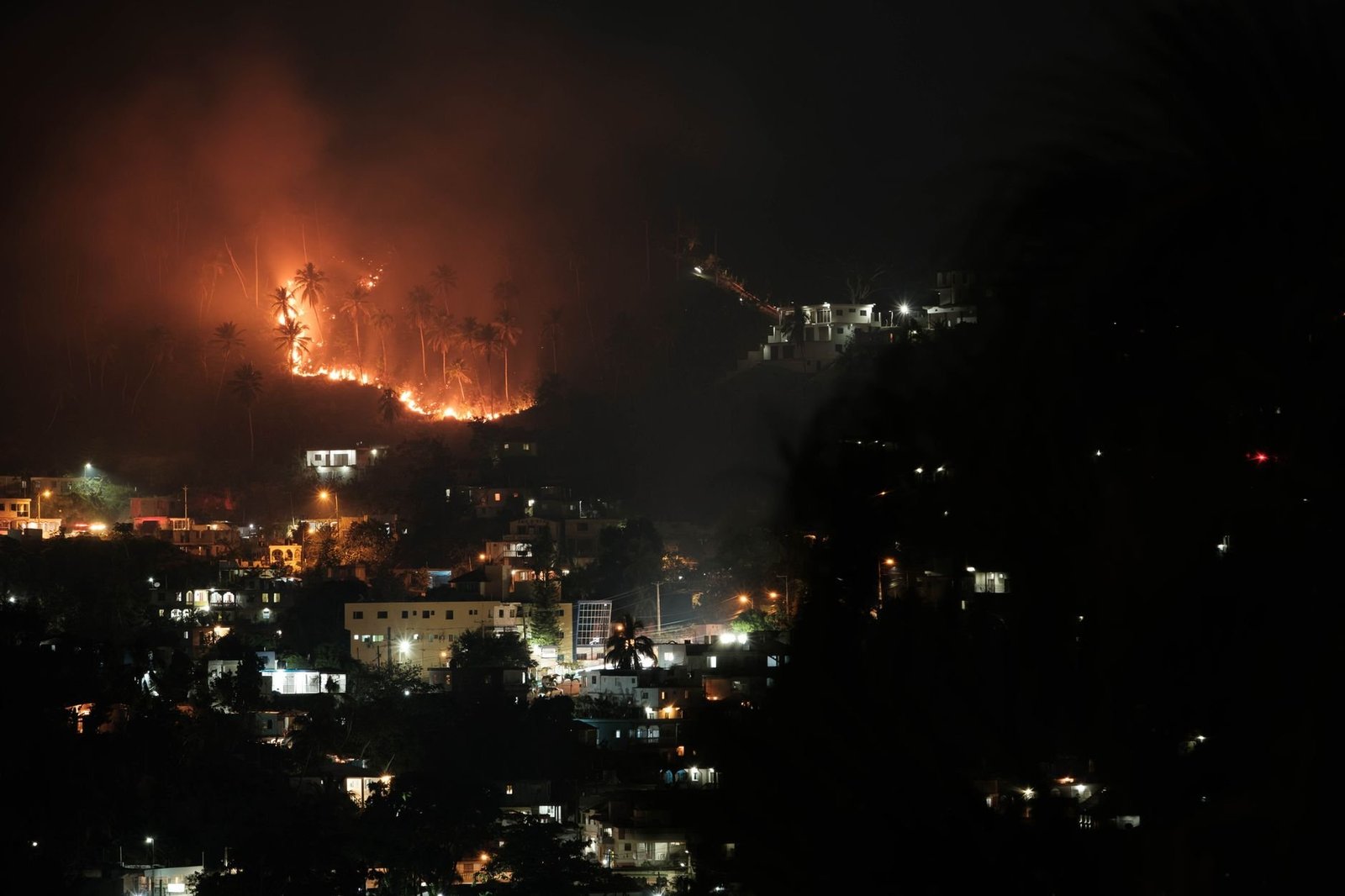

An intensifying heat wave sweeping across Western Europe is set to compound an already dire wildfire emergency, with temperatures in France forecast to climb to 95 degrees Fahrenheit (35 degrees Celsius) this week as firefighters brace for even more dangerous conditions.
The blazes have burned close to 300,000 acres across Spain and France, straining emergency resources and forcing crews to abandon traditional firefighting tactics in favour of protecting lives and property from fast-moving flames.
The new heat wave, expected to hit Spain from Wednesday, has heightened fears that the fires could spread further. Hot, dry air and gusting winds create ideal conditions for flames to jump containment lines, making direct attacks on the blazes increasingly impractical.
Spain’s largest recorded wildfire, burning in the hills of Ávila province west of Madrid, has consumed roughly 500 square kilometres (193 square miles) — an area five times the size of Barcelona. The fire has forced 25,000 residents to flee their villages, part of a wider evacuation that has displaced some 79,000 people across Ávila, the Madrid region and eastern Castellón.
The scale has stunned veteran crews. “This doesn’t have a precedent,” said Javier García, a Spanish firefighter with two decades of experience, who described the shift in strategy as crews prioritise evacuations over containment. “Now it is lives first, then homes, and after, the forest.”
The change reflects a broader reality confronting emergency brigades this summer. Where crews once tackled fires deep in the wilderness, they now function as a last line of defence around inhabited areas, hosing down burning trees and clearing underbrush before it can feed the flames during gruelling 12-hour shifts.
The current disaster follows weeks of escalating fires across the region. Earlier blazes near Bordeaux in France and in Spain’s Guadalajara and Zaragoza areas had already pushed combined evacuations past 340,000, with the Guadalajara fire alone burning 320 square kilometres (123 square miles).
No deaths have been reported from the current cluster of fires in the Madrid region, though the incoming heat threatens to reverse that fragile situation. Authorities warn that rising temperatures and low humidity could reignite contained sections and open new fronts.
Climate scientists have linked the growing frequency and intensity of such fires to warming global temperatures, which extend fire seasons and dry out vegetation across southern Europe. The combination of prolonged drought and repeated heat waves has left large swathes of woodland primed to burn.
As crews prepare for the hottest days yet, officials across both countries are urging residents in at-risk zones to heed evacuation orders. The coming days are expected to test whether firefighting resources, already stretched thin after weeks of continuous deployment, can hold the line against conditions crews describe as unlike anything they have seen before.