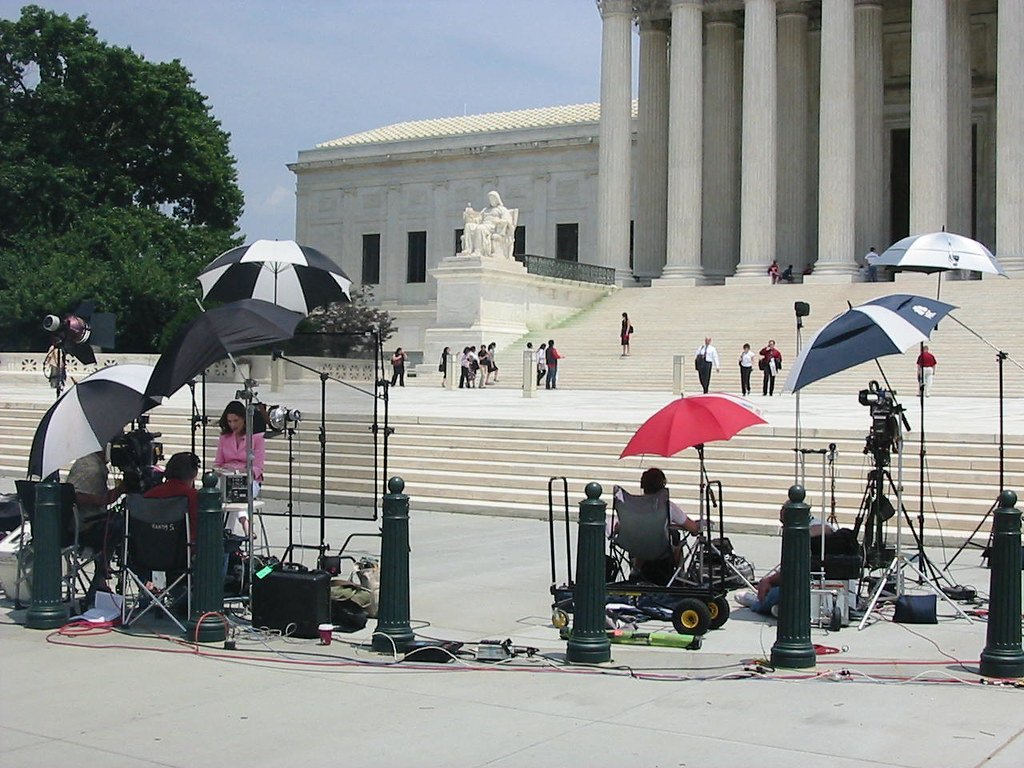

The Trump administration has asked the U.S. Supreme Court to clear the way for an executive order that could significantly reshape mail-in voting, filing an emergency appeal Monday after lower courts blocked the measure in nearly half the country ahead of November’s midterm elections.
The Justice Department urged the justices to allow the proposed changes to take effect while legal challenges continue. The request follows a ruling by a panel of the 1st U.S. Circuit Court of Appeals over the weekend, which upheld a lower court order halting the policy in the 23 states that filed suit.
President Donald Trump issued the order in March, directing U.S. Citizenship and Immigration Services and the commissioner of the Social Security Administration to create a federal “state citizenship list” of eligible voters. Under the order, the U.S. Postal Service would deliver mail ballots only to individuals appearing on that list.
Trump promoted the measure as a safeguard against noncitizen voting. Such voting has been shown to be rare and constitutes a felony that can carry penalties including deportation.
Democratic officials in 23 states and the District of Columbia challenged the order, arguing that the Constitution grants states and Congress—not the president—the authority to set election rules. Opponents contend the changes are open to abuse and could sow confusion at polling places.
U.S. District Court Judge Indira Talwani in Boston, who was nominated by former President Barack Obama, agreed in June to halt implementation for the November 3 elections. The appeals court affirmed that decision on Saturday, finding that states must prepare for potentially disruptive changes to how ballots are distributed.
The dispute is one of several high-profile clashes over federal authority to reach the courts during Trump’s second term, arriving as both parties intensify their preparations for the vote. Democrats recently rolled out an affordability-focused campaign platform as the countdown to the midterms narrows.
The Supreme Court has not indicated when it will rule on the emergency request. A decision permitting the order to proceed could alter ballot distribution in the plaintiff states within months, while a denial would keep the policy on hold as litigation continues through the lower courts.