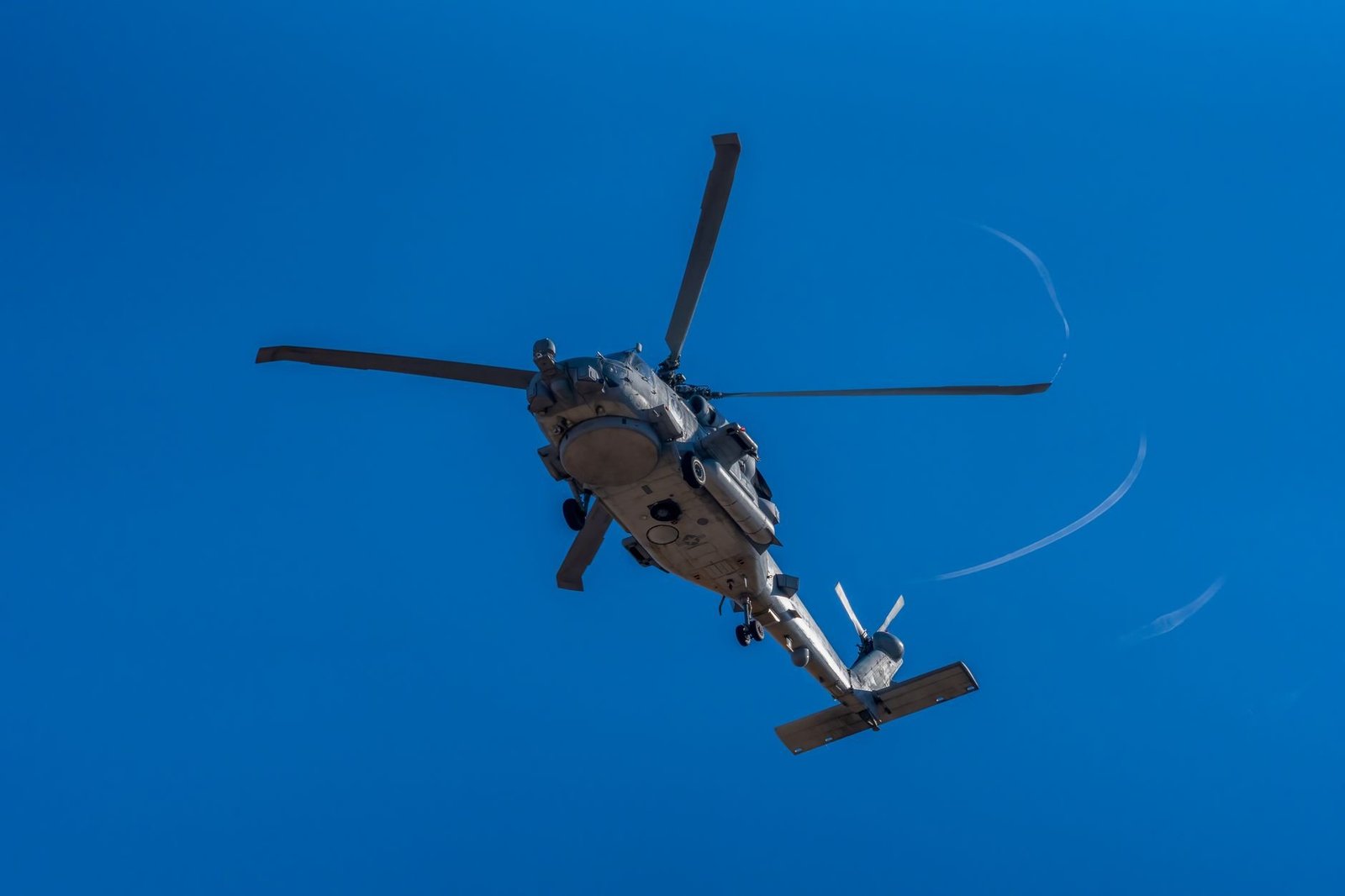

The Federal Aviation Administration has launched an investigation into why a commercial jet was cleared for takeoff as Marine One, carrying President Donald Trump, approached Reagan National Airport on Tuesday afternoon, in what appears to breach safety procedures introduced after a deadly midair collision last year.
The incident unfolded as the presidential helicopter departed the White House for Joint Base Andrews, where Trump boarded Air Force One for the first leg of a West Coast trip. A passenger airplane took off at the same time, briefly reducing the safe distance between the two aircraft.
The FAA said in a statement that “there was a momentary loss of separation after which the aircraft continued to move away from one another,” adding that “the air traffic controller was in contact with both the commercial pilot and Marine One pilot during the loss of separation.”
The departing jet was climbing above Marine One as the helicopter approached, meaning the two were not on a collision course. Officials stressed that the situation was resolved quickly and that the aircraft moved apart.
The episode carries added weight because of new restrictions the FAA imposed following the January 29, 2025 disaster near the same airport, when an airliner collided with an Army Black Hawk helicopter, killing 67 people. Under those rules, all takeoffs and landings at Reagan National are halted whenever a helicopter transits the area.
The crash and its aftermath had already intensified scrutiny of air traffic management around the congested Washington corridor, a concern that has coincided with broader turbulence across the aviation sector amid shifting patterns in domestic travel demand.
The White House moved to reassure the public that the president was never at risk. “Marine One flights are piloted by some of the best aviators in the world, and at no point was the President in harm’s way,” said White House spokesman Kush Desai.
The Marine Corps also defended the conduct of its helicopter pilots during the maneuver.
The investigation is expected to examine how the takeoff was authorized despite the standing prohibition, and whether procedural safeguards need further reinforcement. The FAA has not indicated a timeline for its findings.