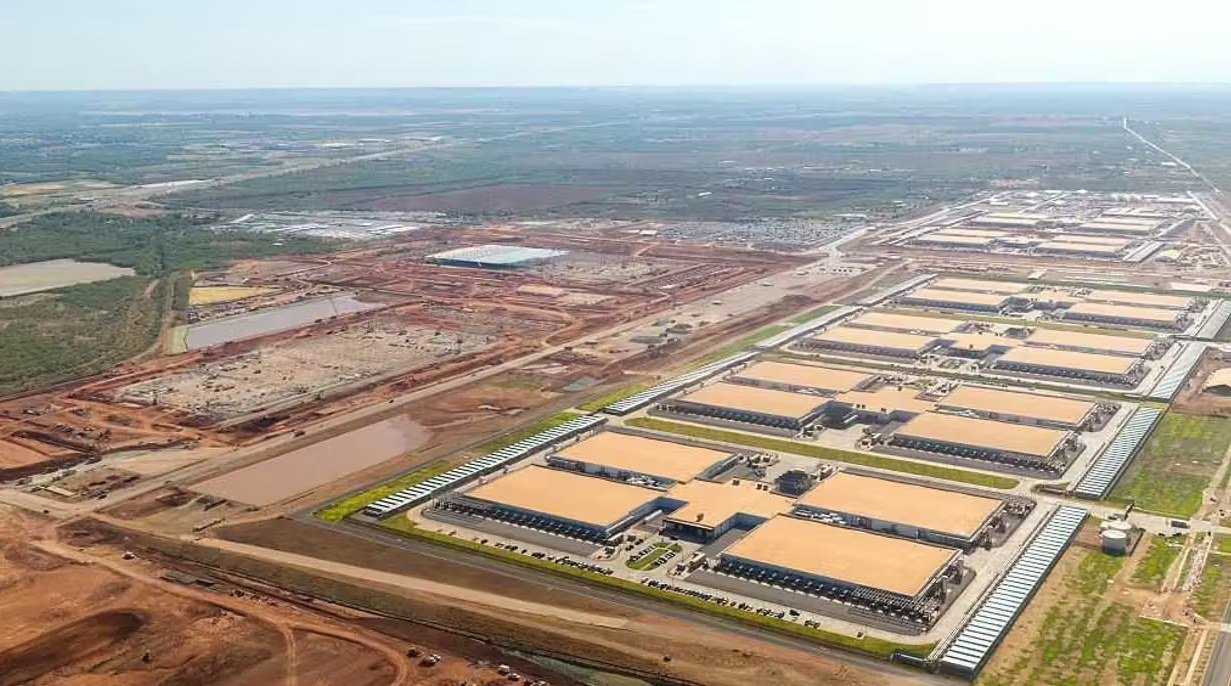

Facing growing local resistance, President Donald Trump on Sunday warned that American communities rejecting AI data center projects risk becoming “backwards and poor,” wading into a dispute that has reached campaign trails ahead of November’s midterm elections.
Trump argued that opposition to the sprawling facilities plays directly into the hands of Beijing, telling supporters that “China could not be happier with this anti Data Center movement.” He framed the buildout as central to keeping the United States ahead in the race to develop artificial intelligence.
The president added that Americans “will only have yourselves to blame” if projects near their towns are canceled, casting the facilities as engines of jobs and technological standing rather than the nuisances many residents describe.
His comments land against clear public skepticism. A recent poll found that roughly three-quarters of Americans oppose data centers being built next to their homes, a level of resistance that has turned once-obscure zoning fights into political flashpoints in districts nationwide.
The friction is not confined to Democrats. Some Republicans have voiced unease about the backlash, aware that the facilities strain local power grids, consume large volumes of water for cooling, and reshape quiet residential areas with industrial-scale construction.
For residents, the objections are concrete. Data centers can raise electricity demand enough to push up household bills, run cooling systems that draw heavily on regional water supplies, and generate constant low-frequency noise from banks of servers and fans operating around the clock.
The dispute sits inside a larger contest over technological leadership. Washington has repeatedly framed AI capacity as a matter of national competitiveness, echoing warnings that the country cannot afford to cede ground to China in emerging computing fields. Data centers form the physical backbone of that ambition, housing the servers that train and run large AI models.
Companies including major cloud and AI firms have announced billions of dollars in new facilities, but the pace of construction has collided with communities weighing the local costs against national arguments. Several proposed projects have already stalled or been rejected by local boards.
With the midterms approaching, the data center question is set to remain a live issue in contested districts. For voters, the choice increasingly pits promises of investment and jobs against tangible concerns over utility costs, water use, and the character of their neighborhoods.