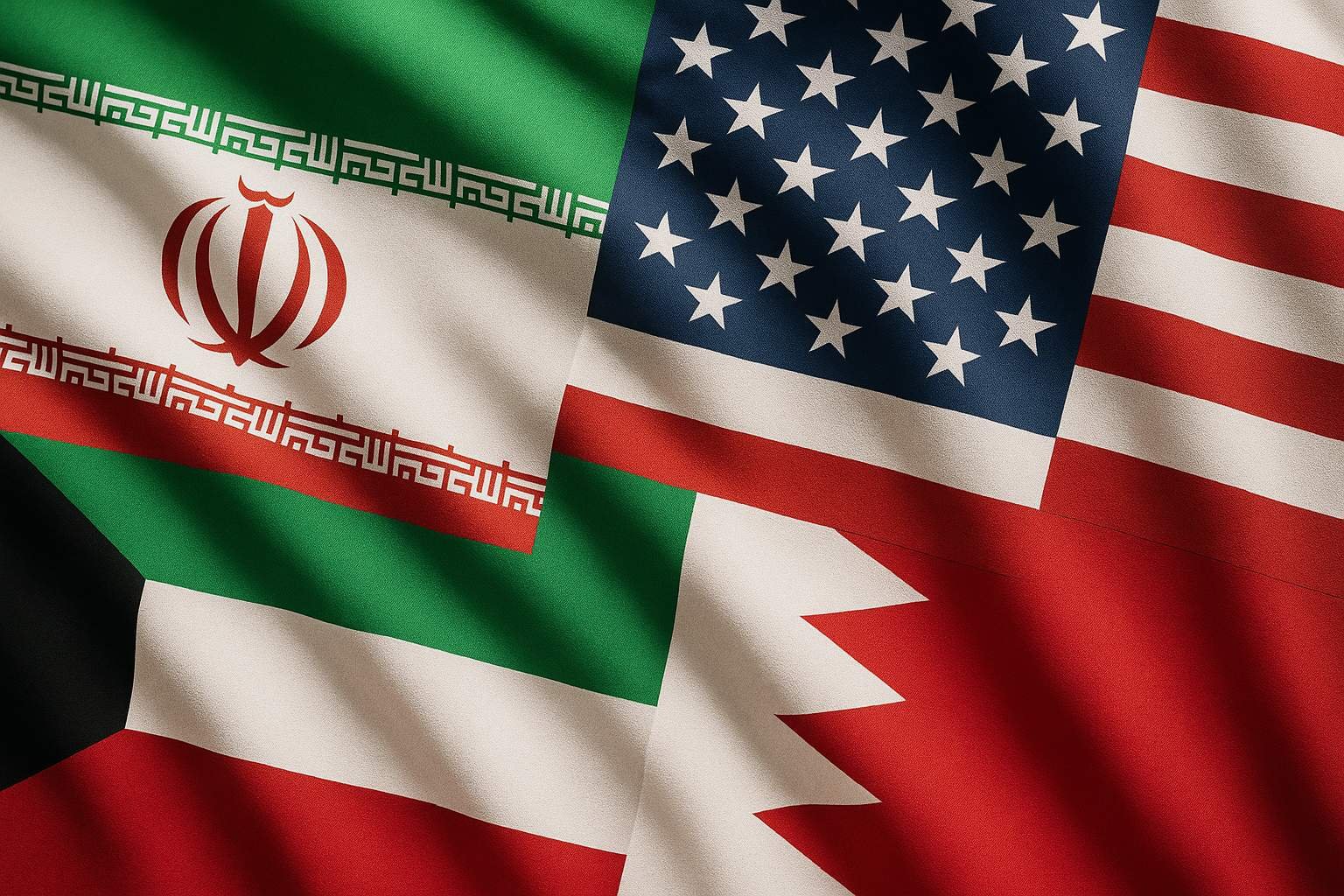

Iran’s Revolutionary Guard Corps has launched retaliatory strikes on US military assets in Kuwait and Bahrain, expanding a rapidly escalating confrontation beyond Iranian territory and drawing key Gulf states directly into the conflict.
The IRGC said the attacks targeted strategic US installations and military bases across the two Gulf countries, describing them as retaliation for American strikes on multiple locations inside Iran the previous day, including the southern island of Qeshm. Iran’s army confirmed the operation, framing it as a direct response to what Tehran characterizes as unprovoked aggression.
The strikes mark a significant widening of hostilities that had, until now, largely centered on Iranian soil. Bahrain hosts the US Navy’s Fifth Fleet, while Kuwait remains home to major American logistics and command facilities, making both nations central to the US military footprint in the region.
Earlier in the week, US forces resumed strikes on Iranian sites, and this latest exchange follows a pattern of tit-for-tat escalation that has drawn in regional actors. The renewed fighting echoes a broader cycle of confrontation that began after Washington resumed strikes on Iran following an attack on a base in Jordan.
In northwestern Iran, residents gathered for the funeral of IRGC members that Tehran says were killed in a US strike. Mourners filled streets in scenes that underscored the domestic dimension of the conflict and the mounting human toll on both military and civilian populations.
Iran has also signaled the possibility of further action against strategic chokepoints, raising concerns among analysts about the security of the Strait of Hormuz, through which a significant share of global oil supplies transits. Any disruption to shipping in the waterway would carry immediate consequences for energy markets worldwide.
The involvement of Kuwait and Bahrain places additional pressure on Gulf Cooperation Council members, several of whom host US forces while maintaining complex ties with Tehran. Regional governments have previously condemned Iranian attacks while affirming their right to defend their territory.
The scale of casualties and the extent of damage from the latest strikes remain unclear, and independent verification of battlefield claims has proven difficult amid the fast-moving situation. Both Tehran and Washington have offered competing accounts of the exchanges.
The coming days are expected to test whether regional and international actors can contain the conflict or whether further retaliation will draw additional Gulf states into direct hostilities, with global attention fixed on the risk of a wider war.