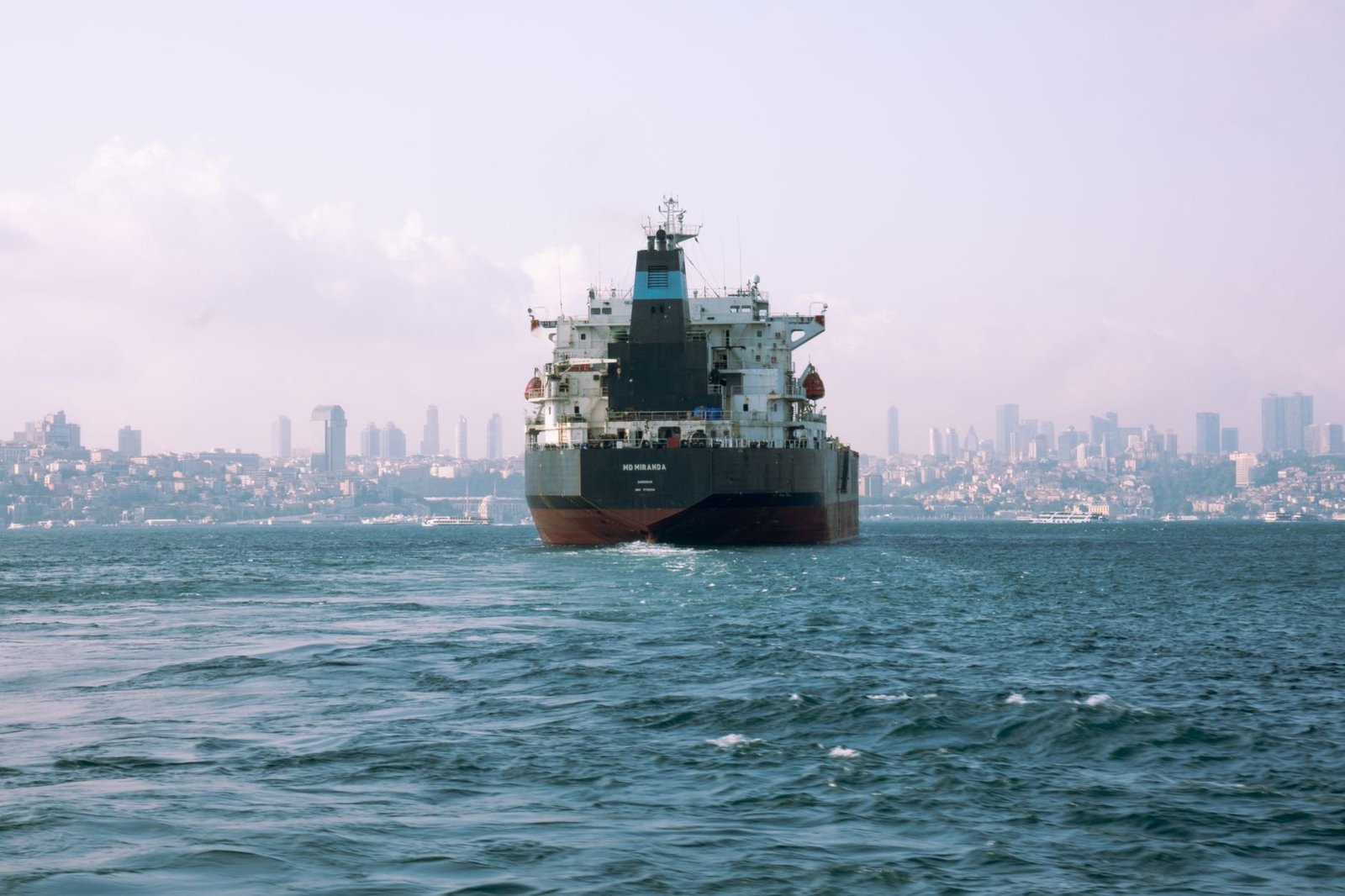

Iran and Oman have moved closer to an agreement that would reopen the Strait of Hormuz to international shipping, a potential turning point that could help unwind months of conflict in the Middle East, regional officials said Tuesday.
Under the emerging arrangement, vessels would enter the Persian Gulf through an Iranian-controlled route and exit through a corridor overseen by Oman, with service fees levied to cover maritime security and environmental protection. Two regional officials cautioned that talks remain fluid and that any final accord could take a different form, adding that a deal would be tied to the lifting of the U.S. blockade on Iran’s ports.
The optimism has rippled through energy markets. Crude prices fell roughly 2% on the reports of progress, though the strait remained closed to shipping. A cargo vessel was reportedly struck by an unidentified projectile off Oman’s coast near the waterway, underscoring the fragility of the diplomatic push.
U.S. and Qatari officials, who have been mediating alongside Oman, confirmed movement without offering specifics. “There’s been progress made in those talks, but not finality yet,” U.S. Secretary of State Marco Rubio told reporters at the State Department. “We’re hoping that will happen very shortly.”
The developments mark a notable shift from recent days, when Washington and Tehran offered sharply conflicting accounts of the state of negotiations. The strait had functioned as an open international waterway until the U.S. and Israel launched strikes on Iran on February 28, after which Tehran closed the passage and the U.S. Navy imposed a blockade.
Any deal that formalises Iranian control over the strait would represent a significant strategic gain for Tehran. That prospect gives Washington reason to hesitate, and the U.S. could seek to stall an agreement by declining to lift its blockade of Iranian ports.
At the same time, President Donald Trump faces mounting domestic pressure to end a war that has pushed up gasoline prices ahead of midterm elections and depleted U.S. stockpiles of certain munitions. In recent days he has alternated between threatening large-scale strikes and endorsing diplomatic efforts.
The Strait of Hormuz is one of the world’s most critical energy chokepoints, carrying a substantial share of seaborne crude and liquefied natural gas. Its closure has rattled global markets and heightened concerns among Asian economies heavily dependent on Gulf oil imports.
Negotiators continue exchanging proposals, and officials indicated a breakthrough could come soon if the remaining sticking points over the blockade and fee structure are resolved. For now, the waterway stays shut, and the reported strike off Oman signals that risks to commercial shipping persist even as diplomacy gathers pace.