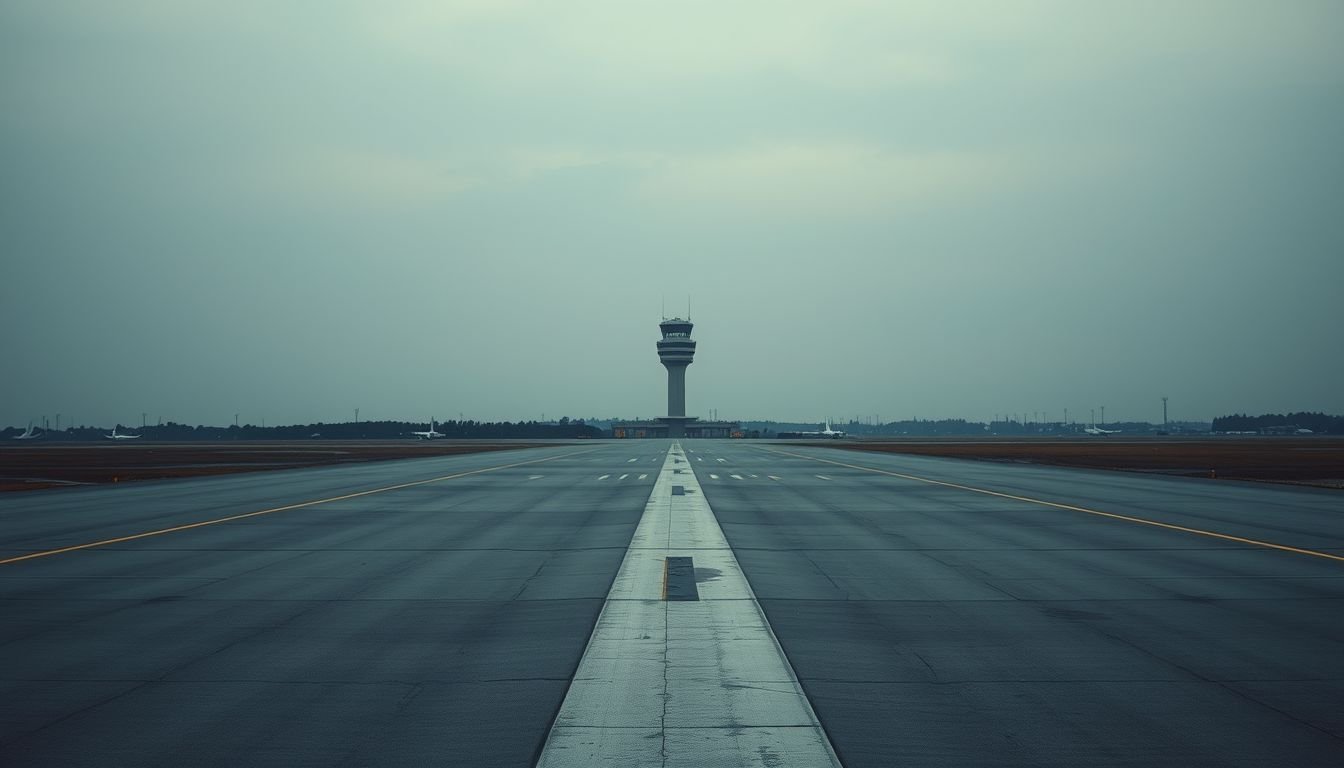

Syria’s civil aviation authority said last week it was preparing to reclassify Mezzeh military airport in Damascus for limited civilian use, focused on private and executive aviation, to complement Damascus International Airport. Rubble removal and infrastructure upgrades had already begun, the state news agency Sana reported.
The plan has drawn alarm from rights groups and residents who say the works could disturb suspected mass graves and override private land claims left unresolved from the rule of ousted president Bashar al-Assad.
Under Assad and his father Hafez, Mezzeh housed branches of the Air Force Intelligence Directorate and detention facilities where suspected government opponents were tortured, executed and subjected to enforced disappearance. Parts of the airbase were used for presidential and official flights.
Air Force Intelligence documents obtained by the Syria Justice and Accountability Centre (SJAC), a US-based Syrian-led rights group, showed senior Syrian military officials approved Mezzeh in 2012 as a site for executing detainees sentenced to death by military field courts. One document proposed moving executions from Sednaya prison to Mezzeh because it was a “closed security compound” close to Damascus. Subsequent correspondence discussed a firing range and later a hangar beside the runway as execution sites, ordering construction of a platform and requesting nylon rope, with the work to be carried out “in utmost secrecy.”
A 2025 SJAC investigation identified two suspected gravesites linked to people who died in detention at Mezzeh, where it said more than 1,150 detainees died, some by execution and others from torture or maltreatment. In July, SJAC gave the coordinates of the two suspected graves to Syria’s National Commission for Missing Persons and urged authorities to prevent construction or excavation until the sites were investigated. The commission told SJAC at the time that there were no construction or refurbishment plans for Mezzeh, SJAC said.
After the redevelopment plans emerged, SJAC wrote again on September 8, warning that excavation, rubble removal or other works could damage human remains and evidence crucial to identifying victims. SJAC said it had not yet received a response to the second letter.
“To construct a business airport on a site that may contain mass graves, without a thorough prior investigation, without site protection, without searching for the missing and their remains and without preserving evidence, is an act of extreme recklessness and disregard,” said Amer Matar, founder of the Germany-based Syria Prisons Museum, an NGO documenting detention facilities including those at Mezzeh.
The land dispute is decades old. Mezzeh airport was built on land belonging to hundreds of private citizens across 2.76 sq km (1.1 square miles), according to land records from the Moadamiya municipality. A former municipal official said expropriation decrees retroactively justified the government’s use of those lands when the airport was built in 1956, and that compensation had not been paid.
Residents demonstrated in Moadamiya a day after the plans were announced. “We welcome investment, but we should be sitting at the table and discussing our share with investors, not the state,” said a protest organiser who gave his name as Abu Khaled. “We have a documented right to this land.”
Sana cited the civil aviation authority as saying Mezzeh’s refurbishment would take into account the surrounding urban area and relevant legal and social issues, but did not specifically mention the graves or land rights. It is unclear who will develop the airport.