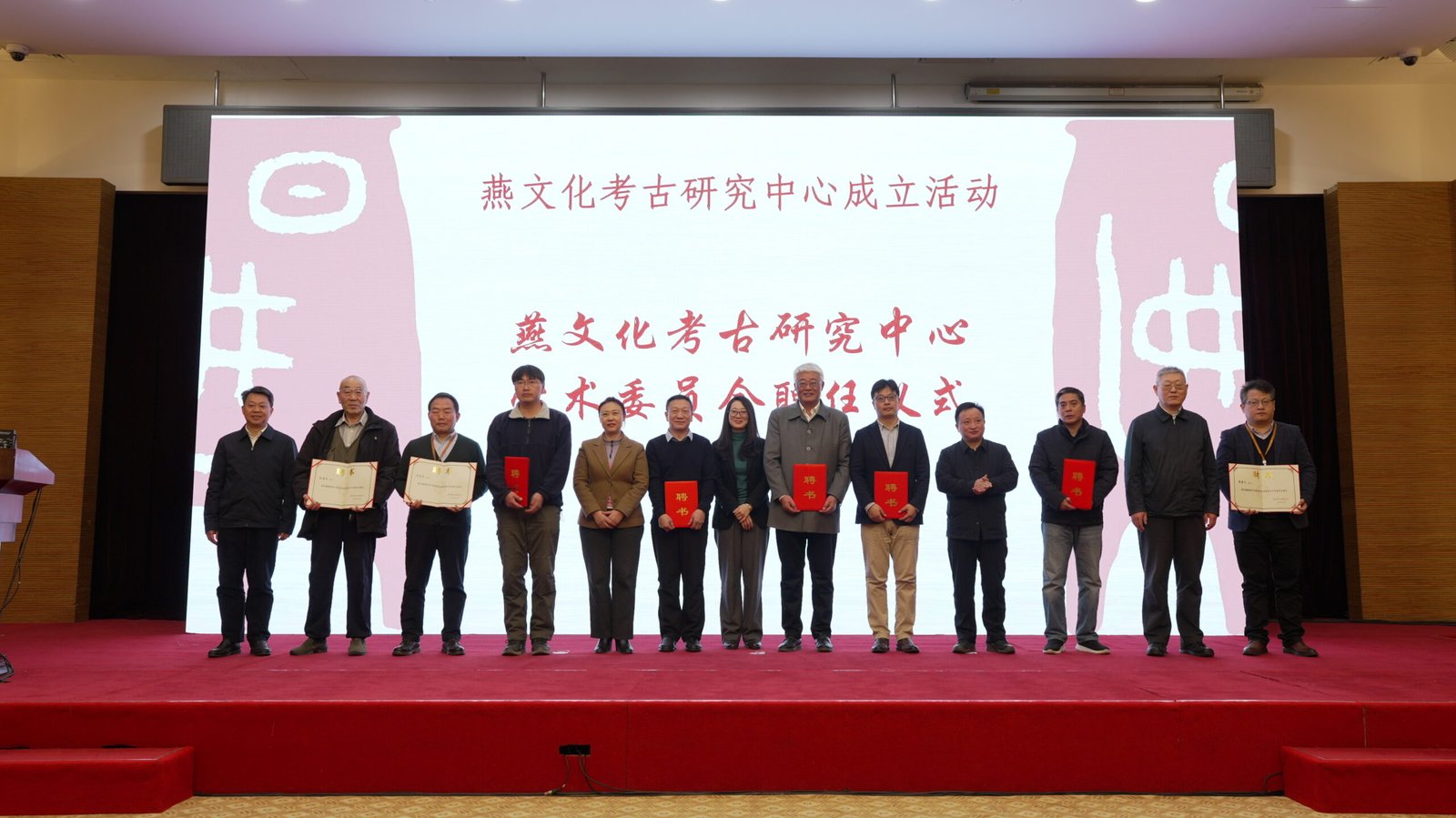

The Research Center for Archaeology of Yan Culture was officially inaugurated in Beijing on Sunday, marking a significant step in the exploration and understanding of China’s rich historical tapestry. The establishment of this center underscores the importance of Yan culture in the broader context of China’s ongoing project to trace the origins of its civilization.
Yan culture, which originated during the Western Zhou Dynasty (1046BC-771BC), has spanned over three millennia, evolving into a distinct regional culture known for its values of generosity, chivalry, and coexistence. The cultural sphere of Yan predominantly covers the Beijing-Tianjin-Hebei region, and it has historically engaged in substantial cultural exchanges with neighboring areas like the Loess Plateau and Mongolian Plateau.
This cultural richness is evident in archaeological discoveries at various sites, including the Liulihe site in Beijing, the Yandu site in Hebei Province, and the Zhangjiayuan site in Tianjin. These sites have revealed the complexity and unity of Yan culture, displaying its evolution and influence over different periods and regions.
During the opening ceremony, Guan Qiang, deputy head of the National Cultural Heritage Administration, praised the archaeological efforts in the Beijing-Tianjin-Hebei region. He advocated for a comprehensive “mega-archaeology” approach, emphasizing the need for academic leadership, foundational work, collaborative openness, and the importance of standardizing archaeological data management and public engagement.
Lei Xingshan, the director of the newly established center, highlighted the center’s role in advancing research on the regional variations of Yan culture. He noted that modern technology, including cutting-edge techniques, has reaffirmed the beginning of the Western Zhou period as 1046 BC. Lei stressed that Chinese culture, characterized by its diversity and integration, sees Yan culture as a vital component in understanding the nation’s early civilization. He emphasized that the use of advanced technology and interdisciplinary approaches has significantly enhanced the efficiency of archaeological work. The center aims to continue this approach, delving deeper into Yan culture studies.
Following the inauguration, forums focusing on “Cultural Continuity” were held. These forums aimed to share recent insights into archaeological discoveries and research in the Beijing-Tianjin-Hebei region, seeking to expand collaborative efforts and innovate in cooperation methods. The forums also aimed to jointly explore the historical and cultural roots of these regions.
Cheng Jianhua, deputy secretary-general of the Beijing Municipal Government, expressed optimism that the establishment of the research center and the archaeological forum will bolster the collaborative development of historical archaeological research and cultural initiatives in the three regions. This collaboration is expected to enhance cultural heritage protection, deepen cultural exchanges, and promote cultural dissemination, contributing to the construction of a modern Chinese civilization.
READ MORE: