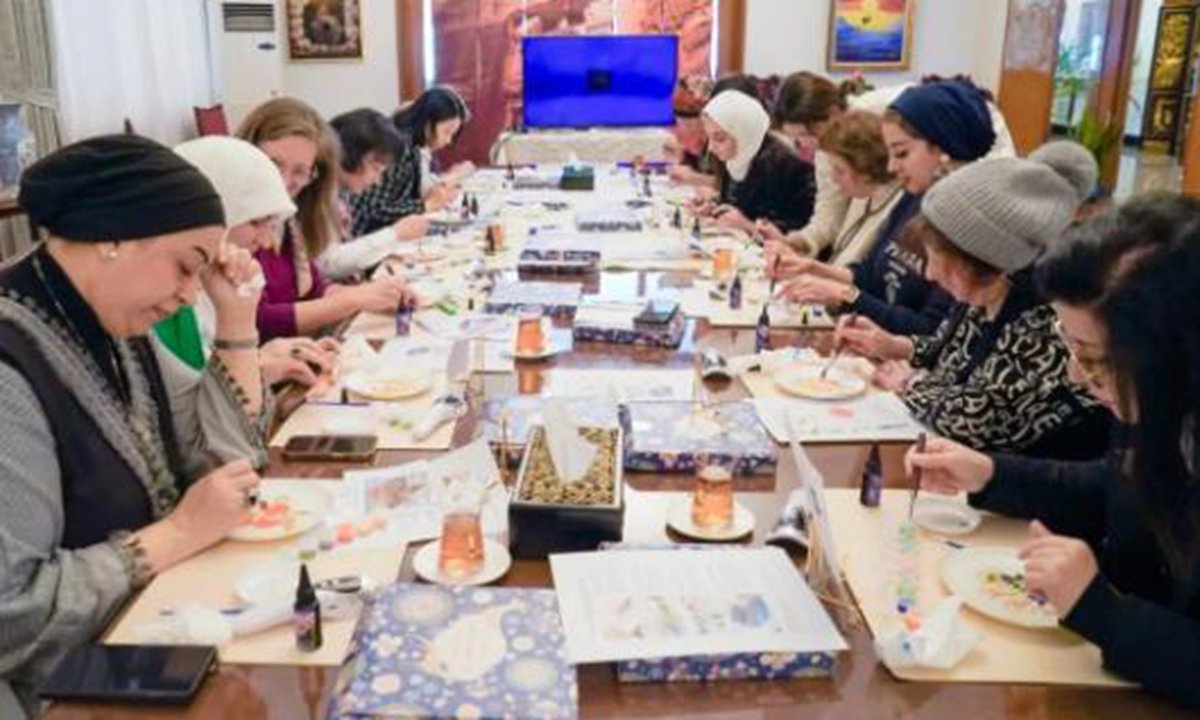

In a vibrant display of cultural exchange and artistic appreciation, the Jordanian Embassy in China became the venue for a special event celebrating traditional Chinese art on December 4. This gathering was not just an artistic endeavor but also a significant step in strengthening cultural ties and promoting mutual understanding between the participants and the host country.
The event attracted a select group of 14 attendees, comprising spouses and relatives of ambassadors to China. These distinguished guests immersed themselves in the world of cloisonné, a renowned traditional Chinese art form, also known as Jingtailan. The workshop offered a hands-on experience, allowing participants to delve into the intricate process and appreciate the artistic value and techniques of cloisonné.
Originating in the Ming Dynasty (1368-1644), cloisonné is a unique and ancient technique used for decorating metalwork objects. This art form involves the application of colored material, usually held in place or separated by metal strips or wire, traditionally made of gold. In recognition of its cultural significance, the Jingtailan production technique was honored in 2006 by being included in the first national-level list of intangible cultural heritage in China. This recognition underscores the importance of preserving such traditional art forms as part of the country’s rich cultural legacy.
The workshop was facilitated by skilled staffers from the Yin Di Museum, who provided a comprehensive and step-by-step guide to the cloisonné production process. Through their expert instruction, the participants were able to engage directly with this intricate art form, gaining both theoretical knowledge and practical skills.
The cultural event at the Jordanian Embassy extended beyond cloisonné. The Yin Di Museum also organized a series of activities showcasing other aspects of traditional Chinese art. These included calligraphy, woodblock printing, traditional brush painting of landscapes, and various other art forms. Each of these activities offered a window into the diverse and rich artistic heritage of China, highlighting the depth and breadth of the country’s cultural contributions.
This event served as a bridge between cultures, enabling diplomatic families to connect more deeply with Chinese traditions and heritage. By engaging directly with these art forms, the participants not only acquired new skills and knowledge but also developed a greater appreciation for the cultural nuances and historical significance of these practices. Such events play a crucial role in fostering international relations, as they provide a platform for cultural exchange and mutual respect between nations.
The success of this workshop at the Jordanian Embassy exemplifies the power of art in bringing people together, transcending language barriers, and fostering a shared understanding and appreciation of different cultures. This initiative highlights the importance of cultural diplomacy in today’s interconnected world and serves as a model for similar events aimed at promoting cross-cultural dialogue and understanding.
READ MORE: