
Upon arriving at Port Blair airport in India’s Andaman Islands, I’m immediately greeted by cabbies eager to take me to the popular tourist islands of Havelock or Neil. But when I request a ride to the Port Blair bus station, the driver looks puzzled, intrigued by my decision to head to Mayabunder, a less-visited part of the archipelago.
Mayabunder, located on Middle Andaman Island, is a town steeped in history as the first settlement of the Karen people in the Andamans. The Karen, originally from Myanmar, were brought to India during British colonial rule for their expertise in forestry and resistance to malaria. Despite its historical significance, Mayabunder remains off the typical tourist path, connected to the capital only by the Andaman Trunk Road (ATR) and a challenging ferry journey.
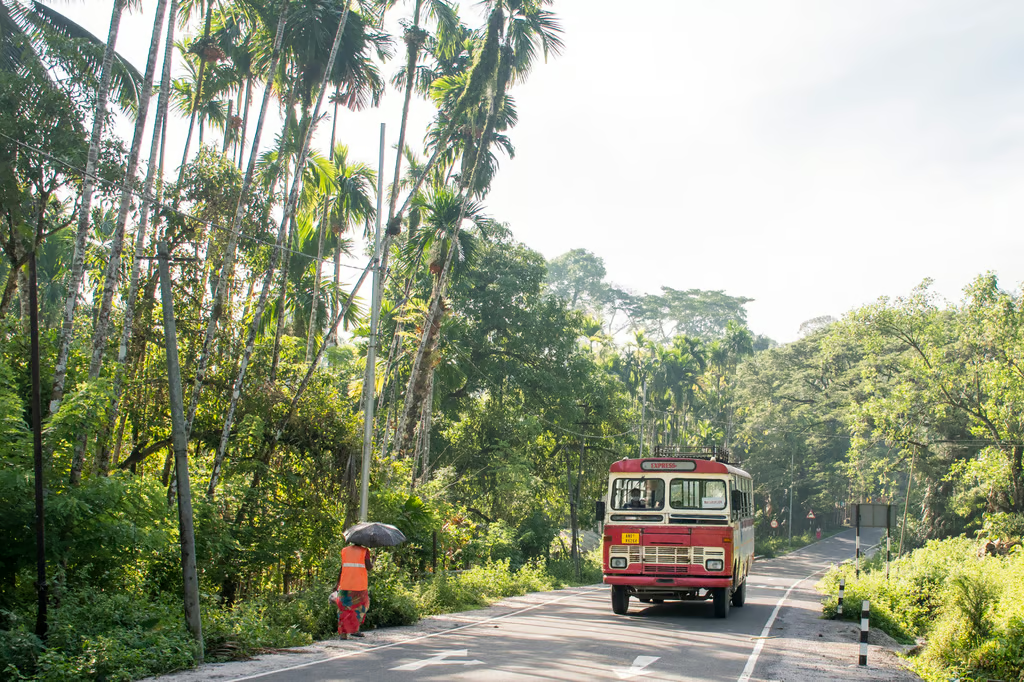
At dawn, I board a dusty bus with a handwritten sign indicating its destination: Mayabunder. Our journey pauses at the Jirkatang checkpoint, the gateway to the Jarawa Reserve, home to one of the indigenous tribes of the Andaman Islands. As the bus moves through the reserve, I catch a glimpse of a Jarawa couple by the roadside, their traditional attire a reminder of the delicate balance between modernity and indigenous life.
After seven hours on the road, I meet my host, John Aung Thung, who takes me to Webi village, known in the Karen language as “hidden city.” Here, traditional Karen culture is alive and well, embodied in Koh Hee Homestay, John’s ancestral home. Unlike the concrete structures now common in the area, Koh Hee is built from bamboo and timber, with a thatched roof that keeps the interior cool despite the tropical heat.
As we relax on the homestay’s breezy balcony, John explains how maintaining such a home is increasingly difficult due to changing laws and the high cost of upkeep. His solution? Tourism. By converting his home into a homestay, John not only preserves his family’s heritage but also provides a sustainable income that supports traditional crafts.
In addition to running the homestay, John founded Andaman Karen Crafts, an initiative to keep traditional woodworking and weaving alive. His efforts extend to a medicinal nursery, where he uses plant knowledge passed down from his grandfather, a healer in the Karen tradition.
For intrepid travelers willing to venture beyond the usual tourist spots, Mayabunder offers a unique opportunity to experience and support the preservation of Karen culture. Through tourism, John and others in the community continue to keep their rich heritage alive, one visitor at a time.
READ MORE: