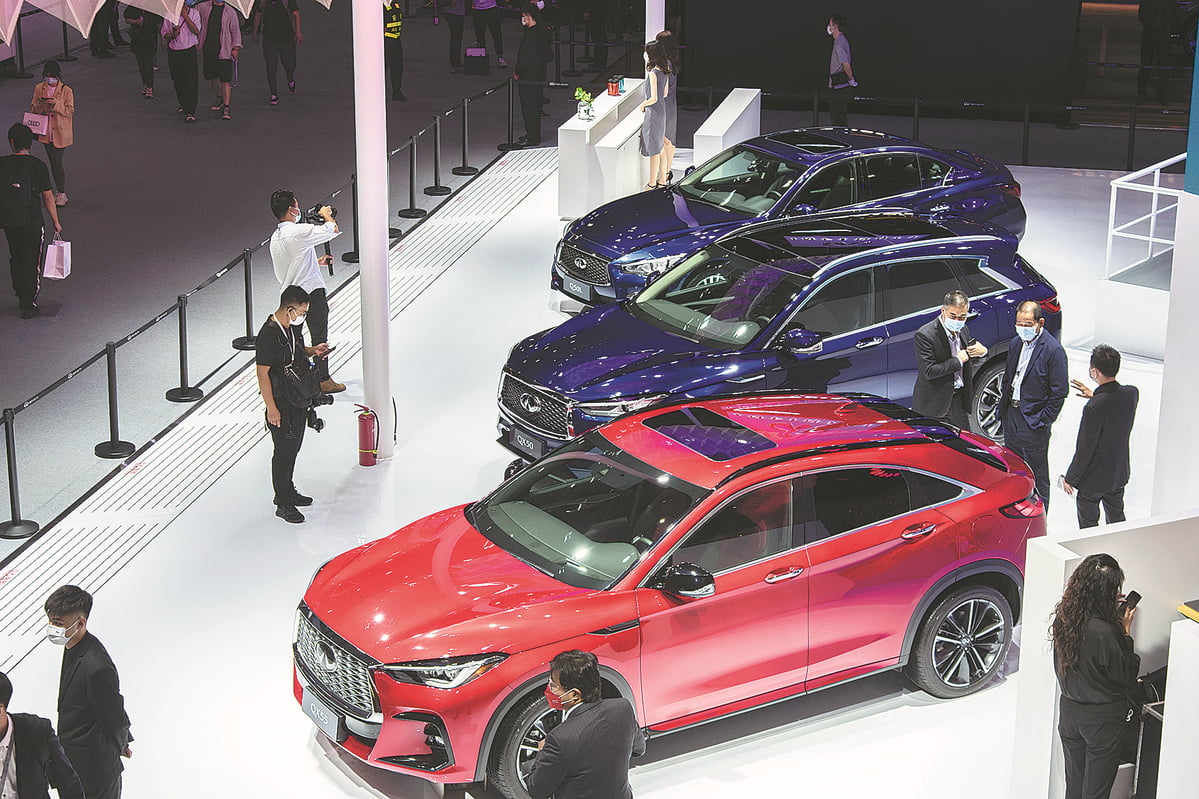

Once a popular choice for those seeking to stand out in the crowded urban streets of China, niche premium brands like Lexus and Infiniti are now facing challenges. With bigger companies like BMW and Mercedes-Benz offering a wider range of options to customers and local brands looking to take on international rivals, smaller premium brands are struggling to keep up.
Despite the ongoing COVID-19 pandemic, China’s premium vehicle market has continued to grow thanks to the country’s large population and economic growth. In 2022, Chinese customers purchased 3.09 million premium vehicles, a 6% increase from the previous year. However, this growth was not evenly distributed, with smaller brands like Acura, Infiniti, and Cadillac experiencing significant declines in sales.
Even Toyota’s Lexus and GM’s Cadillac, which once sat behind only the German giants of BMW, Mercedes-Benz, and Audi, have started to lose steam. Cadillac sold 198,000 units in 2022, down 17.7% year-on-year, while Lexus delivered 184,000 vehicles, down 18.58% year-on-year.
In contrast, FAW Group’s Hongqi saw a 3% increase in sales, overtaking Cadillac with 310,000 vehicles sold in 2022. Tesla was the best-selling electric carmaker, delivering 410,000 vehicles and securing the fourth position on the top 10 list after the three German giants.
Chinese startups Li Auto and Nio also made it into the top 10 list, with their sales soaring 47% and 34% respectively. Nio’s CEO William Li even confidently predicted that his company would outsell Lexus this year.
One reason for the declining sales of traditional premium brands is their slow adoption of electric vehicles. Sales of premium gasoline vehicles went down 4% in 2022, while the premium EV segment soared 49%. The German brands are now speeding up to build EV plants and launch their China-made models, with BMW set to offer the most diverse EV lineup of any premium brand and Mercedes-Benz launching six electric and plug-in hybrid models in China this year.
Meanwhile, Chinese volume carmakers are launching their own premium vehicle brands, with BYD unveiling its Yangwang brand and Geely launching its luxury brand Galaxy. Great Wall Motors is also set to unveil a smart new energy vehicle brand in March. These new brands are introducing new technologies and offering more diverse options, putting pressure on traditional premium brands to keep up.
Read More: