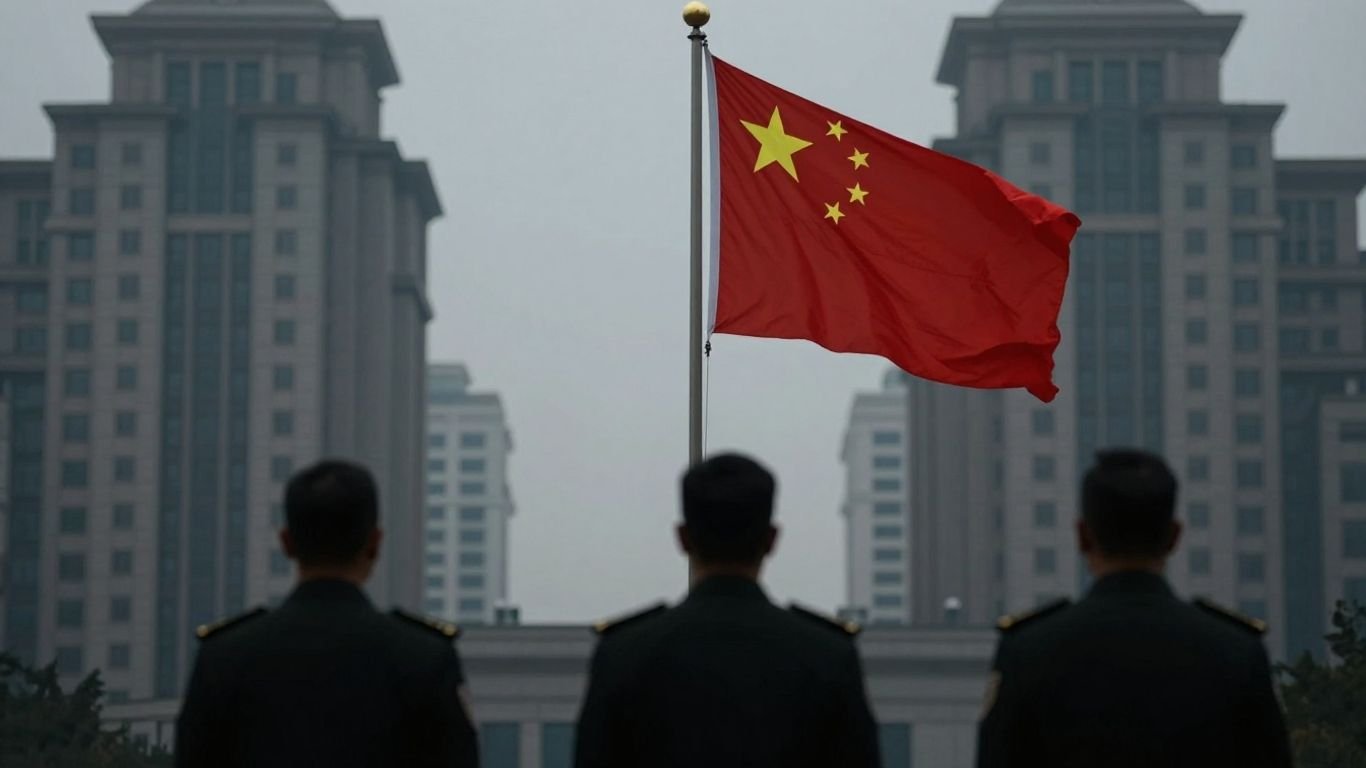

China has removed three prominent figures from its defense and nuclear sectors from the national legislature, signaling an intensified anti-corruption campaign targeting the country’s military-industrial complex. The expulsions, announced by the Standing Committee of the National People’s Congress, come amid a widening probe into alleged serious disciplinary and legal violations within the military leadership.
The Standing Committee of the National People’s Congress announced the expulsions following a one-day meeting in Beijing. The ousted delegates include Zhou Xinmin, former chairman of the state-owned Aviation Industry Corporation of China (AVIC); Luo Qi, chief engineer of the China National Nuclear Corporation (CNNC); and Liu Cangli, former head of the China Academy of Engineering Physics, a key nuclear weapons research institution.
While the official reasons for their removal were not explicitly stated, the timing strongly suggests a connection to the broader anti-corruption efforts. This action follows the announcement on January 24 that Gen. Zhang Youxia, a high-ranking military official, and Gen. Liu Zhenli were under investigation for “suspected serious disciplinary and legal violations.”
The individuals removed held significant positions within industries critical to China’s national security and modernization goals. Zhou Xinmin’s former role at AVIC places him at the helm of a company responsible for producing much of China’s military aircraft and drones. Luo Qi’s position at CNNC is central to the nation’s nuclear power and weapons programs. Liu Cangli, a nuclear weapons expert, led research at a vital academy.
This sweep highlights Beijing’s determination to ensure discipline and transparency within sectors that are crucial for achieving China’s ambition of full military modernization by 2035. Analysts suggest that corruption within the military-industrial complex could impede progress toward this goal.
The removal of sitting legislators is a rare event and sends a strong political message that connections to powerful sectors no longer guarantee immunity from scrutiny. President Xi Jinping has consistently emphasized that corruption poses a threat to both governance and national security.
The investigation into top generals, including allegations that Zhang Youxia may have leaked nuclear secrets to Washington, has drawn international attention. The shakeup within the defense sector is seen as part of Beijing’s broader strategy to project stability and internal discipline amidst geopolitical competition.
Industry analysts anticipate tighter compliance rules, increased audits, and more rigorous personnel vetting across defense-related firms. While these measures might temporarily affect procurement processes, they are expected to bolster long-term institutional credibility and readiness.