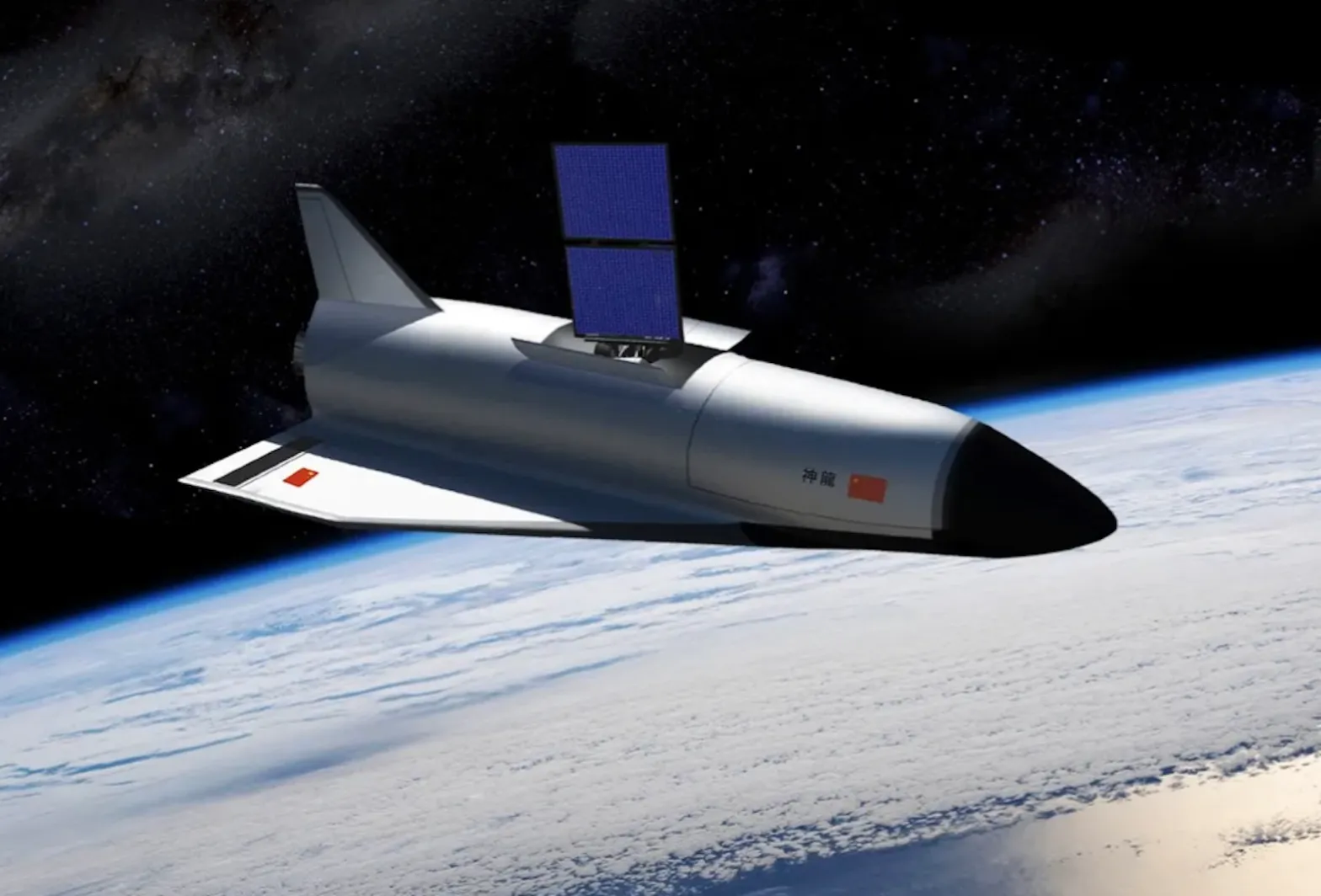

China has successfully launched its experimental reusable spacecraft for the fourth time since 2020, continuing its secretive orbital program. The mission, utilizing a Long March-2F carrier rocket from the Jiuquan Satellite Launch Centre, aims to verify technologies for reusable spacecraft, potentially mirroring capabilities seen in the U.S. Space Force’s X-37B.
This latest launch marks the fourth public mission of China’s reusable experimental spacecraft, with all previous flights also conducted from the Jiuquan Satellite Launch Centre using the Long March-2F rocket. The official details surrounding these missions, including launch times, mission durations, and specific objectives, are kept under tight wraps. State media, such as Xinhua, typically provides brief statements about “technology verification” without offering further specifics.
The first reusable experimental spacecraft was launched on September 4, 2020, and returned after two days. Subsequent missions have seen longer durations in orbit: the second mission lasted 276 days, and the third, launched in December 2023, stayed aloft for 268 days before returning in September 2024. These missions have often involved the release of small satellites or objects, with evidence suggesting rendezvous and proximity operations (RPOs) between the main spacecraft and these released payloads. The Long March 2F rocket’s payload capacity suggests the spacecraft could be comparable in size and function to the U.S. X-37B.
This reusable spacecraft program is part of China’s broader strategy to enhance its access to space and develop advanced spaceflight solutions. The China Aerospace Science and Technology Corporation (CASC) has also announced plans for a fully reusable, two-stage-to-orbit space transportation system. The development aligns with a global trend towards reusable launch systems, with China actively testing various rocket technologies, including vertical takeoff and vertical landing (VTVL) systems.
While China maintains secrecy, the U.S. Space Force is expected to track the spacecraft’s orbit, and the mission will likely attract international attention regarding its future maneuvers, potential deployment of subsatellites, and any RPO activities. The program underscores China’s growing capabilities and ambitions in the competitive field of space exploration and technology.