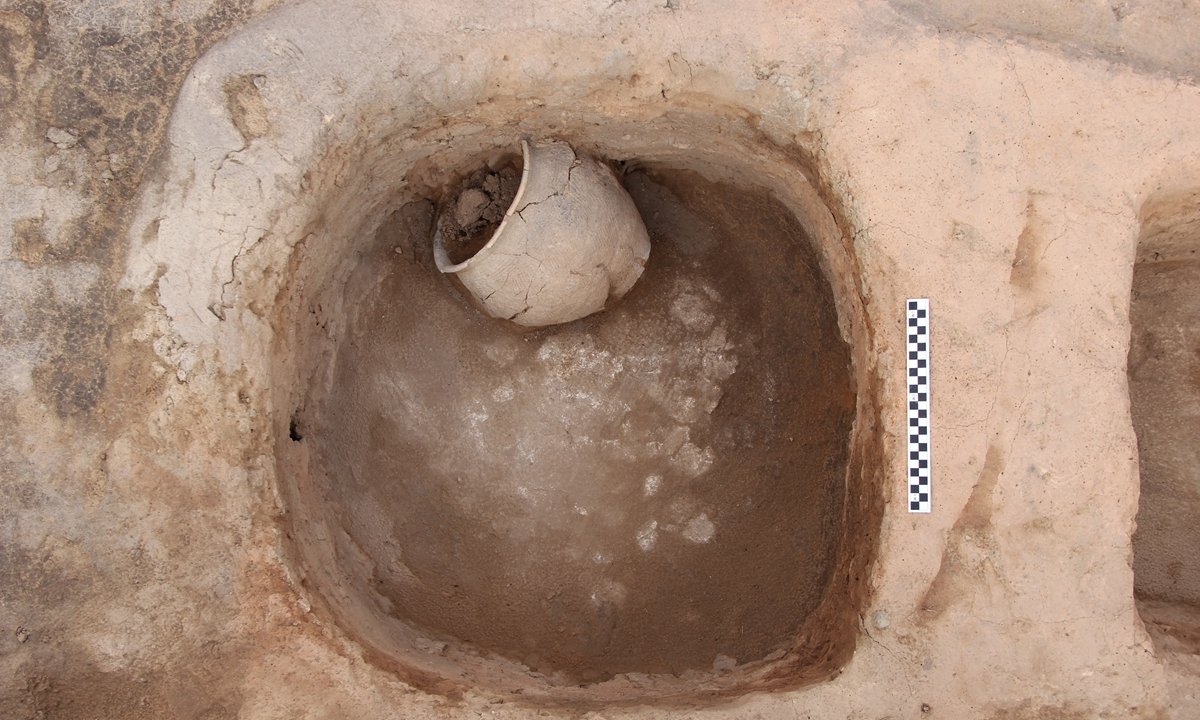

A significant Neolithic site, spanning over 80,000 square meters, has been unearthed in Xinghua City, Jiangsu Province, Eastern China. Named the Caoyangang Ruins, the site has yielded a plethora of relics, predominantly pottery and bone fragments, including intriguing ancient artifacts such as bone hairpins, needles, si (an ancient farming tool), and whistles. Most of these artifacts appear to have been intricately polished and carved.
Archaeologist Xue Ruiming noted that while bone artifacts are common in Neolithic sites, the intricately designed relics found at Caoyangang are quite rare, showcasing the ancient Chinese people’s craftsmanship and tool use. Gan Huiyuan, the lead archaeologist of the Caoyangang project, explained that the bone needle was used for sewing, and the bone si was used for tilling the soil, possibly indicating labor division in ancient households where ‘women sewed and men ploughed.’
A particularly remarkable artifact found at the site is a semi-finished flute, slightly larger than a hand’s palm. As a 7,000-year-old ancient instrument, the flute suggests that the leisure activities of ancient Chinese people included an appreciation for the arts.
In addition to bone artifacts, several rare wooden items were also discovered, including a drill tool believed to have been used for starting fires, as evidenced by the holes and fire burn marks visible on the tool’s surface. Xue noted that the development and use of tools indicate the transition of ancient Chinese people from a primitive to a more civilized lifestyle.
Additionally, remains of animals and plants, such as deer, pig, cattle, and gorgon fruit, were found at the site, along with sea products like mussel and oyster shells.
READ MORE: