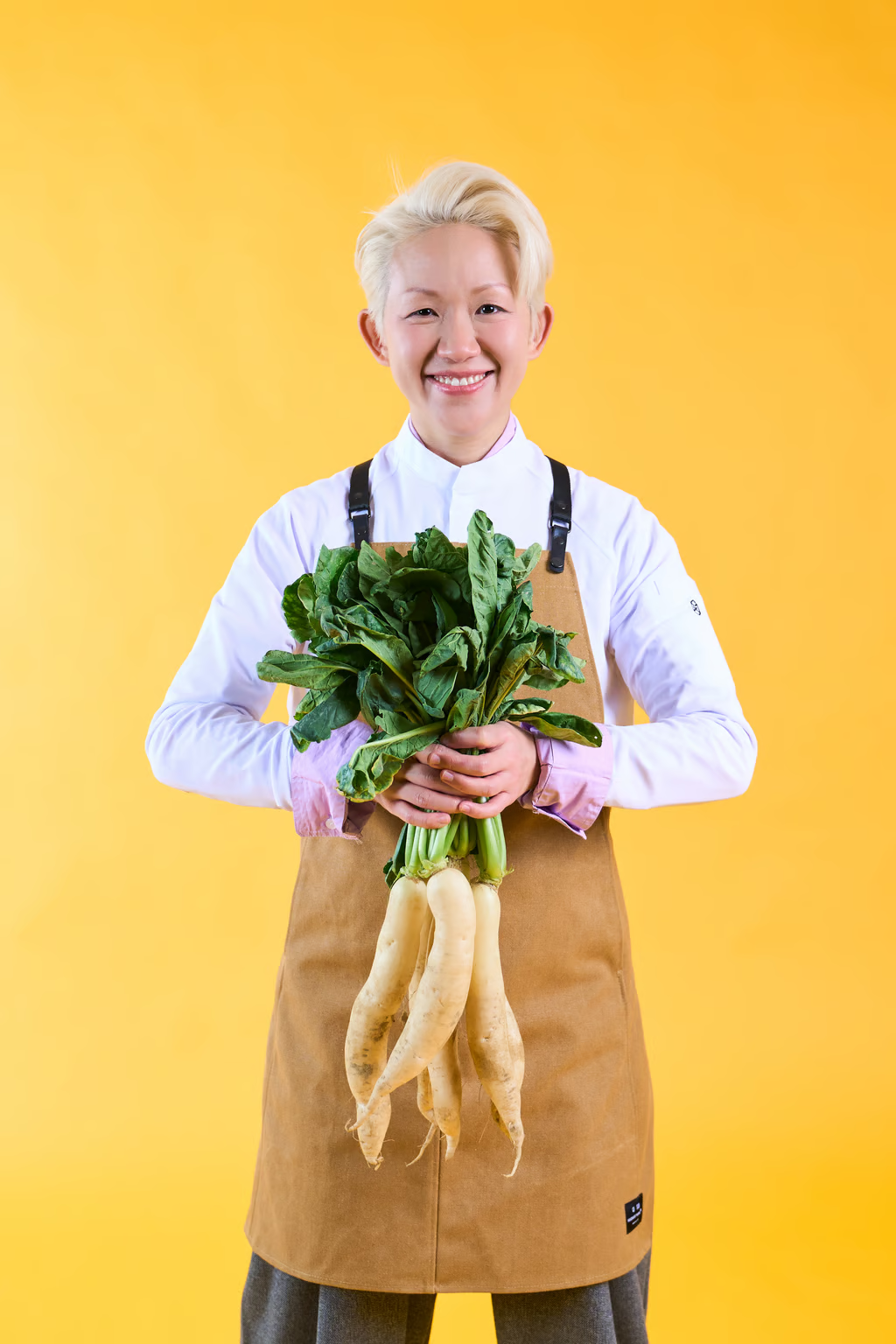

Lo bak go, commonly referred to as “turnip cake” or more accurately “radish cake,” is a savory dish deeply tied to Lunar New Year celebrations. Traditionally made with shredded white radish, rice flour, and lap cheong (Chinese preserved sausage), this dish holds cultural significance and remains a staple in Hong Kong’s festive and culinary landscape.
Hong Kong’s variation of lo bak go often includes luxurious ingredients like dried scallops and dried shrimp, enhancing its flavor. Its English name can be misleading, as white radish was less familiar outside Asia, leading to translation inconsistencies. In Singapore, for example, it is sometimes called “carrot cake” due to the shared Chinese name for radish (lo bak in Cantonese and luo bo in Mandarin).
Radish cake is especially popular during Lunar New Year, not only for its rich flavor but also due to its symbolic meaning. The word go (meaning “cake” or “pudding”) sounds like “high” in Cantonese, signifying prosperity and growth—an auspicious association for the festive season. Additionally, white radish, a winter vegetable, is at its peak during the colder months, making it an ideal ingredient for this celebratory dish.
Historically, families would prepare lo bak go together in the days leading up to the new year, ensuring a readily available dish while shops remained closed for the holiday. Over time, as more women joined the workforce in the 1980s, homemade radish cakes became less common, and the dish transitioned onto restaurant menus, particularly in dim sum establishments and congee shops.
While traditionally homemade, modern variations have emerged. Some high-end brands and hotels now offer gourmet versions with premium ingredients like Japanese daikon, Iberico ham, and abalone. However, culinary experts argue that the essence of lo bak go lies in the balance of its key components—fresh radish, high-quality lap cheong, and the right texture.
Another popular variation, chai tow kway, is a stir-fried version originating from Chaoshan that has been embraced in Southeast Asia. It later influenced Hong Kong’s XO sauce fried radish cake, a dish that gained popularity in the 1990s and is now widely available in restaurants and packaged products.
With a renewed interest in artisanal lo bak go, many chefs are producing small-batch, preservative-free versions using locally sourced ingredients, reviving a cherished tradition and supporting Hong Kong’s agricultural sector. As tastes evolve, the beloved radish cake continues to bridge generations, preserving its place in both home kitchens and high-end restaurants.
READ MORE: