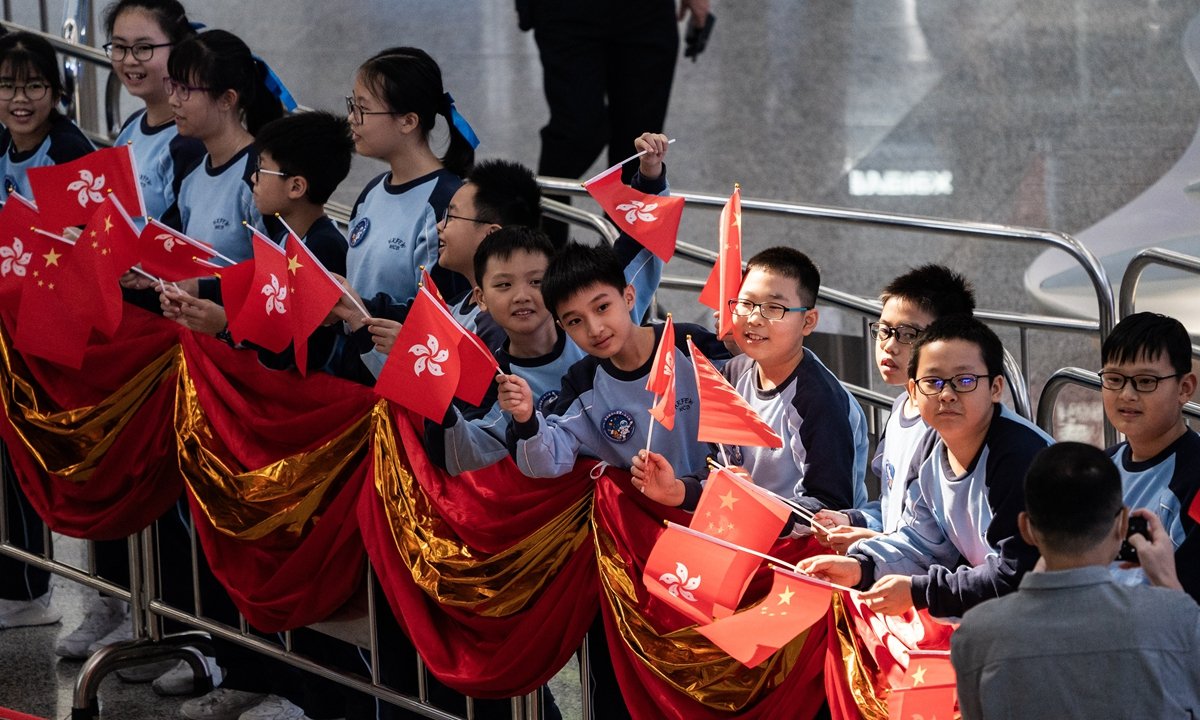

In a significant move to enhance cultural understanding and patriotism among the younger generation in Hong Kong, the Chinese Intangible Cultural Heritage Inheritance School Promotion Program was inaugurated in a ceremony on Monday. Starry Lee Wai-king, a Hong Kong member of the Standing Committee of the National People’s Congress, emphasized the program’s role in fostering national spirit and appreciation for China’s rich traditional culture.
The program, spearheaded by Zhu Yonghong, vice chairman of Chinese Art and Crafts (Hong Kong), is specifically designed to immerse Hong Kong’s youth in the essence of fine traditional Chinese culture. Through various promotional activities, the initiative seeks to deepen the understanding and practice of these cultural elements among the younger generations.
A highlight of the event was a performance by Hathor Wai, daughter of the renowned face-changing master Wai Shui Kwan. Demonstrating the art of face-changing, Hathor Wai emphasized her commitment to promoting this traditional art form among Hong Kong students, noting their limited exposure to such cultural practices. Wai Shui Kwan, known as the “National Master of Face Changing Art,” has been a pivotal figure in this field, setting records for his rapid face-changing abilities on national television.
The enthusiasm of Hong Kong students for Chinese intangible cultural heritage was palpable at the event. One student expressed a keen interest in the traditional art of seal carving and a desire to participate in more activities related to intangible cultural heritage.
This initiative is a collaborative effort between CR Longdation, the property management arm of state-owned conglomerate China Resources Holdings, Chinese Art and Crafts (Hong Kong), and the New Territories School Heads Association.
Slated to run from 2023 to 2024, the program encompasses a range of enrichment activities, including lectures, exhibitions, workshops, parent-child classes, and teacher development training courses. These activities aim to integrate traditional Chinese culture into Hong Kong’s educational curriculum, thereby ensuring the preservation and inheritance of intangible cultural heritage.
In line with these cultural efforts, on October 25, the Hong Kong government established the Patriotic Education Working Group and an Office for the Promotion of Chinese Culture. Announced by John Lee Ka-chiu, chief executive of the Hong Kong Special Administrative Region, during a Legislative Council meeting, these bodies underscore the government’s commitment to fostering a strong national identity and cultivating an appreciation for traditional Chinese culture among Hong Kong residents.
Through these initiatives, Hong Kong is taking significant steps to bridge the gap between modern education and traditional cultural values. The focus on intangible cultural heritage not only preserves these age-old practices but also instills a sense of national pride and cultural understanding among the younger generations. This fusion of education and culture is poised to enrich the societal fabric of Hong Kong, strengthening ties with its rich heritage and fostering a deeper connection with the broader Chinese cultural sphere.
READ MORE: