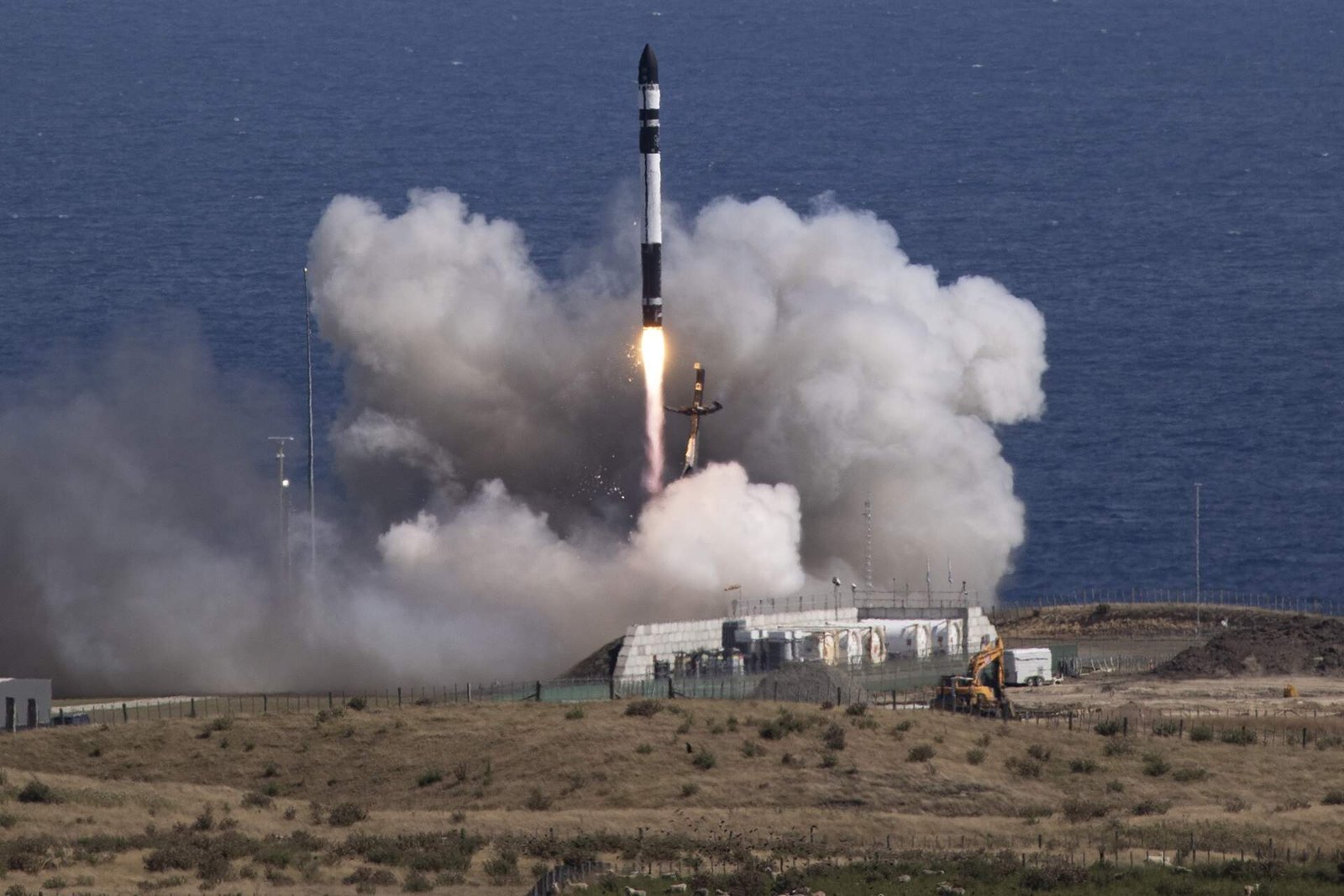

Rocket Lab shares have tumbled roughly 57% from their record high, leaving investors sharply divided over whether the space company’s steep decline represents a buying opportunity or a warning sign about its lofty valuation.
The stock’s slide comes despite continued momentum in the company’s core launch business and ongoing progress toward the debut of its larger Neutron rocket, which is designed to compete more directly with SpaceX for heavier payloads and lucrative national security contracts.
Even after the pullback, Wall Street sentiment remains far from unanimous. Several analysts maintain price targets that imply upside of nearly 49% from current levels, betting that Rocket Lab’s expanding backlog and its transition from a pure launch provider to an end-to-end space systems company will eventually justify its premium valuation.
Others counter that the shares surged too far, too fast during last year’s rally, when the company posted strong quarterly results and unveiled fresh launch agreements. That optimism sent the stock soaring, but it also stretched valuation metrics well beyond those of most profitable technology peers, leaving little margin for execution missteps.
Rocket Lab has yet to turn a consistent profit, and its ambitions hinge heavily on bringing Neutron to market on schedule. Any delays to the rocket’s first flight, or slippage in the company’s growing pipeline of satellite manufacturing and space systems contracts, could weigh further on sentiment.
The recent weakness mirrors a broader repricing across the space and high-growth technology sector, where investors have grown more cautious about companies that prioritize expansion over near-term earnings. That shift echoes the pressure seen at rivals, including the reaction to SpaceX’s first earnings report and its heavy spending on artificial intelligence and infrastructure.
Supporters of the stock argue that Rocket Lab occupies a rare position as one of the few pure-play, publicly traded launch companies with a proven small-rocket franchise and a credible path into the larger launch market. Demand for satellite deployment continues to climb, driven by defense programs and commercial constellations.
Skeptics, however, note that competition is intensifying and that the economics of medium-lift launch remain unproven for newer entrants. They caution that the gap between the company’s market valuation and its actual revenue leaves the shares vulnerable to sharp swings on any disappointing news.
For now, the divergence between the stock’s fall and analysts’ bullish targets underscores the uncertainty surrounding high-growth space ventures. The coming quarters, and particularly the first flight of Neutron, are likely to determine which side of the debate proves correct.