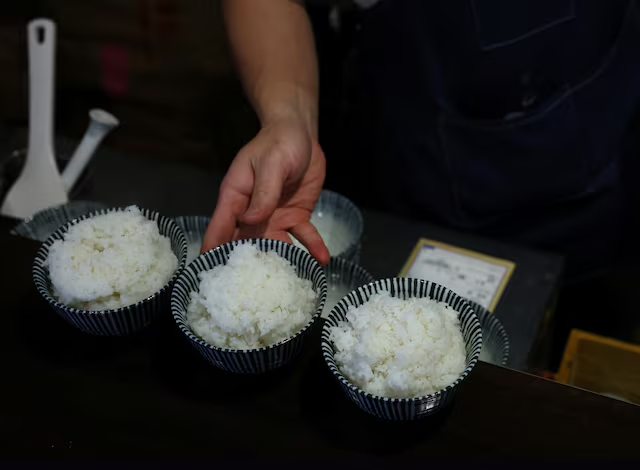

Japan is considering increasing its soybean and rice imports as part of trade negotiations with the U.S. over President Donald Trump’s tariffs. Amid concerns over the global economic impact of Trump’s trade policies, Japan is looking to address the tariffs imposed by the U.S. on Japanese exports and other duties that have affected trade between the two nations. In initial bilateral talks, U.S. negotiators highlighted issues related to automobiles and rice, areas where they believe Japan maintains trade barriers. The U.S. also pushed for Japan to import more meat, fish products, and potatoes, aiming to reduce trade imbalances.
Japan’s trade barriers were a key topic in the discussions, with the U.S. Trade Representative’s annual report identifying such barriers as a point of contention. Following these talks, Japan’s lead negotiator, Economic Revitalisation Minister Ryosei Akazawa, was unexpectedly invited to the Oval Office by Trump, who claimed significant progress was made, although specific details were scarce. Finance Minister Katsunobu Kato is expected to continue talks with Treasury Secretary Scott Bessent in Washington next week, as both countries try to navigate the challenges posed by the tariffs.
Japan has faced a 24% tariff on its exports to the U.S., though this has been temporarily suspended for 90 days. However, a 10% universal tariff remains in place, alongside a 25% duty on cars, which are critical to Japan’s export economy. In these negotiations, Akazawa reportedly asked the U.S. team to prioritize their demands, helping to structure the discussions more effectively. Trump’s criticism of Japan’s rice tariffs, claiming they are as high as 700%, has been a particularly contentious point. Japan, however, disputes this claim, arguing that it is based on outdated rice prices.
Despite Trump’s tariffs, Japan has already been increasing its rice imports in response to a domestic supply shortage that has driven up prices. This shift suggests that Japan is already adjusting its trade strategy, making additional concessions in rice and soybean imports as part of broader efforts to secure a more favorable outcome in trade talks. These adjustments come as Japan seeks to balance economic concerns while attempting to avoid the worst impacts of the ongoing trade dispute with the U.S.
READ MORE: