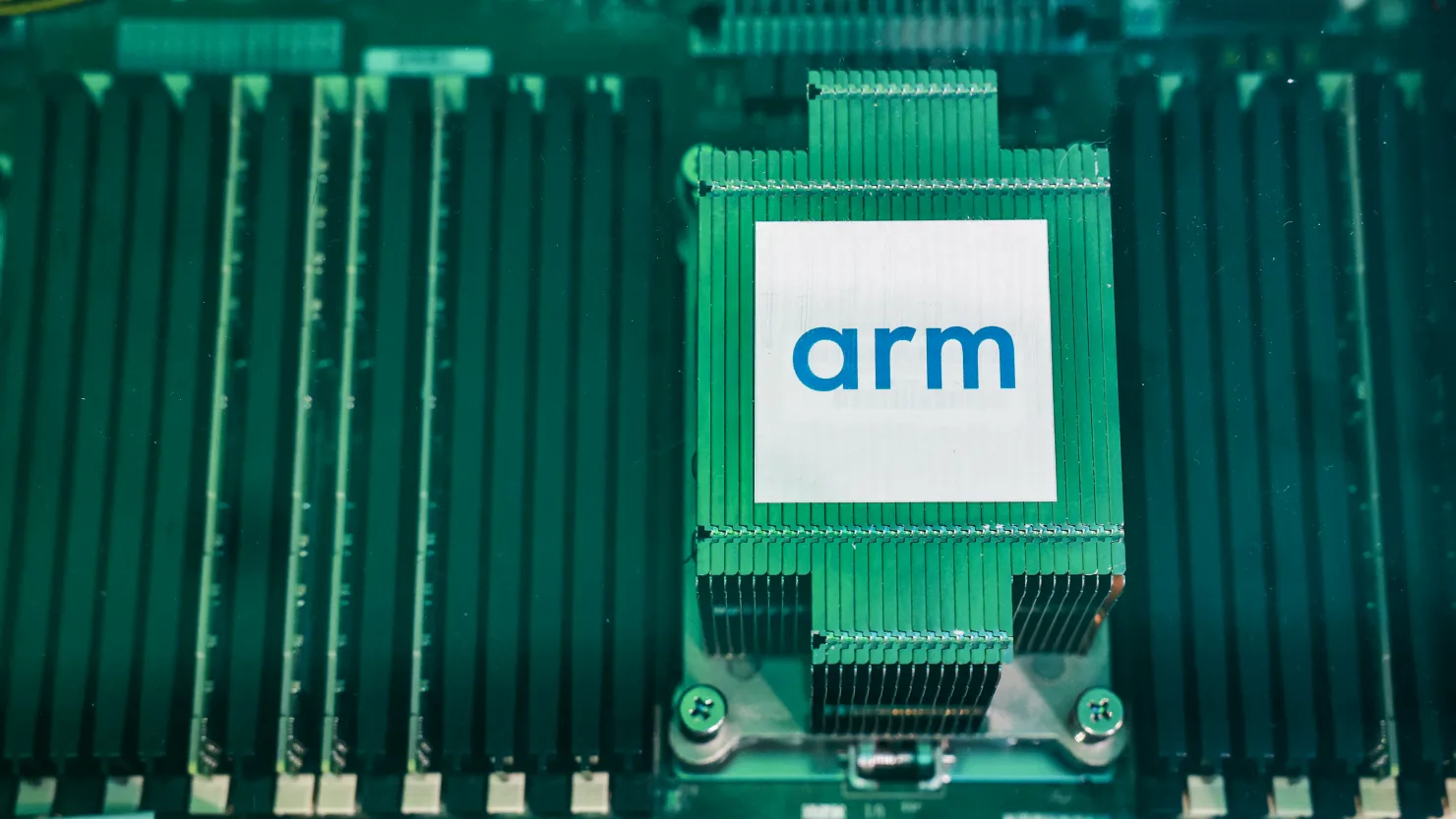

Arm Holdings saw its shares fall by as much as 9% in after-hours trading following its fiscal first-quarter earnings release. The company reported adjusted earnings per share of 35 cents, matching analyst expectations. However, revenue came in at $1.05 billion, just below the projected $1.06 billion. For the second quarter, Arm expects revenue to range between $1.01 billion and $1.11 billion, aligning with the $1.05 billion consensus estimate.
Net income declined 42% year over year, dropping to $130 million, or 12 cents per share, compared to $223 million, or 21 cents per share, in the same quarter last year. Despite the decline in profit, Arm is signaling an ambitious shift in its strategic direction. CEO Rene Haas confirmed that the company is evaluating opportunities to move beyond its traditional role in chip architecture and may begin designing its own processors.
Currently, Arm’s designs power billions of devices and are used by leading companies like Apple and Qualcomm. Its customers also include cloud service providers such as Microsoft and Amazon, which develop custom chips using Arm’s architecture. Expanding into full-chip or chiplet design could introduce competition between Arm and its own clients—a concern raised by analysts on the company’s earnings call. Haas acknowledged these risks but said that demand from newer clients, including cloud providers and OEMs, has led to a need for more integrated starting points in the chip development process.
The company may look into designing complete subsystems or chiplets, or potentially move toward offering fully developed chips. While this could open new revenue streams, it also introduces execution risk and alters its traditional licensing-based model.
Arm’s core business, royalties from smartphone chip designs, showed weaker-than-expected growth. CFO Jason Child noted that smartphone sector demand did not meet expectations, though the company anticipates limited direct impact from geopolitical or tariff-related disruptions due to its licensing model. However, the indirect effects on end-product demand remain uncertain.
On a more positive note, Arm revealed an expanded licensing agreement with SoftBank, which still owns about 90% of the company. Child also highlighted the potential long-term impact of OpenAI’s ambitious Stargate project, a $500 billion AI infrastructure initiative, pointing to significant design opportunities in the future.
READ MORE: