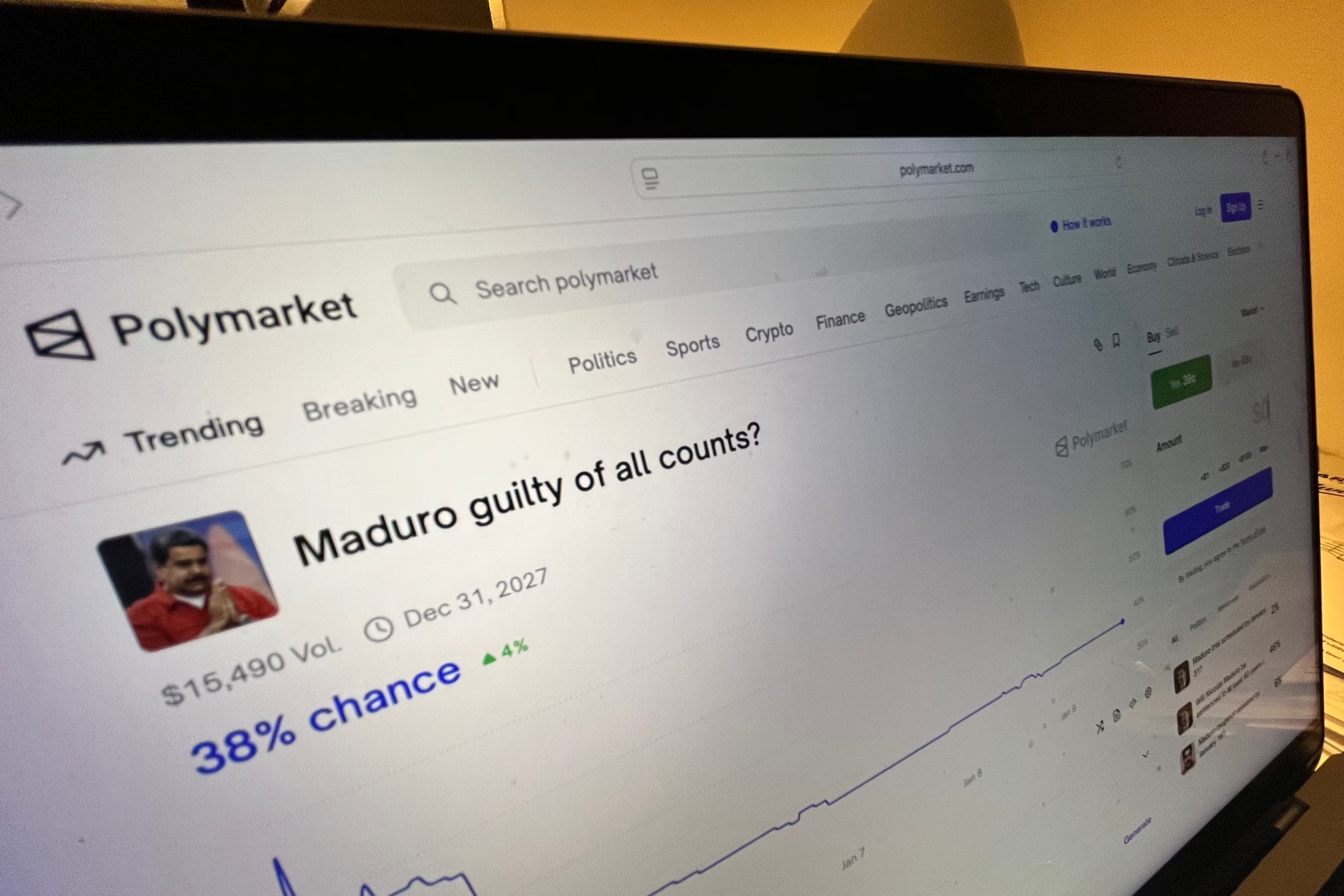

Prediction markets that let users bet on real-world events are facing renewed scrutiny after reporting and analysis highlighted trades that appeared unusually well-timed around sensitive geopolitical developments — raising fresh questions about whether people with access to non-public information can profit from conflicts, diplomatic moves, or government decisions.
The concerns center on the combination of anonymity and speed. One investigation described a case in which a newly created account placed large bets on an Israeli strike on Iran shortly before it occurred, profiting significantly. Blockchain tracing in the same reporting linked the activity to Israel, after which the funds were moved through multiple wallets — a pattern that critics argue makes enforcement and accountability difficult even when activity looks suspicious.
Beyond strikes, reporting also pointed to other high-confidence wins tied to major political or policy events — including bets linked to the capture of Nicolás Maduro and other government outcomes — reinforcing the worry that prediction markets can create a financial incentive to leak information, influence decisions, or exploit privileged access.
Regulatory pressure is building. After the Maduro-related trade sparked allegations of insider-style behavior, a coalition that includes regulated prediction-market players launched a major public campaign calling for clear federal rules and explicit bans on insider trading on these platforms. The effort is also seen as an attempt to differentiate regulated products from offshore-style markets that can be accessed anonymously.
Analysts warn the risks are uniquely sharp when markets involve war and diplomacy. One policy analysis argued that such markets can incentivize monetizing non-public information, enable manipulation, and distort incentives for decision-makers — even if there is no public proof that officials themselves placed bets.
Supporters argue prediction markets can aggregate information and improve forecasting, but critics say that without tighter identity checks, surveillance, and enforcement, the same mechanisms that make these markets liquid and fast can also make them vulnerable to abuse. The debate is now shifting from “are prediction markets useful?” to “what guardrails are required when the subject is national security and geopolitics?”