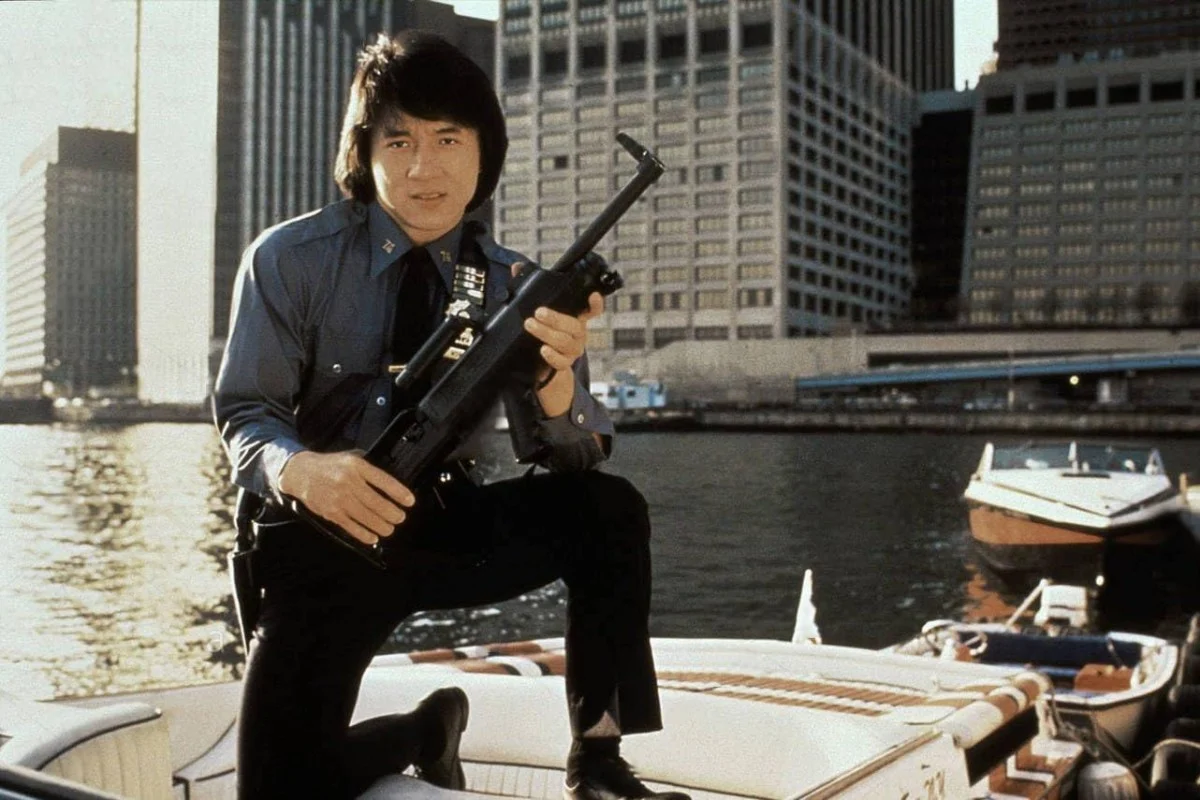

In the mid-1980s, Jackie Chan was Asia’s biggest action star, but his attempts to break into Hollywood had been frustratingly unsuccessful. After The Big Brawl and appearances in The Cannonball Run films, Chan took another shot with The Protector (1985), a Hong Kong-New York buddy cop movie. Directed by American action filmmaker James Glickenhaus, The Protector was a gritty, violent thriller that clashed with Chan’s comedic, family-friendly style. In his autobiography Never Grow Up, Chan reflects, “A cold-blooded killer type did NOT suit me…Unfortunately, I didn’t have any say in this role.”
Contractually bound by his studio Golden Harvest, Chan plays Billy Wong, a Hong Kong cop turned NYPD officer. After witnessing his partner’s murder, Wong’s demotion to crowd control changes when he’s assigned to rescue the kidnapped daughter of a wealthy gangster in Hong Kong. Partnered with rough-around-the-edges Danny Garoni (played by Danny Aiello), Chan’s character navigates a story filled with gritty New York and Hong Kong backdrops, boat chases, and brutal showdowns. Despite its cliched setup and some dated Hong Kong stereotypes, The Protector has memorable action sequences, including a high-speed motorbike chase across Hong Kong’s harborside and a climactic showdown involving helicopters and rocket launchers.
Glickenhaus, known for high-octane films like The Exterminator and McBain, took a hard-edged approach to The Protector, focusing on gritty action rather than the comedic, acrobatic style Chan was known for. Reflecting on the collaboration, Glickenhaus later remarked, “If I had given Jackie everything he wanted, it would have been just another Jackie Chan chopsocky film…he didn’t need me for that.” For Chan, working on The Protector was uncomfortable. “I didn’t condone [Glickenhaus’s] style or methods,” he said, and the project was physically taxing, resulting in hand and finger injuries. After filming, Chan requested a re-edit for the Asian release, cutting out American slang and nudity and reshaping fight scenes to fit his signature style. This version performed moderately well in Hong Kong, grossing twice as much as the original in the U.S.
For Chan, the experience was a turning point. Determined never to give up creative control, he returned to Hollywood in 1995 with Rumble in the Bronx, a hit made on his terms. Meanwhile, Glickenhaus took a lighthearted view of the clash, saying, “I never took any of that stuff seriously…if you read what Jackie Chan says about other movies he did with American directors, he thinks they’re all c**p!”
READ MORE: