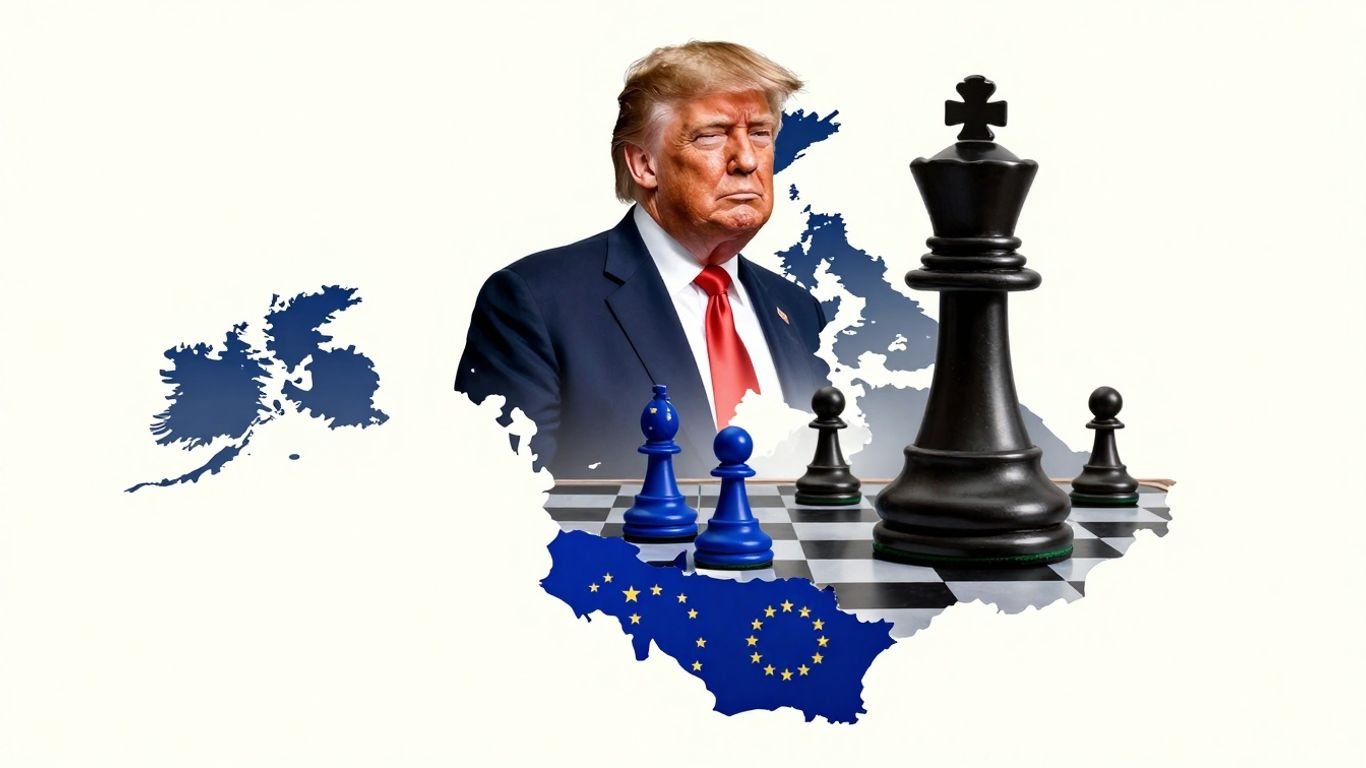

Europe is bracing for potential confrontation as U.S. President Donald Trump renews his interest in acquiring Greenland. Policymakers across the continent are no longer dismissing Trump’s rhetoric as mere bluster, actively seeking strategies to deter any U.S. moves on the strategically vital Arctic territory. The situation has escalated following recent U.S. military actions, prompting urgent discussions among European leaders about safeguarding their interests and the international order.
Europe’s Strategic Response Options
European officials and diplomats are exploring a multi-pronged approach to dissuade President Trump. These strategies aim to address U.S. security concerns while asserting European and Danish sovereignty over Greenland.
Negotiated Compromise: One avenue involves finding a mutually agreeable solution. This could include the U.S. gaining enhanced access to Greenland’s resources or investment opportunities, potentially mediated by NATO. The U.S. has expressed concerns about Greenland’s security against growing Chinese and Russian activity in the Arctic, and Europe is considering bolstering its military presence in the region to reassure Washington.
Economic Incentives for Greenland: To counter potential U.S. offers of financial aid, the European Union is planning to significantly increase its funding for Greenland. This enhanced financial package, set to more than double from 2028, aims to support Greenland’s development, welfare, education, and green transition, while also exploring resource extraction potential.
Economic Retaliation: The EU possesses an “Anti-Coercion Instrument,” a trade tool designed to retaliate against economic discrimination. With existing U.S. tariffs still in place, Brussels could potentially deploy this instrument if diplomatic efforts fail, leveraging its significant export market share in the U.S.
Military Deterrence: In a more extreme scenario, if the U.S. were to attempt a military takeover, European nations are contemplating deploying troops to Greenland. While unlikely to withstand a full-scale U.S. invasion, such a presence could act as a deterrent, potentially forcing the U.S. to reconsider or face a direct confrontation. Denmark’s standing orders could also compel a military response to any attack on its territory.
Underlying Tensions and the Future of Global Order
President Trump’s interest in Greenland is framed by him as a matter of U.S. national security and economic opportunity, citing the island’s strategic location and mineral wealth. However, European leaders view this as a dangerous assertion of power that undermines the rules-based international order established after World War II. The U.S. military action in Venezuela is seen by some as a precedent, signaling a shift towards a more unilateral and power-driven foreign policy. This has led to discussions about whether Europe needs to fundamentally reassess its own security and its relationship with the United States, potentially forging a more independent path.
Greenland’s own stance is crucial, with polls indicating overwhelming opposition to a U.S. takeover. Danish and Greenlandic officials have consistently rejected the idea of Greenland being for sale or subject to seizure. The unfolding situation presents a critical test for Europe’s ability to assert its influence and defend the principles of international law in an increasingly unpredictable global landscape.