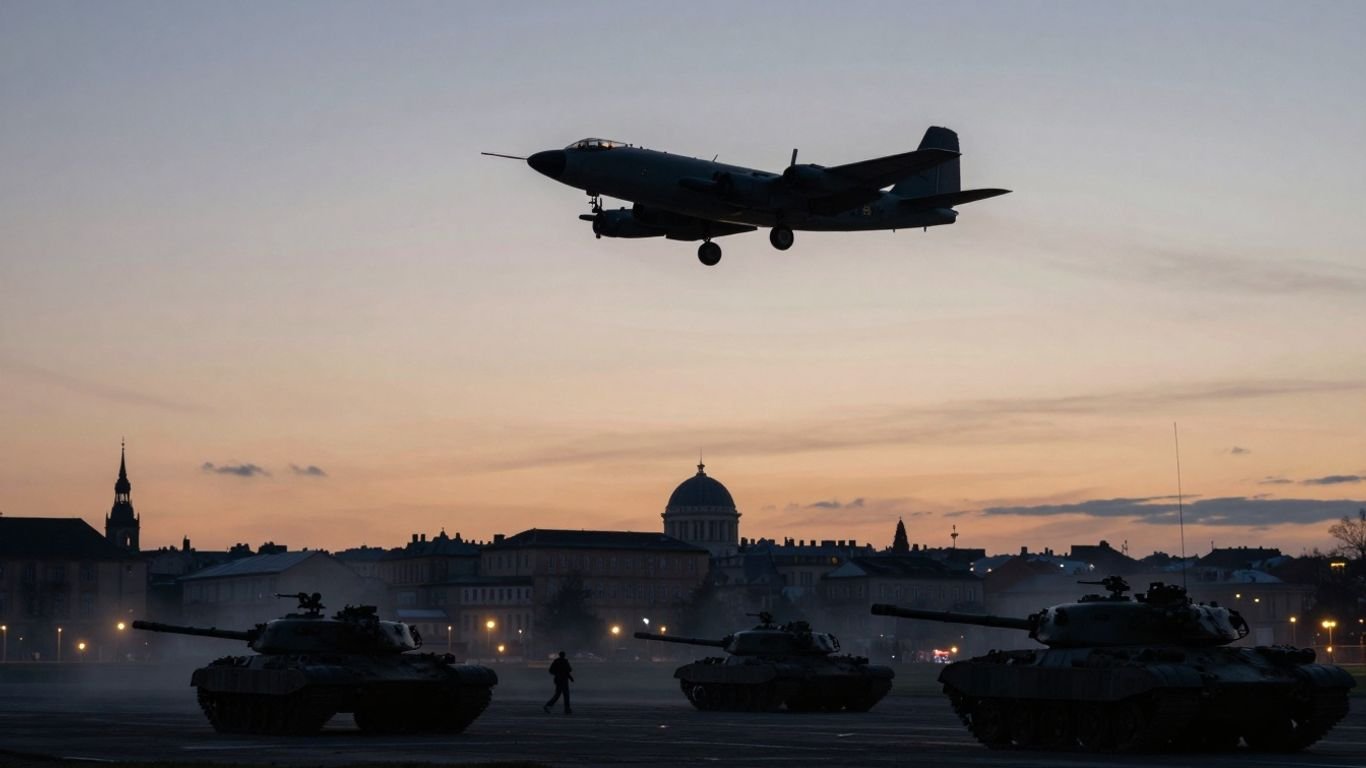

Europe is undergoing a significant military rearmament and strategic shift, driven by escalating Russian aggression and a perceived weakening of U.S. security guarantees. Nations across the continent are dramatically increasing defense spending, modernizing their armed forces, and investing heavily in advanced technologies like autonomous warfare systems to prepare for a potential long-term conflict.
A Continent on High Alert
Fueled by Russia’s ongoing actions in Ukraine and concerns about future U.S. commitment to European security, the continent is witnessing an unprecedented surge in defense investment. Germany, for instance, has committed €100 billion for defense and plans to spend €650 billion over the next five years, a move described as a “watershed moment.” This rearmament drive aims to bolster troop numbers, enhance equipment, and ensure readiness for prolonged conflict, moving away from decades of post-war pacifism.
Russia’s Military Modernization as a Warning
Intelligence indicates Russia is rapidly expanding its military-industrial complex, with shipyards churning out ice-capable submarines and missile factories operating at full capacity. This surge in production, particularly of long-range strike weapons and naval platforms designed for European waters, is seen as a direct threat. Russia’s strategy appears focused on sustained pressure and the ability to hold European targets at risk from multiple angles, compelling NATO to adopt a more forward-leaning deterrence posture.
The Rise of Autonomous Warfare
Europe is at the forefront of developing and integrating autonomous warfare technologies. Initiatives like the “digital targeting web” aim to connect sensors and weapons systems for near-instantaneous threat response. Mass deployment of drones, coupled with AI-enabled intelligence, surveillance, and reconnaissance, is seen as crucial for deterring potential aggression. Companies are rapidly developing advanced systems, including AI-assisted missile drones and uncrewed fighter jets, with a focus on speed and mass production to counter perceived threats.
Navigating Ethical and Strategic Challenges
While the push for advanced defense capabilities is driven by security concerns, it also raises significant ethical questions. The increasing autonomy of weapons systems and the potential for “saturation attacks” could blur the lines of human control and escalate conflicts. Despite these concerns, many strategists argue that such technologies are essential for maintaining a credible deterrent against a modernized Russian military, emphasizing that the choice is between winning or losing in a rapidly evolving security landscape.
Shifting Alliances and Domestic Debates
Concerns about potential shifts in U.S. foreign policy have spurred European nations to take greater responsibility for their own security. This has led to increased defense cooperation within Europe, though some nations, like Hungary, have expressed reservations about direct military involvement in Ukraine, fearing escalation. Domestically, rearmament efforts are met with varying degrees of public support, with ongoing debates about the balance between defense spending and social programs, and the cultural shift required to embrace a stronger military posture.