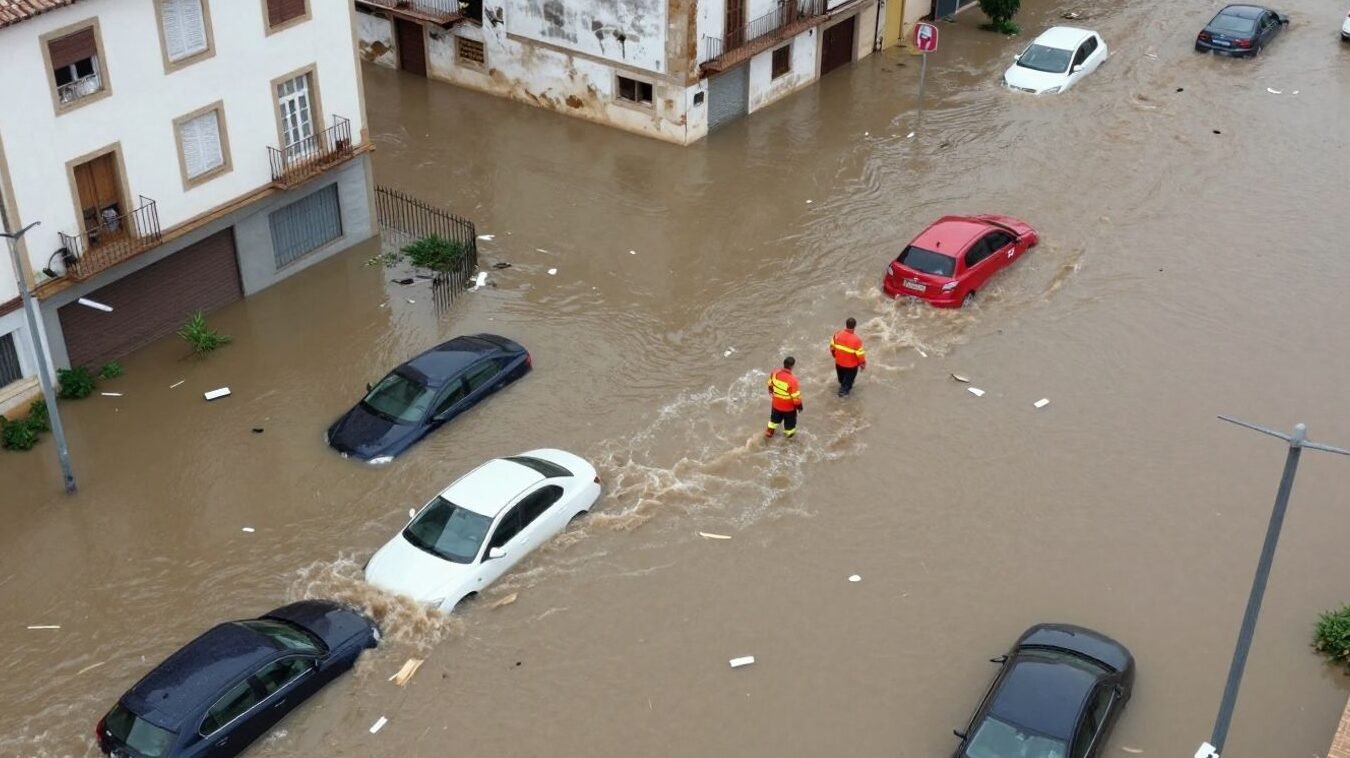

Storm Leonardo has unleashed a torrent of destruction across Spain and Portugal, bringing torrential rains, powerful winds, and widespread flooding. The severe weather has forced thousands to evacuate their homes, caused significant infrastructure damage, and tragically resulted in multiple fatalities. Emergency services are working tirelessly to manage the crisis, with concerns mounting over further rainfall and potential landslides.
Torrential downpours have overwhelmed rivers and reservoirs across both Spain and Portugal, leading to catastrophic flooding. In Spain’s Andalusia region, areas near the Guadalquivir River in Córdoba were evacuated as water levels dramatically rose. The mountainous village of Grazalema experienced severe flooding, with water seeping into homes and prompting the evacuation of approximately 1,500 residents. Spain’s state meteorological agency, AEMET, issued severe weather alerts, with some areas receiving rainfall equivalent to an entire year’s average in just a few days.
Portugal has also been hit hard, with the River Douro overflowing in Porto and large parts of Alcácer do Sal remaining semi-submerged. The Portuguese government has extended a state of calamity in numerous municipalities, mobilizing emergency funding and relief assistance. The Tagus river basin is at high risk of significant flooding, with the civil protection service warning of the worst flood threat in nearly three decades.
Thousands of residents have been forced to flee their homes, seeking safety on higher ground. Major transport networks have been severely disrupted, with hundreds of roads closed due to flooding, mudslides, and fallen trees. Rail services have been suspended in large parts of southern Spain, and ferry services in Portugal have faced temporary closures. Schools and colleges in affected Spanish regions have been ordered to close. The agricultural sector has suffered immense losses, with farmers reporting millions of euros worth of damage to crops like broccoli, carrots, and cauliflowers, which are now submerged.
The severe weather has prompted calls to postpone the second round of Portugal’s presidential election, with some political leaders arguing that the conditions create an unequal playing field for voters. However, the national electoral authority has stated that weather alerts are not sufficient grounds for postponement. Scientists have linked the increasing intensity and frequency of extreme weather events like Storm Leonardo to human-driven climate breakdown.
Emergency services, including firefighters, civil protection personnel, and military units, are engaged in large-scale rescue and support operations. Authorities are urging the public to heed official advisories, avoid flood-prone areas, and stay informed about weather updates. While conditions are expected to improve gradually, the risk of further unsettled weather and landslides remains high, particularly in southern Spain. The long-term reconstruction and recovery efforts will be a significant challenge for the affected regions.