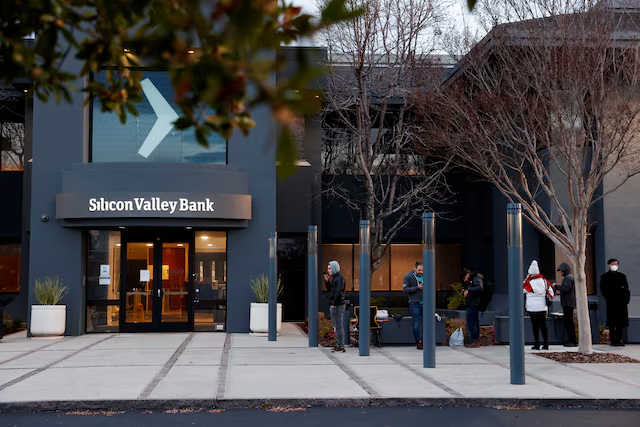

SVB Financial Group, the former owner of the now-defunct Silicon Valley Bank, received approval from a U.S. judge on Friday to transfer its remaining assets to creditors and conclude its bankruptcy proceedings. This decision marks a significant step in the financial restructuring following one of the largest bank collapses in U.S. history.
As part of its bankruptcy restructuring, SVB Financial Group will establish a trust to pursue litigation against the U.S. Federal Deposit Insurance Corporation (FDIC). The legal battle centers around $1.9 billion seized by the FDIC from SVB Financial’s bank accounts during the 2023 collapse of Silicon Valley Bank. The case will be litigated in a California federal court.
SVB Financial Group contends that the funds should be returned because the FDIC invoked a “systemic risk” exemption to protect all deposits at Silicon Valley Bank, including those exceeding the typical $250,000 insurance limit. In contrast, the FDIC argues that the seizure of the funds was legal and necessary to offset the costs incurred in rescuing the bank, and that it did not intend to protect the bank accounts of the parent company.
The outcome of the litigation will significantly impact the repayment to SVB Financial’s senior bondholders, who are owed $3.3 billion. Depending on the court’s decision, these bondholders could receive between 41% and 96% of their claims. The bondholders include major financial entities such as MFN Partners, Pacific Investment Management Company, Bank of America Securities, JP Morgan Securities, and King Street Capital, according to court documents.
In addition to the litigation, SVB Financial Group’s bankruptcy restructuring has involved the sale of several assets. The company has spun off its venture capital business and its investment banking unit, seeking to streamline operations and generate funds to repay creditors.
The approval to end its bankruptcy and transfer assets marks a pivotal moment for SVB Financial Group as it navigates the aftermath of Silicon Valley Bank’s collapse. The resolution of the litigation against the FDIC will be closely watched, as it will determine the final financial outcomes for the company’s creditors and bondholders. This case also underscores the complexities and challenges in the financial sector when major banking institutions fail, highlighting the intricate balance between regulatory actions and corporate financial rights.
READ MORE: